The world’s largest “second‑life” battery factory launched in just six weeks
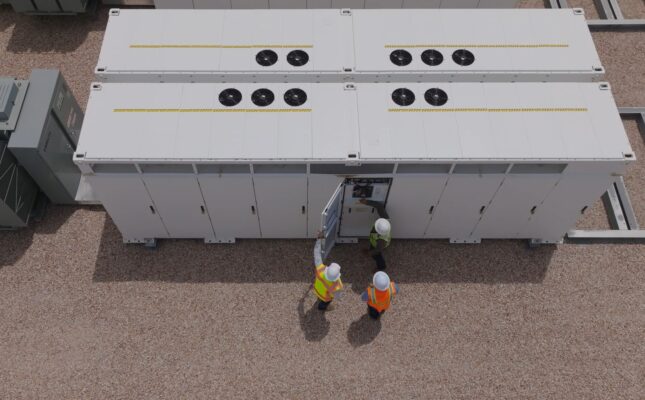
Moment Energy has launched Megafactory 1 in Vancouver, which the company describes as the world’s largest facility using retired electric‑vehicle batteries to produce stationary energy‑storage systems. Importantly, the investment was completed just six weeks after its official announcement, demonstrating the rapid pace of development in the “second‑life” battery‑based energy‑storage sector.
The new facility does not manufacture lithium‑ion cells. Its operations focus on selecting, diagnosing, and integrating batteries retired from electric vehicles, which—after appropriate technical assessment—are deployed into stationary energy‑storage systems.
Second life for batteries instead of premature recycling
Batteries used in electric vehicles typically lose part of their capacity after several years of operation and no longer meet automotive manufacturers’ requirements. In many cases, however, they retain 70–80% of their original capacity, making them suitable for continued use in stationary applications.
This approach aligns with circular‑economy principles, extending the battery life cycle before final recycling. It also reduces demand for new raw materials used in the production of energy‑storage systems.
A response to growing demand for BESS systems
The rapid expansion of renewable energy sources, data centers, and industrial electrification is driving a sharp increase in demand for energy‑storage systems. At the same time, more batteries from the first generations of electric vehicles are reaching the end of their transportation lifecycle.
Moment Energy aims to leverage both trends by building a local supply chain for the BESS sector. Systems produced at Megafactory 1 are expected to be used in data centers, industrial facilities, hospitals, microgrids, and critical infrastructure.
Target production of 1 GWh per year
The company expects the facility to reach an annual production capacity of 1 GWh of energy‑storage systems by 2030. In addition to increasing domestic manufacturing capacity, the investment is expected to deliver tangible economic benefits—creating over 100 direct jobs at the factory and around 1,000 jobs across the supply chain and related sectors.
Growth supported by investors and government programs
Founded in 2020, Moment Energy has evolved from an academic startup into a manufacturer of commercial energy‑storage systems. Its development is supported by both private capital and government programs.
The Canadian PacifiCan program allocated CAD 4.9 million to support the company’s growth. Meanwhile, the Series B funding round completed in 2026 brought in USD 40 million, increasing total financing to over USD 100 million.
Moment Energy also announced that it has obtained product‑safety and functional‑safety certifications for its proprietary battery‑management system (BMS), designed specifically for applications using “second‑life” batteries.
The second‑life battery market enters the commercialization phase
Experts indicate that in the coming years, the segment focused on reusing traction batteries will be one of the fastest‑growing areas of the energy‑storage market. According to forecasts, by the end of this decade millions of batteries retired from electric vehicles will be available worldwide, still capable of operating for another 8–15 years in stationary applications.
The launch of Megafactory 1 demonstrates that technologies using second‑life batteries are no longer pilot projects but are becoming a fully fledged part of the industrial energy‑storage market. It also signals to the industry that the development of the circular economy can significantly reduce the cost of building BESS systems and decrease dependence on new lithium‑ion cell supplies.
The launch of Megafactory 1 demonstrates that technologies using second‑life batteries are no longer pilot projects but are becoming a fully fledged part of the industrial energy‑storage market. It also signals to the industry that the development of the circular economy can significantly reduce the cost of building BESS systems and decrease dependence on new lithium‑ion cell supplies.
Leave a Reply