The new KPEiK and the old dilemma: how long will gas remain a guarantee of security?
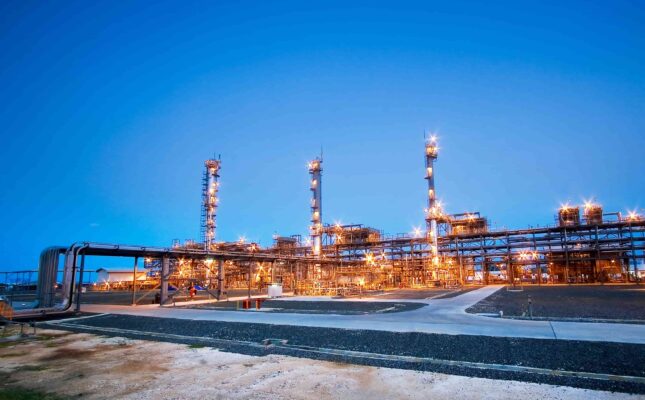
Poland plans to increase the role of gas in its energy transition, but global trends are beginning to challenge this direction. While the new KPEiK assumes continued use of gas as a guarantor of system stability, the latest data from Ember show that gas has been losing significance in global power generation for the fifth year in a row. Is Poland betting on the fuel of the future, or on a technology whose best years are already behind it?
Gas in Poland’s energy strategy
The draft update of the National Energy and Climate Plan (KPEiK), adopted by the Council of Ministers, assumes further growth in the use of natural gas in the national energy system. Gas is expected to play a stabilizing role during the accelerated expansion of renewable energy sources and the gradual phase‑out of the oldest coal units.
From the perspective of power‑system operators, this approach appears justified. Gas‑fired power plants offer high operational flexibility, can quickly respond to fluctuations in wind and solar generation, and emit less CO₂ than coal units. In the short and medium term, gas therefore remains an important element ensuring system security.
At the same time, it is increasingly clear that the long‑term outlook is less straightforward than it seemed just a few years ago.
Global trends are reshaping the role of gas
The latest Ember report shows that the importance of gas in global power generation is steadily declining. The year 2025 marked the fifth consecutive year in which gas’s share in the global energy mix fell. Although gas‑fired electricity production still grew slightly in absolute terms, renewable energy expanded much faster. Between 2021 and 2025, clean energy sources covered around 68% of the increase in global electricity demand, reducing the need for new gas‑fired capacity.
Even more striking are the country‑level data. According to Ember, 61 out of 124 countries using gas for electricity generation have already reached peak gas demand in the power sector. In many cases, the decline in gas use is directly linked to the rapid development of renewables, energy storage, and modernized transmission networks.
A similar shift is visible in G7 countries, which account for more than one‑third of global gas‑fired electricity production. In 2025, renewable energy nearly matched gas in terms of generation volume, and gas’s share in the energy mix fell for the second year in a row.
Energy security is redefining what “stability” means
For years, gas was considered a fuel that guaranteed power‑system stability. Recent geopolitical events, however, show that energy security depends not only on the ability to regulate power‑plant output but also on the availability and price of fuel.
As Małgorzata Wiatros‑Motyka, Senior Energy Analyst at Ember, emphasizes:
–Natural gas is often seen as a stable energy source, and its use in Poland is expected to grow according to the KPEiK. But the question is whether it will truly retain this role in the next decade. Recent geopolitical events and the conflict in the Persian Gulf highlight the weaknesses of gas as an imported fuel. Global trends described in Ember’s gas report show that countries dependent on gas imports are accelerating the development of renewable energy and storage. Globally, gas lost significance in the power mix for the fifth year in a row in 2025, and nearly half of gas‑producing countries have already reached peak gas demand, increasingly turning to locally produced renewables that offer greater stability and are less exposed to price volatility.
In practice, this means a shift in how energy security is understood. Systems based on local energy sources — independent of fuel imports and global geopolitical tensions — are increasingly seen as the most resilient.
Gas as a transitional, not a destination technology
This does not mean the end of gas in the power sector. On the contrary — in the coming years, gas will still be needed as a balancing source during periods of low renewable generation. In Poland, the role of gas may even temporarily increase as new gas units come online and some coal capacity is retired.
However, growing evidence suggests this increase will be temporary. The development of energy storage, demand‑side management, interconnectors, and the broader electrification of the economy may gradually reduce the need for gas as the primary stabilizing technology.
This trend is already visible in countries such as the UK, Spain, Italy, and Japan, where declining gas use coincides with rapid growth in renewable energy.
The future belongs to flexibility
The key conclusion from both the KPEiK and Ember’s latest analysis is that the future of energy will not be built around a single dominant fuel. The most important resource will be system flexibility — the ability to respond quickly to changing conditions in energy production and consumption.
In this model, gas will remain an important part of the energy mix, but its role will evolve. From a fuel driving electricity production, it will increasingly become a supporting technology in a system dominated by renewable energy. The scale and pace of this transformation will depend not only on economic factors but also on energy security considerations and the development of energy storage and modern grid infrastructure.
Growing evidence suggests that the future of European energy will be shaped primarily by renewable sources — and gas, while still needed, will play an increasingly auxiliary role.
Leave a Reply