Poland is opening the way for underground CO₂ storage. Industry gains an opportunity, but the map has significant gaps.
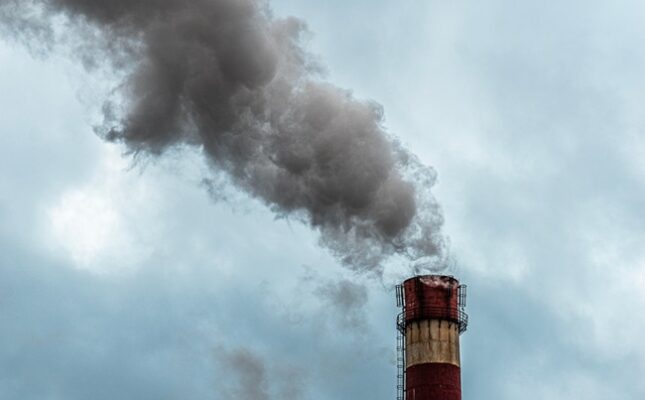
The new regulation issued by the Ministry of Climate and Environment enables underground storage of carbon dioxide in 18 onshore areas in Poland. This long‑awaited change may accelerate the development of CCS technologies and help energy‑intensive plants reduce emission‑related costs. However, experts from the Instrat Foundation point out that several promising locations situated near major cement plants and fertilizer factories were left outside the designated map.
The publication of the regulation on underground CO₂ storage may become a turning point for Poland’s heavy industry. The new rules open the possibility of planning domestic investments related to carbon capture and storage, which in the coming years may play an important role in maintaining the competitiveness of enterprises.
The Instrat Foundation positively assesses the removal of one of the most significant legal barriers limiting the development of CCS technologies in Poland. At the same time, it notes that the list of approved locations does not include all areas with geological potential.
What is CCS and why does industry need it?
CCS, or Carbon Capture and Storage, is a technology involving the capture of carbon dioxide generated in industrial processes, its transport, and permanent storage in suitable geological formations.
The solution can reduce the amount of CO₂ released into the atmosphere and allow companies to lower expenses related to rising greenhouse‑gas emission costs.
The technology is particularly important for sectors where full emission reduction is very difficult or requires much more expensive solutions. This applies primarily to the cement, chemical, and parts of the metallurgical industry.
In cement production, part of the emissions results directly from chemical processes occurring during clinker manufacturing. This means that switching to renewable energy alone is not enough to fully decarbonize plants. In such cases, CO₂ capture and storage may prove to be one of the most effective available solutions.
Eighteen areas open for investment
The regulation identifies 18 areas on Poland’s land territory where underground CO₂ storage facilities may be located. The new rules remove a restriction that for years hindered the development of domestic CCS projects.
Until now, companies interested in CO₂ capture had to consider transporting it outside the country. Offshore CO₂ storage projects are being developed by countries such as Norway and Denmark, but for Polish plants this path may involve high logistical costs.
Poland has significant potential for geological CO₂ storage on land. Using domestic formations may be considerably cheaper than transporting gas to storage sites under the North Sea. According to presented estimates, the cost difference may in some cases reach around 100 euros per tonne of CO₂.
An example of the consequences of previous restrictions is the Kujawy cement plant, implementing the Go4ECOPlanet project. The facility plans to transport captured CO₂ to storage sites in the North Sea, even though potential formations enabling its storage are located much closer.
Missing locations may increase the cost of cement and fertilizers
Although the new regulations open the way for developing a domestic CCS market, experts highlight the omission of several promising areas.
The list does not include geological formations in the Lublin region. Their CO₂ storage potential had previously been highly rated by the Polish Geological Institute. These locations are relatively close to the cement plant in Chełm and the fertilizer factory in Puławy.
The inability to use nearby formations may mean the need to transport captured CO₂ to storage sites located up to around 200 kilometers away. A longer route will increase the operating costs of the entire CCS system, which in the long term may also affect the prices of final products — including cement and fertilizers.
Similar challenges may affect plants operating in Górażdże and Kędzierzyn‑Koźle. In their case, the potential geological formation in the Bielsko‑Biała region was not included.
The estimated difference between transporting CO₂ to a storage site located about 10 kilometers away and transporting it over a distance of 200 kilometers may amount to around 10 euros per tonne. Although this value is much lower than the potential costs of exporting CO₂ abroad, at large production scales it may significantly affect the competitiveness of enterprises.
Geological safety remains a priority
During public consultations, the Instrat Foundation proposed expanding the list of approved areas to include selected formations in the Lublin region. The Ministry of Climate and Environment did not accept this proposal, citing issues related to the efficiency and safety of storage.
Underground CO₂ storage is considered a safe technology provided that the location is properly selected, geological conditions are thoroughly assessed, and continuous monitoring is carried out. One of the most important criteria is the tightness of formations, which should prevent gas from escaping.
According to the ministry, in some areas of the Lublin region there were doubts regarding the tightness of potential storage sites. Assessing these concerns is, however, difficult due to existing regulations.
The law allows work related to the exploration and detailed study of complexes intended for underground CO₂ storage only in areas designated in the regulation. This means that formations located outside the approved zones cannot be comprehensively examined for suitability and safety.
This creates a situation in which potential locations are excluded due to geological concerns, while at the same time current regulations limit the ability to conduct studies that could confirm or dispel those concerns.
The first step toward building Poland’s CCS market
Despite the indicated shortcomings, the new regulation may initiate the development of a domestic chain for capturing, transporting, and storing carbon dioxide.
For some energy‑intensive sectors, CCS technology may be one of the few available ways to significantly reduce emissions without abandoning production in Poland. Access to domestic storage sites may also lower transformation costs and reduce the need to transport CO₂ to foreign facilities.
According to the Instrat Foundation, launching investments will be an important step for the future of Polish industry. At the same time, further analyses and updates to the map of approved areas may be necessary, especially where potential storage sites are located close to major emitters.
The availability of suitable infrastructure and CO₂ transport costs may determine not only the pace of industrial decarbonization but also the future competitiveness of domestic producers of cement, fertilizers, and other materials essential to the economy.
Leave a Reply