Scientists Have Found a Cheaper Way to Stabilize Green Energy in Agriculture
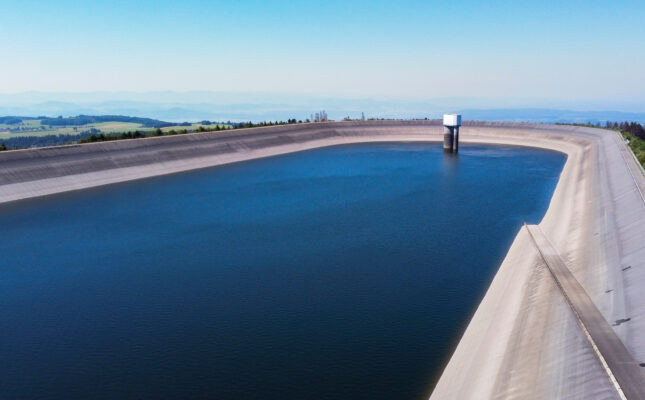
Use of Renewable Energy Sources to Power Irrigation Systems in Agriculture Is a Proven Step Toward Cost Reduction However, the sun does not shine when the soil most needs moisture, which creates the need for energy storage. A new study by Spanish researchers shows that classic batteries are not actually the best solution to this problem.
Three Scenarios Under the Researchers’ Microscope
Scientists from the Spanish CIRCE Technology Centre decided to resolve this dilemma. As part of the European HarvRESt project, they examined a real, operational irrigation system in one of Spain’s vineyards. The installation consisted of photovoltaic panels with a capacity of 112 kW and six water pumps.
The original system operated in the simplest model — PV electricity powered the pumps directly, and any surplus energy was fed into the grid. There was no storage — neither electrical nor hydraulic.
The researchers developed an advanced mathematical model that, over the course of a year, analyzed the vineyard’s hourly water demand, satellite data, weather forecasts, and fluctuating energy prices. Based on this, they compared three new scenarios:
- Scenario 1 — installation of a traditional battery storage system.
- Scenario 2 — construction of a water reservoir (hydraulic storage), into which water is pumped during peak sunlight hours and used later.
- Scenario 3 — a combination of both technologies (hybrid).
Independence vs. Costs: A Clash of Priorities
When the goal was maximum energy self‑sufficiency and disconnecting from the grid, the combination of batteries and a water reservoir proved unbeatable. This setup almost completely eliminated feeding surplus electricity into the grid and minimized external energy purchases.
But the situation changed dramatically when the researchers began calculating pure economics and operational costs. Here, the water reservoir alone emerged as the leader.
Storing energy in the form of water accumulated in a reservoir turned out to be far more cost‑effective than the chemistry locked inside lithium‑ion cells. Why? The reservoir does not generate energy losses that naturally occur during charging and discharging of traditional batteries. Moreover, the flexibility provided by stored water is entirely sufficient to separate electricity production hours from crop irrigation hours.
Gravity Cheaper Than Battery Chemistry
The economic advantage of hydraulic technology over electrochemical storage became clear after analyzing the investment payback period. The cost of building a water reservoir in the Spanish farm pays for itself on average after 8.2 years. Meanwhile, investment in a classic battery storage system proved completely unprofitable in this specific case — the additional savings generated by the batteries were too small to offset the high cost of purchasing the equipment.
Agricultural energy reform faces an interesting choice. Although battery technology is tempting with its modernity, it often loses when confronted with simple physics and gravity.
Leave a Reply