Hungary on the brink of a blackout as companies prepare to cut electricity consumption
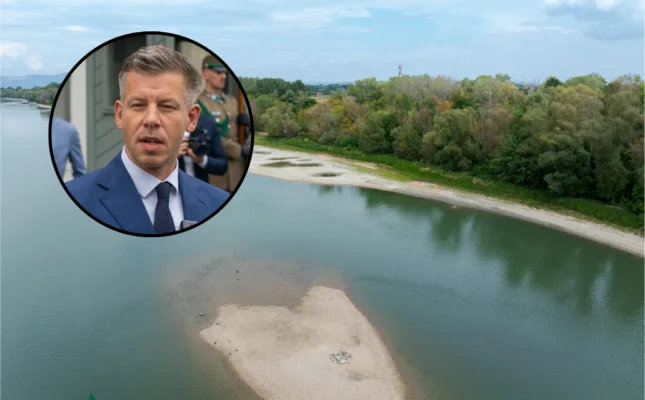
Hungary’s energy system has come under enormous pressure. The record-low water level of the Danube is threatening the operation of the Paks Nuclear Power Plant, which accounts for nearly half of the country’s electricity generation. Authorities warn that the reactors could be shut down completely as early as Monday and that restarting them could take many weeks.
The four reactors at the Paks Nuclear Power Plant, with a combined capacity of around 2,000 MW, are currently operating at less than 50% of their capacity. The reason is the rapidly falling level of the Danube, which supplies the water needed to cool the facility.
If the hydrological situation continues to deteriorate, the power plant may have to be disconnected from the grid entirely. This would mean the sudden loss of one of the Hungarian energy system’s most important sources of electricity. Péter Magyar acknowledged that the reactors would only be able to resume operation once the river level was again high enough to ensure safe cooling. During a visit to the MOL refinery in Százhalombatta, he said that no improvement should be expected in the coming weeks.
Heatwave drives up energy consumption
The problems at the Paks power plant have emerged at an exceptionally difficult time. Hungary is struggling with a heatwave that is significantly increasing energy demand, especially during the evening hours.
According to estimates, electricity consumption during peak periods could rise by as much as 20%. At the same time, the Dunamenti power station, the country’s largest gas-fired power plant, is offline because of a failure. As a result, the system has lost an additional 400 MW of available capacity.
Hungary may be able to make up part of the shortfall by importing electricity from neighbouring countries. The country’s cross-border transmission capacity ranges from 3,600 to 3,800 MW. However, if demand remains high, even imports on this scale may not be enough to stabilise the situation.
Government asks industry to reduce production
The authorities have asked the country’s largest energy consumers to prepare plans for voluntarily reducing their electricity and water consumption. The appeal is aimed primarily at car manufacturers, battery producers and other energy-intensive industrial plants.
The objective is to prevent uncontrolled power outages and avoid overloading the entire system. If voluntary savings prove insufficient, temporary restrictions on electricity consumption may be introduced for selected companies.
The first companies have already announced measures. MOL intends to reduce its energy consumption by 40%. Samsung SDI, meanwhile, is expected to cut its water consumption by half and use 10% less electricity during the most critical evening hours.
Starting on Monday, rail freight transport will be suspended during the most critical hours, between 5 p.m. and 10 p.m. Public administration employees will switch to remote work for the first three days of the week, wherever the nature of their duties allows it. Similar measures are expected from private companies and employers, which are being asked to enable remote work for their employees and reduce electricity consumption in offices as much as possible.
The government has also ordered decorative and unnecessary lighting to be switched off in all state institutions, while calling on local authorities to implement the most extensive energy-saving measures possible.
Danube falls to historic low
The scale of the problem is visible in Budapest, where the level of the Danube has fallen to just 23 centimetres. This is below the previous record set in 2018, when a level of 33 centimetres was recorded.
Forecasts do not indicate a rapid improvement. Temperatures exceeding 38 degrees Celsius and the absence of heavy rainfall could cause the river level to fall even further. The drought is affecting more than just Hungary. Similar problems have occurred in Romania, where limited access to water from the Danube has affected the operation of reactors at the Cernavodă Nuclear Power Plant.
Unless the weather changes, Central Europe could face a broader energy crisis. Thermal and nuclear power plants require enormous quantities of water for cooling, which means prolonged heatwaves and droughts may lead to further restrictions on electricity generation.
The Paks power plant and Paks II
The Paks Nuclear Power Plant, located on the Danube around 100 kilometres south of Budapest, is Hungary’s only nuclear power station and one of the most important components of the country’s energy system. It consists of four VVER-440 reactors with a combined capacity of around 1.9 GW, which generate a significant share of the electricity consumed in the country.
Because the existing units are ageing, the Paks II project is being developed to construct two new reactors. The investment is intended to strengthen Hungary’s energy security, although it has also prompted debate over costs, safety and the storage of radioactive waste.
Source: Reuters
Leave a Reply