Over PLN 60 billion for nuclear power. The government updates the nuclear program and outlines what will happen by 2040
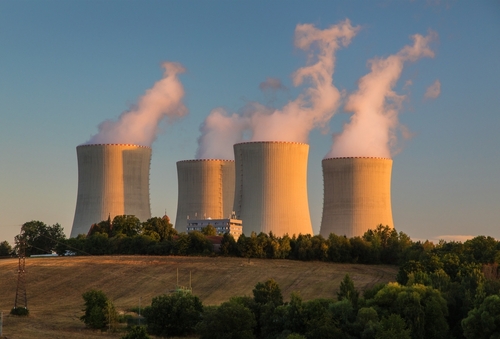
Poland’s nuclear program is entering a decisive phase. The first power plant already has secured financing, the procedure for obtaining a construction permit is underway, and preparations for the second investment are progressing in parallel. The updated Polish Nuclear Power Program shows that after years of planning, nuclear energy is becoming a real element of Poland’s future energy mix.
The new document prepared by the Ministry of Energy provides for the construction of two nuclear power plants with a combined capacity of up to 9 GW. This is comparable to several of the country’s largest conventional power stations and represents one of the most significant infrastructure projects currently underway in Poland.
The First Power Plant Moves Into the Implementation Phase
The greatest progress concerns the first nuclear power plant, being developed by Polish Nuclear Power Plants. The project includes three AP1000 reactors with a total capacity of around 3.75 GW.
In recent months, the investment has reached several key milestones. The European Commission has approved the model of public support for the project, and the investor has submitted an application to the National Atomic Energy Agency for a permit to construct the nuclear facility. Preparatory works are already underway at the site of the future plant.
The state has allocated more than PLN 60 billion for recapitalization of the project between 2025 and 2030. According to the schedule, the first unit is expected to begin commercial operation in 2036, with the plant reaching full capacity two years later.
This is a breakthrough moment for the entire program. For the first time, a government document describes not a planned investment, but a project already in the implementation phase.
The Second Power Plant Draws Closer
Parallel activities are underway for the construction of the second nuclear power plant. Bełchatów and Konin remain on the shortlist of potential locations — two regions long associated with electricity production.
A competitive dialogue is also ongoing regarding the selection of technology and a strategic partner. Companies and institutions from the United States, France, and Canada are participating in the process. The partner is expected to be selected in 2027.
Under current assumptions, construction of the second plant could begin around 2032, with the first unit entering operation around 2040.
Why Is Nuclear Power So Important Today?
The updated program was prepared in a completely different context than earlier versions. The energy crisis in Europe, the war in Ukraine, and rising electricity demand have made supply security one of the most critical economic challenges.
Poland is gradually moving away from coal-based energy while rapidly expanding renewable energy sources. The problem is that wind and solar generation depend on weather conditions. Nuclear power plants are intended to serve as a stable foundation of the system, providing energy regardless of weather or commodity market conditions.
For industry, this means greater price predictability; for the economy, greater resilience to future energy crises.
Thousands of Jobs and Opportunities for Polish Companies
The nuclear program is also expected to be one of the biggest development impulses for domestic industry.
According to government assumptions, Polish companies may account for around 40% of the value of the first reactor’s construction. In subsequent investments, this share could rise to as much as 70%.
The greatest opportunities lie ahead for companies in construction, steel production, electromechanical engineering, logistics, and engineering services. At the same time, the development of nuclear energy will require training thousands of new specialists — from engineers and operators to experts in automation, cybersecurity, and large‑scale project management.
It’s Not Just About Power Plants
The new version of the program shows that the nuclear initiative is now much broader than the construction of reactors alone. It also includes the development of transmission networks, nuclear oversight systems, domestic industrial capacity, education, and workforce training.
In practice, this means building an entire sector of the economy that is expected to operate for decades.
After years of debate over whether Poland should build nuclear power plants, discussions increasingly focus not on the direction itself but on the effectiveness of project implementation. The updated program shows that this stage is now beginning.
Leave a Reply