Polish capital is building an energy powerhouse. Koronea and Atlas Trafo launch a new factory in Turkey
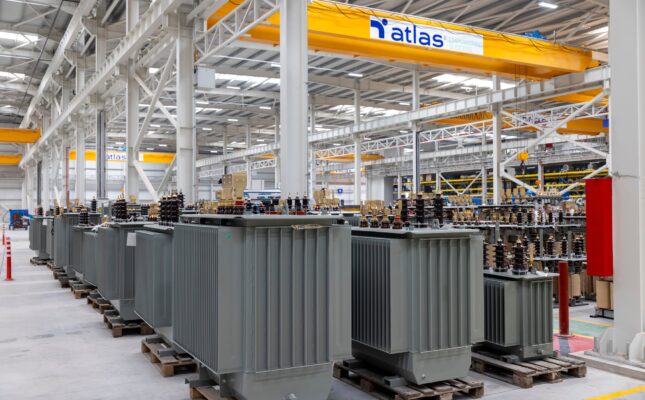
Polish capital is increasingly asserting its presence in foreign industrial markets. The latest example is an investment by the Koronea Group, owner of ZPUE, which has completed the construction of a new production facility in Turkey. The factory was established following the acquisition of the local transformer manufacturer Atlas Trafo and is already expected to play an important role in delivering energy projects across numerous global markets.
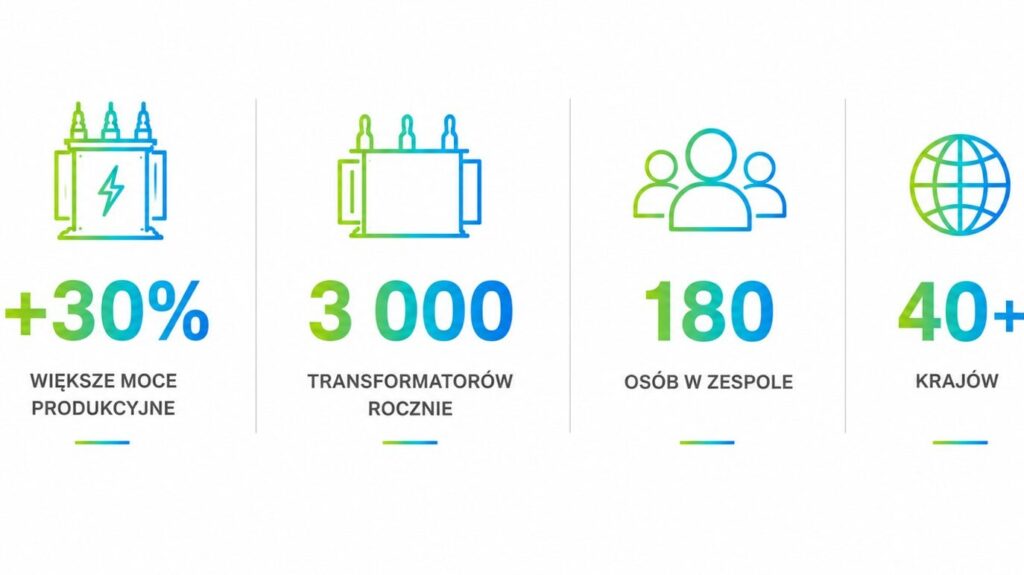
The launch of the new facility marks another stage in the development that began in March 2026, when the Koronea Group acquired a majority stake in Atlas Trafo. The Turkish company has specialized for years in the production of oil‑filled transformers used by power grid operators, industrial plants, manufacturers of transformer stations, and investors developing renewable energy sources. Its equipment is now delivered to customers in more than 40 countries on four continents.
We previously reported on the acquisition of Atlas Trafo on our portal: Koronea acquires 51% of shares in Atlas Trafo
Production will accelerate significantly
The new factory will increase monthly production capacity from around 300 to 400 MVA, which means an increase of roughly 30 percent. This level corresponds to the power demand of a medium‑sized city or several large wind and solar farms. The plant is expected to produce around 3,000 transformers per year — an average of more than eight units every day. As the facility expands, employment will also grow: approximately 180 people will work at the factory.
The company also intends to broaden its production capabilities in the segment of the largest units. Ultimately, the plant will be prepared to manufacture transformers with capacities reaching 20–25 MVA, used in the most demanding infrastructure investments.
Good to know
The transformer market is experiencing an unprecedented boom. According to the International Energy Agency (IEA), the lead time for acquiring large power transformers has increased from roughly two years to as much as four years, and for cables and other key components it now stands at 2–3 years. At the same time, the prices of transformers and cables have nearly doubled since 2021.
The offer includes three groups of equipment
Atlas Trafo manufactures three basic types of transformers. The first group consists of power transformers intended for the utility sector, industry, and transmission infrastructure. They are used to transmit large amounts of electricity over long distances.
The second category comprises distribution transformers responsible for reducing voltage to levels used by end consumers. These units are one of the fundamental components of every power grid.
The portfolio is complemented by special transformers built according to individual customer requirements. Such equipment is used, among others, in rail transport, heavy industry, and non‑standard energy installations.
A key advantage: in‑house technology
Atlas Trafo’s strength lies not only in the scale of its production. The company has its own design office and R&D department responsible for developing new solutions. Thanks to structural analyses and 3D modelling, it is possible to prepare equipment tailored to specific projects.
Equally important is the growing in‑house production of critical components. Manufacturing transformer tanks and other key parts internally reduces dependence on external suppliers and allows for better control over the quality of finished products.
The company also focuses on environmentally friendly solutions. It increasingly uses ester oils, which replace traditional mineral oils used for cooling and insulation in transformers. In selected projects, it also offers units that use fully biodegradable insulating liquids.
Turkey is becoming an important production hub
The location of the investment is no coincidence. Turkey has been strengthening its position for several years as one of the world’s most important transformer manufacturing centres. Its favourable geographic location enables efficient service for customers in Europe, the Middle East, and Africa, while its developed industrial base supports further scaling of operations.
For the Koronea Group, this means easier access to rapidly growing markets and the ability to shorten order fulfilment times.
Why are transformers so important today?
The transformer remains one of the most crucial components of modern energy infrastructure. Without it, a wind farm, photovoltaic power plant, energy storage facility, or modern transformer station cannot be put into operation.
In recent years, demand for such equipment has grown significantly, and manufacturers are struggling to keep up with orders. In many countries, delivery times have extended to several months or even over a year. This is why having one’s own production capacity has become a strategic advantage for companies operating in the energy sector.
An investment with the future in mind
The acquisition of Atlas Trafo is intended to give the Koronea Group greater independence from external suppliers and enable the execution of a larger number of contracts in international markets. The company expects that in the first stage of developing its Turkish operations, annual revenues will reach 40–45 million euros.
Within the next three to five years, the group aims to surpass the 100‑million‑euro revenue threshold. The expansion of the plant in Turkey is expected to be one of the foundations for achieving this goal and a response to the growing needs of the global energy transition.
The increasing number of investments in power grids and renewable energy sources means that transformer manufacturers are becoming some of the most important players in the market. For the Koronea Group, expanding production in Turkey not only increases the scale of operations but also strengthens its position in a strategic segment of the European energy industry.
Leave a Reply