Lithium–Sulfur Batteries Move Closer to Commercialization. Scientists Overcome Another Major Barrier
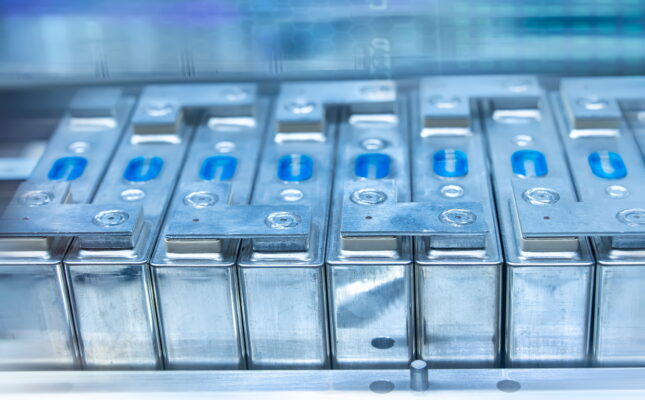
Researchers from Tohoku University and collaborating institutions have developed a new intermediate layer that may solve one of the biggest challenges facing lithium–sulfur (Li–S) batteries.Thanks to this innovative cell architecture, the batteries maintain high capacity even after more than 1,000 charge–discharge cycles, while offering significantly higher energy density than today’s lithium‑ion cells.
Lithium–sulfur batteries hold enormous potential
For years, Li–S batteries have been viewed as one of the most promising alternatives to lithium‑ion technology. Sulfur is inexpensive, abundant, environmentally friendly, and enables much higher theoretical energy storage.
However, the key obstacle has been the polysulfide shuttle effect. During operation, soluble lithium polysulfides form and migrate between the electrodes. This triggers unwanted chemical reactions, causing rapid capacity fade and shortening the battery’s lifespan.
Instead of blocking the reaction — controlling it
The research team moved away from the traditional strategy of creating a physical barrier to stop polysulfide migration. Instead, they designed a special intermediate layer that not only captures these chemical species but also allows them to continue participating in the electrochemical reactions inside the battery.
The new material is called TUS‑44@G. It consists of a covalent organic framework enriched with graphene, forming a lightweight, conductive layer between the cell components.
Its performance is driven by carefully engineered active sites containing nitrogen, oxygen, and sulfur atoms, which effectively bind lithium polysulfides. Graphene, in turn, ensures rapid electron transport, improving reaction efficiency during charging and discharging.
Impressive test results
Laboratory tests delivered highly encouraging outcomes. Cells equipped with the TUS‑44@G layer achieved a reversible capacity of 1455.7 mAh/g at a current density of 0.2 A/g. Even under extremely high load conditions of 10 A/g, the battery maintained a capacity of 773 mAh/g.
Durability was equally remarkable. Over 1,000 cycles, capacity degradation averaged only 0.034% per cycle, representing one of the best results ever reported for this technology.
The researchers also built a pouch‑cell prototype. The achieved energy density of approximately 674 Wh/kg demonstrates that the solution has not only laboratory relevance but also strong industrial potential.
Worth noting
For comparison, most modern lithium-ion batteries used in electric vehicles achieve around 250–300 Wh/kg at the cell level. Achieving approximately 674 Wh/kg in the prototype demonstrates the immense potential of Li-S technology.
Molecular chemistry opens new possibilities
The authors of the study emphasize that covalent organic frameworks offer a major advantage over traditional carbon‑based materials: their structure can be precisely engineered at the molecular level. This makes it possible to simultaneously trap polysulfides, improve electron transport, and accelerate sulfur conversion reactions occurring during battery operation.
The new intermediate layer was produced using a synthesis method based on Schiff‑base chemistry, resulting in a two‑dimensional, porous structure with a large active surface area. When applied together with graphene onto a polypropylene separator, it forms a thin coating that effectively absorbs electrolyte and limits polysulfide migration.
A chance for a new generation of energy‑storage systems
According to the researchers, the developed technology could accelerate the emergence of lightweight, efficient, and durable lithium–sulfur batteries. If the solution can be scaled to industrial production, such batteries may find applications in electric vehicles, aviation, stationary energy‑storage systems, and mobile electronics, where high energy density and long cycle life are essential.
The research findings were published in the scientific journal Small.
Leave a Reply