A New Benchmark Will Reveal the Revenue Potential of Energy Storage Systems in Poland
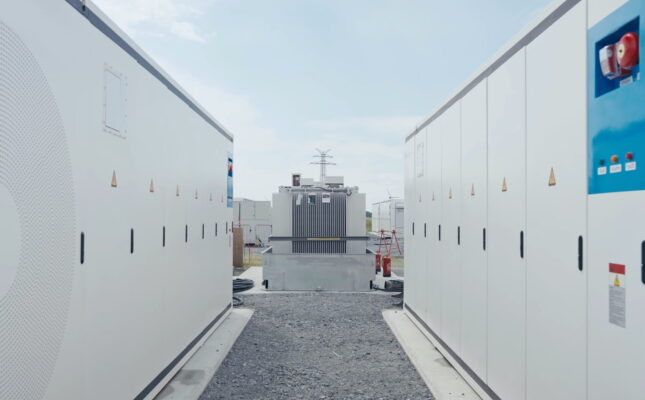
Poland’s energy‑storage market is expanding rapidlyAccording to grid‑connection application data, nearly 400 BESS projects are currently in the queue, representing a combined capacity of roughly 82 GW. At the same time, the number of commercially operating installations remains small — only a few dozen megawatts.
As more projects come online, tools that allow investors to compare operational performance will become increasingly important. Envalis aims to address this need with PolBESS, a benchmark that presents the historical revenue potential of reference energy‑storage systems operating on the Polish market.
A benchmark for the BESS sector
PolBESS is designed as a reference point for investors, asset owners, banks, funds, and aggregators. Its unified methodology makes it possible to determine how much of a storage system’s achieved revenue resulted from market conditions versus the effectiveness of operational optimization.
The benchmark is calculated at the end of each month using the proprietary Sentinel optimization engine and real market data. It includes gross revenue from day‑ahead arbitrage and the provision of FCR and aFRR system‑services.
The index is published for two configurations — 2‑hour and 4‑hour storage duration — assuming a reference system with 1 MW of power.
How to interpret the indicators
PolBESS presents results in three core formats:
- MGR — Monthly Gross Revenue of the reference storage system.
- TTM — Trailing Twelve Months, showing cumulative gross revenue over the last 12 completed months, reducing the impact of short‑term volatility.
- AGR — Annualised Gross Revenue, which scales the monthly result to an annual value assuming identical market conditions. This is not a forecast of future revenue.
Latest results
According to the most recent PolBESS reading, monthly gross revenue (MGR) reached:
- 158.3 thousand PLN/MW for a 2‑hour system,
- 193.3 thousand PLN/MW for a 4‑hour system.
The TTM indicator reached:
- 1,823.4 thousand PLN/MW for the 2‑hour configuration,
- 2,145.4 thousand PLN/MW for the 4‑hour configuration.
These values include revenue from energy arbitrage and system‑service provision.
Why only 2‑hour and 4‑hour systems?
According to Jacek Janiuk, CEO of Envalis, the choice is deliberate.
“We deliberately designed PolBESS exclusively for 2-hour and 4-hour configurations. While benchmarks for one-hour storage systems exist in some developed European markets, in Poland, it is the 2-hour and 4-hour installations that are shaping the direction of new investments. The NFOŚiGW program sets minimum requirements corresponding to 2-hour storage systems, whereas the capacity market effectively rewards units capable of discharging power for four hours”.
He adds that, with the growing number of energy storage facilities and the gradual saturation of the system services market, the ability to generate revenue from arbitrage and energy shifting will become increasingly important.
A reference point for investor
Envalis argues that the market is entering a phase where reporting revenue alone is no longer sufficient. What matters most is comparing actual results with the revenue potential offered by market conditions.
–Without a point of reference, it is difficult to determine whether the storage system’s performance was driven by market conditions, the quality of optimization, or the specific characteristics of a given month. “An energy storage system increasingly resembles an investment fund: a fund has a manager, whereas a storage system has an optimizer that decides when to charge and discharge, and on which markets to monetize flexibility, emphasizes Jacek Janiuk.
Benchmark, not a forecast
PolBESS is not a valuation tool for specific projects nor a projection of future revenue. It does not account for financing costs, taxes, OPEX, aggregator fees, battery degradation, or individual grid‑connection conditions.
Its purpose is to provide a uniform reference point for the market, enabling the performance of various BESS projects to be compared using a common methodology.
A benchmark protects against two common misinterpretations. A good result does not always signify above-average management, just as a weaker outcome does not necessarily indicate a poor strategy. Market conditions are often the decisive factor—sums up Jacek Janiuk.
Leave a Reply