400 GWh is not enough. Experts warn of a shortage of flexibility in the EU energy system.
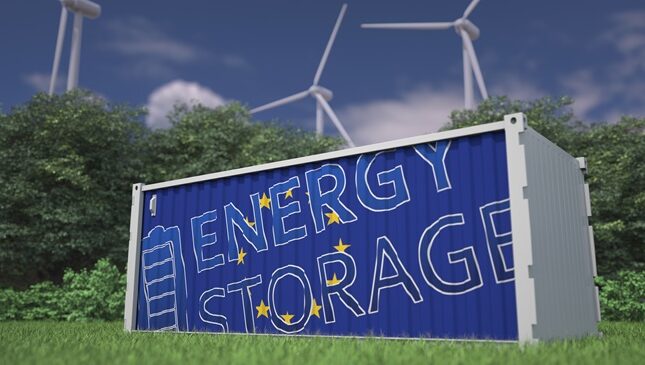
Europe Breaks New Records in Energy Storage Development, but Growth Still Falls Short of Energy Transition Needs – Warns SolarPower Europe in Its Latest Report Published at Intersolar Munich
45% Annual Growth – Still Not Enough!
According to the report titled “European Market Outlook for Battery Storage 2025-2029”, the total capacity of stationary energy storage in Europe currently exceeds 61 GWh. In 2024 alone, 21.9 GWh of new storage systems were installed—marking the eleventh consecutive year of record growth. However, the growth rate has slowed down. Last year, the market grew by “only” 15%, after nearly doubling year-on-year for three years.
Forecasts for 2025 predict installations of 29.7 GWh, representing a 36% increase. By 2029, Europe could reach a total capacity of 400 GWh (including 344 GWh in EU countries), corresponding to an impressive 45% compound annual growth rate (CAGR). Yet, this is still insufficient. As SolarPower Europe emphasizes, to fully support the energy transition, the EU-27 needs to reach as much as 780 GWh by the end of the decade.
“If Europe has already entered the solar energy era, the energy storage era is just beginning,” commented Walburga Hemetsberger, CEO of SolarPower Europe. “This is the moment for batteries to become a central element of a flexible, electrified energy system.”
Gigabytes in the Grid—and in Policy
Despite market growth, the report’s authors call for decisive political action. SolarPower Europe urges the European Commission to adopt an “Energy Storage Action Plan” as part of a broader flexibility package.
Key recommendations include:
- Harmonizing market rules across the EU and removing regulatory barriers,
- Simplifying grid connection procedures and ensuring fair cost allocation,
- Enabling energy storage full access to energy markets and balancing markets,
- Developing smart metering systems and real-time data exchange standards.
Experts point out that the recent power outage on the Iberian Peninsula serves as a warning about how fragile current energy systems are without proper reserves and flexibility.
Large-Scale Storage Takes the Lead
Until now, the market has been driven mainly by residential installations, but 2025 will bring change. The large-scale energy storage segment is expected to become the market leader for the first time. Home batteries will account for only 33% of the market, while the commercial and industrial sector is showing slow but steady growth.
The decline in interest in home storage results from decreasing energy pressure and the withdrawal of some support programs. Meanwhile, energy companies and industry are beginning to recognize the potential of batteries as a tool for energy security and cost optimization.
Uneven Europe
In 2024, as much as 78% of new capacity was concentrated in five countries. Germany remains the leader despite a drop in the residential segment and delays in large projects. Italy has gained importance due to the dynamic growth of large installations. The UK experienced a temporary pause due to project delays, while Austria and Sweden surpassed the 1 GWh barrier for the first time thanks to growth in the commercial & industrial segment.
“The success of solar energy in Europe laid the foundation—it’s now time for batteries,” emphasizes Markus Elsaesser, director of Solar Promotion GmbH. “The need for energy flexibility has never been more obvious. Europe has the chance to build a resilient renewable-based system faster than many think. We just need to seize the momentum.”
Source: solarpowereurope.org
Leave a Reply