Will nuclear fusion revolutionize the world?

Scientists have long seen potential in nuclear fusion for clean energy. Recent breakthroughs show progress in controlling fusion reactions, bringing us closer to harnessing its power for practical energy production. Fusion releases huge energy and is clean, using water and hydrogen as fuel. Although challenges remain, this development holds promise for a greener energy future.
What is nuclear fusion?
Nuclear fusion, a process we encounter every day, is quite remarkable. In simple terms, it entails breaking apart lightweight atoms to create heavier ones. The outcome of this reaction is the release of an enormous amount of energy. Interestingly, this is the very process responsible for generating the heat and light emitted by the sun and stars in the sky. Scientists have been exploring ways to replicate and control nuclear fusion for energy production here on Earth, which could potentially provide us with a nearly limitless and clean energy source.
Can we use the power of the stars on earth?
Scientists are exploring an alternative approach to trigger nuclear fusion. They’re investigating whether fusion reactions can occur spontaneously, which is the focus of ongoing research spanning several decades. This method of triggering fusion is intricate and demands rigorous engineering efforts.
In-depth insights into this reaction, its advantages, and the obstacles of achieving nuclear fusion under Earth’s conditions are elaborated in the article “Nuclear Fusion: The Energy Source of the Future” It’s recommended to explore this article first to gain a more comprehensive understanding of the topic. Recent scientific accomplishments suggest that what was once speculative is now becoming a plausible reality, thanks to the remarkable progress achieved by researchers.
“Fusion has excited scientists since they first discovered what makes the sun shine. Today’s results really put us on the road to commercializing this technology.”
Dr. Melanie Windridge, CEO of Fusion Energy Insights
What exactly have scientists proven?
As early as 2021, there were signs that making energy from nuclear fusion could become profitable. Researchers at the National Ignition Facility (NIF), part of California’s Lawrence Livermore National Laboratory, hinted at the potential for using nuclear fusion to generate energy. Today, this optimism has spread worldwide due to recent advancements that validate earlier hypotheses.
Scientists from the Lawrence Livermore National Laboratory have revealed the success of their fusion experiment. In an unprecedented feat, they’ve extracted more energy from the fusion reaction than they initially put into it. This milestone is referred to as “ignition,” where energy gain or a positive energy balance is achieved for the first time in history.
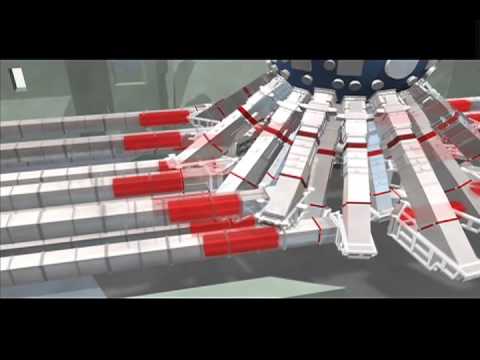
“During the experiment, 192 high-energy lasers focused on a peppercorn-sized target, heating a deuterium-tritium capsule to over 3 million degrees Celsius, temporarily simulating conditions inside a star, achieving ignition.”
Dr. Jill Hruby, Undersecretary of Energy for Nuclear Energy
Na nagraniu udostępnionym przez NIF możemy zobaczyć jak przebiegał eksperyment:
Was a lot of energy produced?
In the experiment, the research team used 2.05 megajoules (MJ) of energy from lasers to heat the fuel. As a result, they released 3.15 MJ of energy. This leads to a difference of 1.1 MJ, which is approximately equivalent to 0.3 kilowatt-hours (kWh). To provide context, boiling a full kettle of water requires around 0.2 kWh of energy. This result indicates that more than 50% additional energy was produced compared to what was initially needed to start the process. Thank you for clarifying the information.
Is it really a breakthrough?
Physicists worldwide widely consider this event as a significant breakthrough in scientific research.
Today’s success builds on the work done by many scientists in the US, UK and around the world. The achieved ignition not only releases fusion energy, but also opens the door to new science.
prof. Gianluca Gregori, Professor of Physics at the University of Oxford
Even though the experiment didn’t produce a large amount of energy, this event has ignited excitement within the global scientific community. This is due to the fact that:
- A positive energy balance was obtained
- Igniting the hope that self-sustaining fusion reactions may now be within reach.
- This achievement marks a significant milestone after years of dedicated effort.
As we highlighted earlier in the article, fusion research is a lengthy endeavor. However, it’s only now, for the very first time, that scientists have achieved ignition, a boost in energy. This accomplishment is hailed as a success, particularly given our elevated expectations for the potential of nuclear fusion.
A step into the abundant clean energy of the future
At present, significant transformations are unfolding worldwide in the realm of electricity generation. Our focus is on secure energy options, as we transition from fossil fuels to renewable sources. Moreover, we anticipate that this successful experiment will serve as a stepping stone towards achieving plentiful, nearly boundless, and environmentally friendly energy in the times to come.
We have taken the first tentative steps towards a clean energy source that could revolutionize the world.
Dr. Jill Hruby, Undersecretary of Energy for Nuclear Energy
When will nuclear fusion provide energy for homes?
Regrettably, the realization of this goal is not imminent. Dr. Kim Budil, the director of the center overseeing the study, emphasizes that despite this initial advancement, the path ahead toward integrating nuclear fusion into power plants could span several decades.
Numerous challenges lie ahead for scientists. The key ones that must be conquered prior to reaching the commercialization stage encompass:
- scaling up energy production to a much larger extent,
- lowering energy production costs,
- efficiently transmitting generated energy through the power grid.
Anyone who deals with nuclear fusion will quickly notice that there is still a long way to go from demonstrating energy gain to achieving efficiency .
prof. Jeremy Chittenden, Professor of Plasma Physics at Imperial College London
Currently, the energy surplus generated is still relatively modest, while substantial amounts are required. Additionally, these reactions must become more frequent to be practical. Ultimately, nuclear fusion needs to achieve greater cost-effectiveness in comparison to other established technologies before it can progress to the commercialization phase.
The experiments at NIF show the ignition process scientifically and how it leads to high energy gains from fusion, but in order to turn this into a power plant we need to develop simpler methods of achieving these conditions, which will have to be more efficient and, above all, cheaper to make inertial fusion could be realized as a source of fusion energy.
prof. Jeremy Chittenden, Professor of Plasma Physics at Imperial College London
Sources:
What is nuclear fusion and what have scientists achieved? theguardian.com
US scientists confirm “major breakthrough” in nuclear fusion, theguardian.com
Breakthrough in nuclear fusion energy announced, bbc.com
They squeezed more energy out of the atom. The USA announced a great breakthrough in the energy sector, banker.pl
Leave a Reply