Spain Has Pulled Ahead of Europe: How Wholesale Electricity Prices Were Reduced
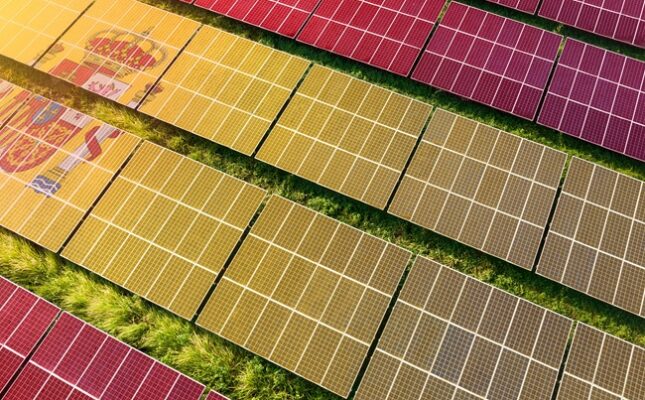
Spain Becomes One of Europe’s Cheapest Electricity Markets After a Deep Energy Transformation
Just a decade ago, Spain was seen as a cautionary tale in Europe’s energy transition: high electricity prices, a burst investment bubble in solar PV, and heavy dependence on natural gas. Today, the situation looks entirely different.
In the first four months of 2026, Spain’s average wholesale electricity price stood at just €44 per megawatt-hour. By comparison, prices reached €96/MWh in Germany, €103/MWh in the United Kingdom, and as much as €127/MWh in Italy.
Spain has become one of the cheapest electricity markets in Europe. This is not the result of a temporary crisis or a one-off government intervention, but of a deep structural transformation of its entire power system.
Renewables Push Out Fossil Fuels
Twenty-five years ago, around one-third of Spain’s electricity came from coal. Later, natural gas replaced coal and for a time accounted for more than 30% of generation. Today, both fossil fuels are losing relevance.
Wind power now accounts for roughly 20% of electricity generation, while solar PV contributes around 22%. Together, wind and solar generate more electricity than any other single technology in Spain’s system, including nuclear power.
The turning point came in 2022, when wind and solar generation together exceeded total fossil fuel-based electricity production for the first time. By the first quarter of 2026, wind and solar already accounted for 44% of electricity generation, while fossil fuels had fallen to just 17%.
Gas No Longer Sets Prices as Often
In European power markets, wholesale electricity prices are typically set by the most expensive plant needed to meet demand—usually a gas-fired power plant. This is why the gas crisis of 2022 led to a surge in electricity prices across Europe. Spain, however, has gradually moved away from this mechanism.
In 2022, gas plants set electricity prices more than half of the time. By early 2026, this had dropped to around 9% of hours. The less frequently gas is needed for system balancing, the weaker its influence on electricity prices—and this is now clearly visible in Spain.
Low Wholesale Prices Do Not Mean Low Bills
However, low wholesale prices do not automatically translate into lower household electricity bills.
Despite record-low wholesale market prices, Spanish households still pay above the EU average for electricity. The reason is simple: wholesale energy prices are only one component of the final bill. Network costs, system charges, taxes, and infrastructure modernization expenses are added on top.
These costs are increasing alongside renewable energy expansion. System balancing, voltage stability, and grid reinforcement are becoming more important and more expensive as renewable penetration grows.
The Blackout Changed the Debate on Renewables
System stability became a particularly sensitive topic after the major blackout in April 2025, which paralyzed much of the Iberian Peninsula.
Initially, some commentators blamed renewable energy. However, the final report by European grid operators pointed to different causes: issues with voltage control and the system’s response to sudden grid oscillations.
Experts emphasized that similar challenges could emerge in other countries as renewable penetration continues to rise.
Nuclear Power Remains Important
Although Spain is now a flagship example of renewable energy success, around 20% of its electricity still comes from nuclear power. The issue is that current policy plans call for a gradual phase-out between 2027 and 2035.
If nuclear capacity is replaced mainly by gas, the current low-price model could begin to reverse.
Spain Shows a New Direction
Spain has become Europe’s most important example of how large-scale wind and solar deployment can reduce wholesale electricity prices.
A country that once relied on coal for one-third of its electricity is now among the cheapest electricity markets in Europe. At the same time, it highlights that the next phase of the energy transition will be less about generation itself and more about the stability and resilience of the entire power system.
Leave a Reply