China is reshaping the global energy landscape. Beijing has unveiled a massive plan through 2030.
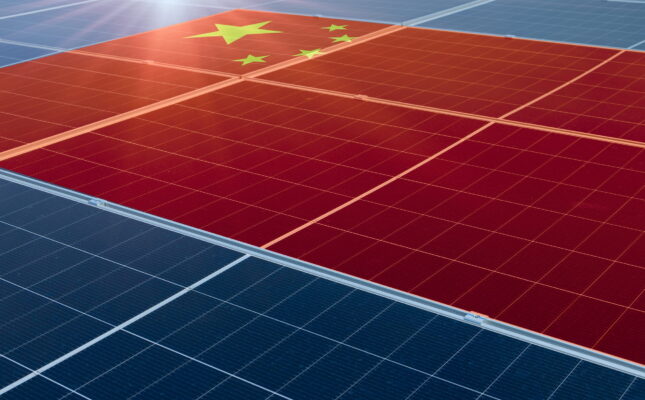
China enters a key phase of its climate strategy. China is entering a crucial stage in the implementation of its climate strategy. Beijing’s new five‑year plan envisions further expansion of nuclear energy, wind power and solar power, a gradual reduction of dependence on fossil fuels, and the modernization of the most emission‑intensive industrial sectors. At the same time, authorities must ensure sufficient energy supplies for the rapidly developing economy and the increasingly power‑hungry artificial‑intelligence sector.
Chinese authorities confirm that they are not abandoning their ambitious climate goals. The State Council, China’s cabinet, has presented a new five‑year action plan designed to enable the country to reach its carbon‑emissions peak by 2030. This is one of the most important milestones on the path toward the much more distant objective of achieving carbon neutrality by 2060.
These commitments were first announced by President Xi Jinping in September 2020. The current plan, however, shows how Beijing intends to move from political declarations to concrete actions in energy, industry, transport, and digital infrastructure.
Emissions are to grow more slowly, and green energy more quickly
One of the main pillars of the strategy is to reduce carbon‑dioxide emissions per unit of GDP by 17% by 2030 compared with the 2025 level. At the same time, the share of non‑fossil energy sources in total energy consumption is expected to rise to 25%.
Achieving these goals will require a gradual reduction in dependence on coal, oil, and gas, which still account for the majority of China’s energy mix. Authorities announce, among other measures, replacing part of coal use with cleaner energy sources and optimizing the structure of oil and gas consumption.
According to the government plan, China’s consumption of coal and crude oil is expected to reach its peak between 2026 and 2030. This does not mean an immediate departure from fossil fuels, but rather the beginning of a gradual process of reducing their role in the national economy.
Artificial intelligence becomes a new energy challenge
Computing infrastructure occupies a special place in the strategy. The development of artificial intelligence, data centers, and advanced digital systems is driving a rapid increase in electricity demand.
For Beijing, this is a dual challenge. On one hand, China wants to narrow the technological gap with the United States and develop its own AI sector. On the other hand, massive computing centers could hinder the achievement of climate goals if they are powered mainly by energy produced from fossil fuels.
Therefore, new data centers and computing facilities are increasingly expected to rely on non‑fossil energy sources. The green transition thus becomes not only a component of climate policy but also a part of China’s technological strategy and energy‑security framework.
Worth knowing 💡
In 2026, a 24 MW underwater data center was launched off the coast of Shanghai, powered by more than 95% green energy. Placing the infrastructure 10 meters below the surface of the sea allows the use of seawater for server cooling, reducing energy consumption by 22.8%.
Massive expansion of wind, solar, and nuclear energy
China intends to continue building enormous clean‑energy complexes. In the northwest of the country, large‑scale wind and solar farms are set to expand. In the southwest, integrated systems combining hydropower with wind and photovoltaic plants are planned.
At the same time, additional nuclear power plants and offshore wind farms are expected to be built along the coast.
By 2030, the total installed capacity of wind and solar energy is expected to exceed 2.8 billion kilowatts, or 2.8 terawatts. Hydropower capacity is projected to reach 410 million kilowatts, and operating nuclear power plants — 110 million kilowatts.
The scale of these investments shows that Beijing views the development of low‑emission energy sources not only as a way to reduce emissions. It is also a tool for strengthening the country’s energy security and meeting the rapidly growing demand for electricity.
Heavy industry faces deep modernization
The transformation will not be limited to the energy sector. The government plan also envisions major changes in traditional, high‑emission industries such as steel production, electrolytic aluminum, and the chemical industry.
Authorities also aim to improve connections between regional power grids and increase the ability to transmit electricity between provinces. This is particularly important because the largest solar and wind resources are often located far from major industrial centers and the biggest cities.
The plan also includes the development of net‑zero factories, low‑emission public institutions, and more environmentally friendly modes of transport.
Beijing announces greater oversight and accountability for officials
Implementation of the strategy is to be supported by more advanced emissions‑accounting systems, financial instruments, and new pricing mechanisms. Beijing also intends to more closely monitor the progress of individual regions in reducing emissions.
Local officials who are too slow in meeting decarbonization targets may be held accountable. This shows that climate policy is becoming increasingly tied to the administrative performance‑evaluation system at the local level.
China’s National Development and Reform Commission assesses that the country has a solid foundation for reaching its emissions peak on schedule. Among the achievements cited so far are the rapid electrification of road transport and a significant decline in the carbon intensity of the economy.
However, authorities acknowledge that the transformation will be exceptionally difficult. China must simultaneously reduce emissions, modernize industry, ensure secure energy supplies, and respond to the rapidly growing needs of the new‑technology sector.
Reconciling these seemingly conflicting goals will be one of the most important tests for the Chinese economy in the second half of the decade. Beijing’s success or failure will have implications far beyond the country’s borders — due to the scale of China’s emissions, industry, and energy investments, it may significantly influence the global fight against climate change.
Leave a Reply