Paweł Średniawa: We are starting a new chapter in the development history of the ONDE Group
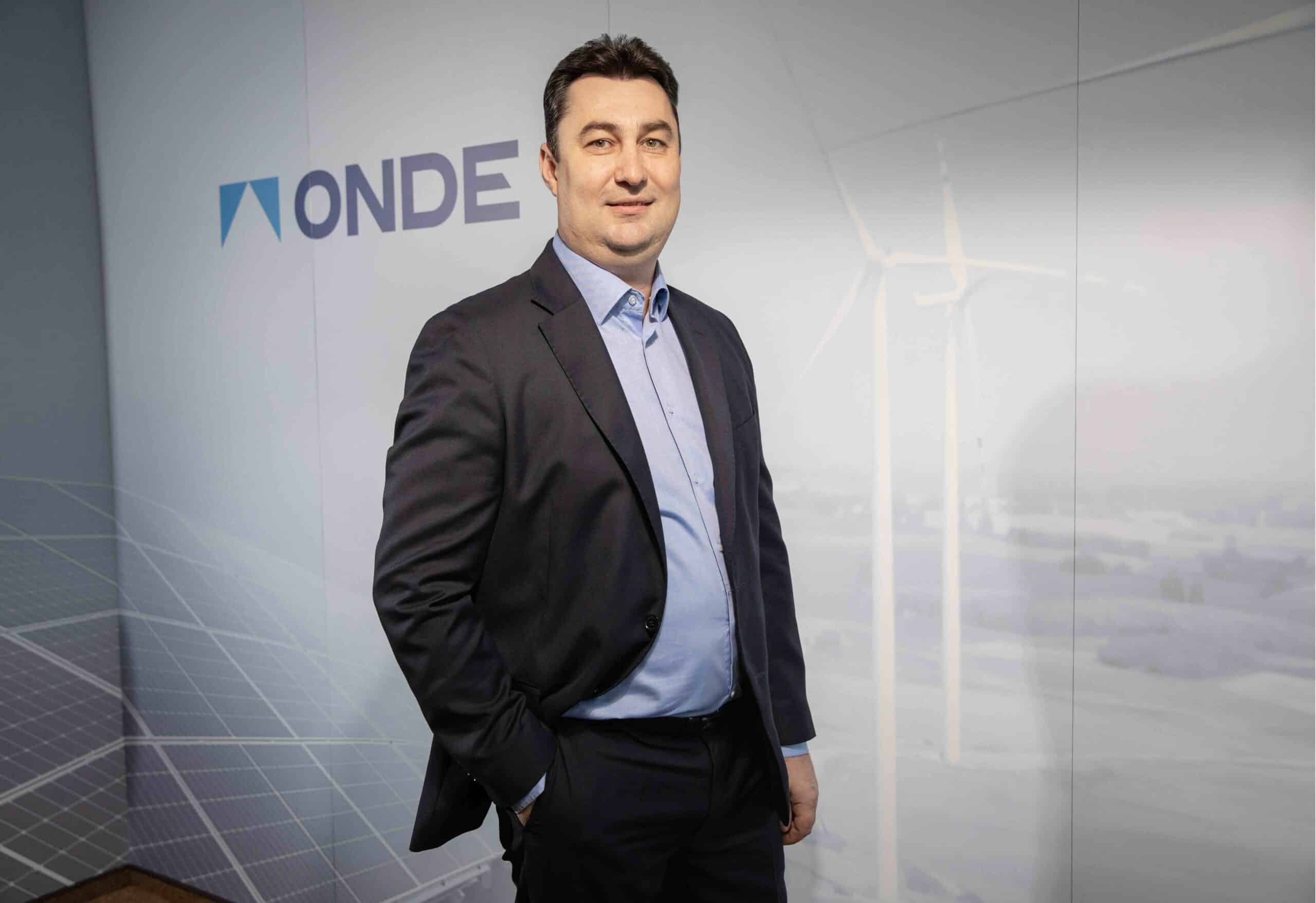
Today, we have the pleasure of conversing with Paweł Średniawa, the President of ONDE SA.
In the final quarter of 2022, ONDE SA inked several substantial contracts for wind farm construction. Could you highlight some of these projects that particularly stand out within the ONDE portfolio?
Absolutely, the final quarter of the previous year brought us great satisfaction with contract signings, amounting to over PLN 373 million. This propelled us into the new year with a substantial portfolio of around PLN 900 million and promising prospects for further contracting activities.
While each contract holds significance for us, a notable standout is undoubtedly our first foreign contract, inked last autumn. This marked a significant milestone after extensive preparations, opening the door to a captivating market. To emphasize the significance, by February this year, we had already sealed another contract in Lithuania, outlining the construction of an 80-megawatt wind farm. This milestone signifies the inception of a new chapter in ONDE Group’s evolution.
After a prolonged process spanning over half a year, we have at last witnessed the liberalization of the 10H rule. In your opinion, how will the newly introduced 700-meter rule impact the wind industry in Poland?
For the past seven years, we’ve eagerly awaited a departure from the detrimental path that has been hindering the Polish energy sector and restricting onshore wind development. The approved compromise amendment, although not a miraculous solution as I anticipated, is received with a sense of cautious contentment. It unquestionably signifies a step in the right direction. While I remain grounded as a realist, I must admit that the change brings moderate satisfaction.
Nonetheless, our expectations reach beyond this point. Alongside the reduction of the building distance, the progress of wind energy necessitates substantial investments in transmission networks, a potential bottleneck. It’s worth highlighting that this enacted amendment could usher in an additional 3-4 GW of fresh capacity within the wind sector. Importantly, these projects are underpinned by more advanced and thus more efficient technologies. Contrary to the earlier designs that centered on 2-3 megawatt turbines, these advancements promise a brighter future.
I am very pleased and proud that such prestigious and demanding partners as Qair have been cooperating with us regularly for many years and come back with new projects. Our joint photovoltaic and wind installations have already exceeded 200 MW.
ONDE initially embarked on its journey in the renewable energy sector through wind energy endeavors. However, the landscape has evolved, and photovoltaic projects have become our primary revenue stream. Notably, we recently achieved a significant milestone by sealing the largest contract in our history for the construction of a photovoltaic farm. Could you provide more insights into this noteworthy collaboration with Qair?
It’s a source of immense pleasure and pride to have esteemed and exacting partners like Qair consistently collaborating with us over the years, returning with new projects. Our joint endeavors in photovoltaic and wind installations have already surpassed a remarkable 200 MW. This stands as the strongest endorsement within the market for ONDE, underlining the substantial value we’ve collectively nurtured over time. I’m always keen to extend gratitude to everyone who has contributed to shaping our brand, and I’m grateful once again.
Shifting our focus to the contract we’ve inked with Qair, our responsibilities encompass comprehensive construction tasks, excluding module delivery, across farms with a combined potential of 122 MW. An intriguing aspect lies in the installation of modules on the Tracker system, a move that enhances energy production efficiency. This endeavor holds a special place for us, encapsulating the spirit of innovation and collaboration that defines ONDE.
All the time we intend to act effectively enough to maintain the leading position in the implementation of renewable energy sources in Poland. We believe in this market and we are convinced that it will develop intensively (?).
Indeed, as a part of the ERBUD Group, ONDE holds a prominent position as a contracting leader. However, a new paradigm, the “build, sell, and manage” model, is gaining traction in discussions. With this in mind, could you elaborate on your intentions for the Cyranka photovoltaic farm located near Giżycko?
Gradually, we’re expanding our focus on the development aspect, and the 18-megawatt Cyranka photovoltaic farm stands as our inaugural venture. It’s been operational since the winter, allowing us to accumulate valuable insights and expertise encompassing the entire process – from project acquisition to successful execution. Cyranka holds immense potential; it can either serve as an excellent product for sale or become a prized asset within our company’s portfolio. We’re actively exploring both avenues and are deeply engaged in discussions with prospective clients. We’re optimistic about unveiling our decision in the near future.
Our portfolio boasts not only Cyranka but also projects amounting to a capacity exceeding 750 MW. Our intention is to commence the construction of nearly 100 MW later this year. Naturally, the ultimate decision hinges upon various factors, encompassing the financing model and the broader market and macroeconomic conditions. The process is intricate, but we’re guided by a prudent approach. Importantly, time is on our side, as the value of projects, given their limited availability, continues to appreciate. Thus, we’re poised to make informed decisions rather than rushing into action.
We have already started writing the foreign chapter of ONDE’s history and I assume it will be long and interesting. Lithuania, where we are currently implementing two wind contracts, is a market that plans to increase its wind capacity from the current 2.5 GW to 9 GW by 2030. We are also interested in the other Baltic markets, Romania and, of course, Germany, where investment expenditures on renewable energy sources of EUR 200 billion are planned.
In what other new directions do you plan to develop the company’s operations?
Our unwavering aim is to act with utmost efficiency, ensuring we maintain our leading position in renewable energy implementation within Poland. We possess unshakable faith in this market and firmly believe in its robust growth potential. This conviction is substantiated by PEP2040 projections, foreseeing an escalation of RES in our energy mix to nearly 50% within the next 15 years. This vision affirms the compelling journey ahead.
The overseas chapter of ONDE’s narrative has already commenced, and I foresee it unfolding as a lengthy and intriguing tale. Our current endeavors in Lithuania, where we’re executing two wind contracts, are a testament to this international expansion. Lithuania aspires to elevate its wind capacity from the current 2.5 GW to an impressive 9 GW by 2030. Our interests also extend to the other Baltic markets, Romania, and notably, Germany, which is gearing up for EUR 200 billion investments in renewable energy sources.
Harnessing our expertise, we’re organically nurturing RES segments targeting industry and maintenance services. Let’s not overlook our origins in road infrastructure, which continues to comprise a steady 20% of our portfolio. Recognizing the pivotal role of offshore ventures in Poland’s energy landscape, we’re poised to leverage our unique domestic competencies in power engineering and comprehensive construction works, positioning us optimally for onshore components of offshore projects.
Our commitment to diversification across segments and markets remains steadfast, evident through our unwavering dedication to this evolving model.
Do you expect an increase in the importance of collocation in RES projects in the future? I mean photovoltaics plus wind or photovoltaics plus wind plus batteries.
We, along with the entire industry, are strong proponents of this approach. Collocation and cable pooling stand out as the most cost-effective ways to elevate the proportion of renewable energy sources (RES) in the energy mix. This approach concurrently enhances the flexibility of the power system, all without necessitating alterations to connection requirements. Moreover, these solutions hold the potential to augment the average availability of RES by diversifying the primary energy sources within a single connection and boosting short- and medium-term storage capacity.
Cable pooling, in particular, presents a ready-made solution that significantly heightens installation efficiency and energy production. Importantly, it circumvents the need for protracted legislative processes. However, it’s imperative to acknowledge that investments and the expansion of transmission networks remain essential components of the equation.
Do you think it’s a good idea to explore long-term energy storage to make the most of renewable energy sources? And if so, which of these storage technologies do you see as the most promising?
It’s important to consider all economically viable ideas, especially given the rising costs associated with using energy from fossil fuels. Prioritizing long-term energy storage becomes crucial once we’ve harnessed the full potential of combining energy sources and storage setups, along with efficient cable sharing. If we can economically justify storing excess energy generated during certain seasons, technologies like power to gas (P2G) and gas to power (G2P) cycles could gain traction naturally, without requiring centralized intervention. Regulatory efforts should concentrate on removing obstacles to investment, while energy companies should focus on expanding distribution infrastructure.
Are there any other groundbreaking initiatives within the renewable energy sector that you believe deserve special recognition?
Significant transformations are occurring not only within renewable energy sources themselves but also in their broader context. One pivotal shift involves the digitization of the energy sector, aimed at enhancing the manageability and predictability of these sources. The evolving landscape of dispersed energy necessitates a shift in how we approach the control of generation units. Through the application of autonomous and semi-autonomous control mechanisms driven by extensive data processing (often referred to as big data) and intelligent measurement, a harmonious collaboration can be achieved among the growing number of renewable energy sources, despite their limited predictability and availability within the power grid. Leveraging digital and IT techniques for managing distributed energy has the potential to facilitate more efficient market dynamics and reduced maintenance costs for available capacities, often known as “reserves.”
This gave us the conviction that it is worth continuing this project and increasing the emphasis on the research area. SOFIA is also an excellent example of cooperation, because, apart from representatives of academic circles, also ? as a Strategic Patron? our long-term business partner, ZPUE. This makes us very happy, because, as we know from last year’s winners, the greatest value of the program for them is the opportunity to conduct research projects under the supervision of experts.
How does ONDE approach research and what is SOFIA?
SOFIA, which stands for Science Onde Flow Innovation Academy, is a grant program dedicated to discovering and supporting innovative research and development initiatives led by young Polish scientists. This endeavor aligns seamlessly with the core values and philosophy of ONDE, and it produces tangible and measurable outcomes. The inaugural edition’s finalists undertook diverse projects, including studying a self-balancing power grid model for Warsaw, creating an app that regulates household appliances based on renewable energy forecasts, and exploring the potential of biological light usage, among other winning ideas. These successes have reinforced our commitment to continuing and amplifying our focus on research.
SOFIA also exemplifies remarkable collaboration, as it involves not only academic representatives but also our long-standing business partner, ZPUE, as a Strategic Patron. This cooperative effort brings us immense satisfaction. Last year’s winners highlighted that the most valuable aspect of the program for them was the chance to conduct research projects under expert guidance.
As we kick off the second edition, we’re excited to recruit talent across five thematic areas, encompassing new solutions for Operations and Maintenance (O&M), control systems for renewable energy sources (RES), power evacuation systems in hybrid setups, and the entire life cycle of RES. Given the positive outcomes of the previous edition, I’m confident that this round will yield more impressive results. It’s worth noting that recruitment continues until mid-May, with grants available for up to PLN 20,000. I encourage all researchers passionate about renewable energy sources to apply and eagerly await the forthcoming outcomes.
ONDE stands as the premier general contractor for wind farms and photovoltaic farms in Poland, commanding an impressive 80% share of such implementations in revenue.
To date, the company has successfully executed over 400 renewable energy investments, boasting a cumulative capacity that surpasses 4 GW.
Notably, ONDE holds the distinction of being the first enterprise in Poland’s renewable energy sector to attain the EMAS certificate. This prestigious accolade represents the highest EU recognition in the realm of ecology and stands as a hallmark of the most credible environmental management standards within the European Union.
Expanding its horizons beyond Poland, the company has been actively engaging in contracts abroad since 2021.
A vital component of the ERBUD Capital Group, ONDE draws on the Group’s extensive expertise garnered over three decades in the Polish market and Western European nations.
Leave a Reply