What’s happening with Poland’s first nuclear power plant? The CEO explains.
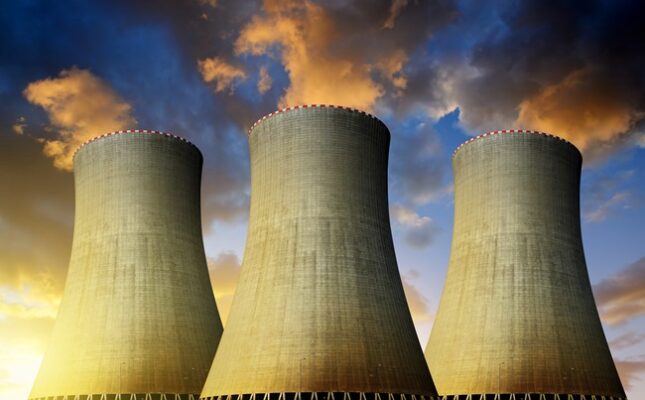
The construction schedule for Poland’s first nuclear power plant in Pomerania is “ambitious but achievable,” assures Marek Woszczyk, CEO of Polskie Elektrownie Jądrowe (PEJ). The plan foresees commissioning the first unit in 2036 and the entire three‑unit plant by 2038. This is the most concrete declaration in months from the investor and future operator, helping to align market expectations with the project’s key milestones. Sources consistently emphasize: it is a fast plan, but grounded in the realities of procedures and approvals that cannot be bypassed in nuclear investments.
Construction permit application by 2026
PEJ states that in 2026 it will submit an application for a construction permit to the National Atomic Energy Agency (PAA). Obtaining the decision within the planned window would open the way to “first nuclear concrete” for Unit 1 in 2028—a symbolic and technical moment marking the transition from preparation to actual construction. Before that, however, the investor must complete a package of administrative decisions, finalize the design and address any additional requirements indicated by the nuclear regulator.
The next stage is completing construction of the first unit in 2035, followed by commissioning and entry into commercial operation about a year later. In 2038—if everything proceeds according to plan—all three units are expected to operate at their intended capacity. In practice, this means sequential deployment of units, system calibration and integrity testing to ultimately achieve stable, predictable power generation.
Supporting infrastructure: a coordination challenge
As the PEJ CEO notes, the schedule has several layers of detail, and one of the most critical is coordinating supporting infrastructure—road, rail, maritime and grid investments—which are not directly under the company’s control. This requires synchronizing the work of many entities and decisions issued by various institutions. It is typical of complex infrastructure projects, but also an area where even seemingly minor delays can shift the entire project timeline.
At the end of August, PEJ obtained a permit for the first stage of preparatory works. The company recalls that a geotechnical survey campaign has already been completed and another is being prepared. This stage—less visible than large‑scale construction—determines future safety and logistics on the construction site: access roads, layout of facilities, organization of storage areas and site power supply.
EDA today, EPC tomorrow – the critical decision axis
Today, cooperation with the Westinghouse–Bechtel consortium is conducted under the EDA (Engineering Development Agreement)—a “bridging” contract that enables design work and documentation preparation for decisions and licensing. Ultimately, an EPC (Engineering, Procurement, Construction) contract—the main execution contract—is to be signed. The condition, however, is a positive decision from the European Commission regarding state aid, which the government and PEJ expect in 2025. Only then will it be possible to formally confirm orders and the execution framework for the entire construction scope.
Once the EPC is agreed and EC approval obtained, the investor will be able to place orders for long‑lead items—components with long manufacturing timelines. These are critical for the schedule (e.g., large nuclear island components), with production and delivery taking years. In practice, ordering LLIs “starts the clock” for the entire supply chain and sets firm dates for subsequent assembly stages.
Conclusion: cautious optimism and firm dates
Poland’s first nuclear power plant is being built in Lubiatowo–Kopalino. According to the adopted concept, it will include three AP1000 units from Westinghouse, with the Westinghouse–Bechtel consortium as general contractor. The implementation model combines Poland’s regulatory environment, American technology and the execution experience of EPC partners—this combination is expected to ensure predictable quality and safety.
For the first time in many months, the investor has provided such precise dates: 2026 – application to PAA, 2028 – first concrete, 2035–2036 – commissioning and operation of the first unit, 2038 – full plant operation. It is an ambitious plan, but consistent with the logic of large nuclear projects: from organizing decisions, through the EPC contract and LLIs, to on‑site work. Will Poland see its first nuclear electricity in 2036? The PEJ CEO answers without hesitation: the plan is challenging, but achievable—provided all administrative and investment processes mesh without unnecessary delays.
Source: bankier.pl
Leave a Reply