Nuclear power as a symbol of change. The Prime Minister announces that electricity from the nuclear power plant will be sufficient for 12 million households.
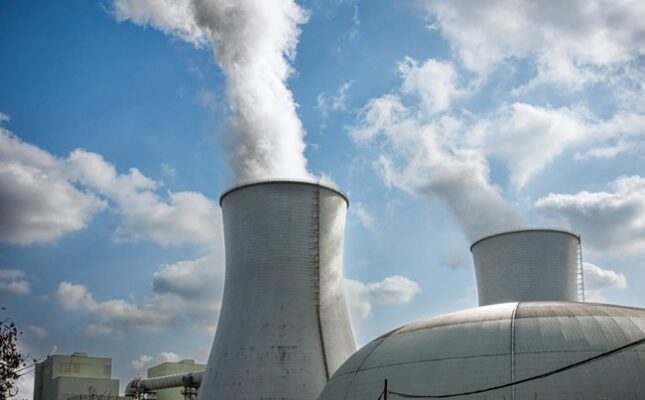
During a visit to the Choczewo municipality, at the construction site of Poland’s first nuclear power plant “Lubiatowo–Kopalino”, Prime Minister Donald Tusk emphasized that the state is moving from years of announcements to the actual implementation of the project: “First of all: we act, we don’t just talk.” The head of government described the investment as “a symbol of a major energy, technological and industrial leap”, which—beyond supply security—is expected to transform the economic and social landscape of northern Poland. The source of this leap is to be stable, low‑emission nuclear power, enabling the country to reduce its dependence on fluctuations in fossil fuel prices.
12 million households, or 86 percent of the country
According to the Prime Minister, electricity from the first nuclear power plant is expected to be sufficient for up to 12 million households, which—he noted—corresponds to around 86 percent of all households in Poland. This was presented as the tangible dimension of energy security: “a warm home, affordable electricity, safe families.” The expected outcome also includes greater price predictability and increased system resilience to demand spikes.
The investor and future operator is Polskie Elektrownie Jądrowe, working with the Westinghouse–Bechtel consortium.The parties are currently operating under the so‑called bridging agreement (Engineering Development Agreement), signed on 28 April 2025, which sets the framework for further engineering and preparatory work leading to the EPC contract. The Prime Minister stated that the cooperation terms are “fully partnership‑based and very beneficial for Poland and for our foreign partners”, which is expected to support timely and high‑quality execution.
Thousands of jobs and “local content”
The government estimates that around 50,000 people will be working on the construction site at peak. The principle of local content—broad participation of domestic companies in the supply chain—was strongly emphasized. Among the companies mentioned by the Prime Minister were Mostostal Kielce, Mostostal Kraków, Mostostal Siedlce, Ferrum (Katowice), Famak (Kluczbork) and Electro‑Montaż Północ (Gdynia). Alongside major contractors, hundreds of smaller enterprises from across Poland are expected to join the project, building competencies in construction, assembly and maintenance.
The location in Pomerania is—according to the government—a deliberate choice that will integrate the nuclear power plant, offshore wind farms and modernized ports into a single ecosystem. The Prime Minister spoke of “shifting the development center of gravity to the north” and of lasting, local benefits for the Choczewo municipality and the entire region. Infrastructure effects were also highlighted: a new national road, new rail connections and a maritime structure for unloading the largest components of the power plant. The first sections of roads and rail lines are expected to be completed in 2028.
Contribution to GDP and industrial modernization
The government argues that the scale of nuclear investments will translate into additional economic growth of nearly 1 percent of GDP. This refers not only to direct spending at the construction site, but also to the multiplier effect: development of domestic competencies, specialized design and manufacturing capabilities, and—ultimately—industrial modernization and greater export competitiveness. In this perspective, nuclear power is meant to be not only a source of capacity in the system, but also a driving force for reindustrialization.
The Prime Minister’s statements, echoed by industry media, form a coherent message: the nuclear power plant is intended to stabilize the system, reduce price risks and genuinely support the energy transition—alongside the expansion of renewables and transmission networks. According to the announcements, this is a project meant to end the era of “perpetual declarations” and translate into concrete megawatts in Poland’s energy mix, as well as concrete jobs and accompanying investments in the region.
Leave a Reply