Poland will build a third LNG terminal. It is one of the most important energy investments of the decade.
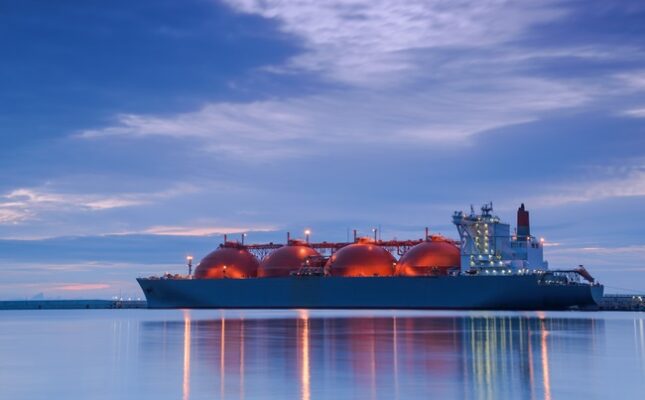
Poland will expand its ability to import natural gas from global markets. Following record interest in the services of the new LNG terminal in the Gulf of Gdańsk, a decision has been made to build another floating FSRU unit. With this investment, the country will operate three LNG terminals, significantly strengthening its position on Europe’s energy map.
Decision made: another LNG terminal will be built
GAZ‑SYSTEM has completed the Open Season procedure for the FSRU 2 project. The results showed that market interest exceeded the available capacity, which ultimately determined that the investment will go ahead.
The new terminal will be built in the Gulf of Gdańsk and will be the second FSRU facility in the area. Initially, its regasification capacity was planned at 4.5 billion m³ per year, but strong demand led to an increase in the project’s parameters to 6.1 billion m³.
This means Poland will be able to import even more liquefied natural gas from various global sources, strengthening supply security and reducing risks associated with commodity‑market volatility.
Poland will have three LNG terminals
Once FSRU 2 is operational, Poland will have three LNG terminals:
- Świnoujście LNG terminal
- FSRU 1 terminal in Gdańsk
- the new FSRU 2 terminal in the Gulf of Gdańsk
Their combined regasification capacity will exceed 20 billion m³ per year, placing Poland among the EU countries with the largest LNG infrastructure.
Will the new investment affect gas prices?
Experts emphasize that greater import capacity means more competition among gas suppliers. The more supply routes and market participants, the stronger the pressure to maintain attractive commodity prices.
Expanding LNG infrastructure is also expected to improve the efficiency of the transmission network and reduce unit costs of gas transport and regasification. In the long term, this may translate into more stable prices for households and businesses.
Poland moves closer to becoming a regional gas hub
The construction of another LNG terminal fits into Poland’s strategy of strengthening its role as a regional center for gas trading and transmission. The country already has gas interconnections with Denmark, Germany, the Czech Republic, Slovakia, and Lithuania, enabling the transport of gas to many Central and Eastern European states.
After 2030, Poland’s total import capacity is expected to reach around 50 billion m³ per year — a volume exceeding domestic demand and enabling exports as well as further development of the regional energy market.
Record interest in the new terminal
Long‑term access to FSRU 2 services has been contracted by four companies. In total, 47 slots per year have been reserved for 2030–2039 and 35 slots per year for 2040–2044.
This is the first time in the history of Poland’s LNG market that several market participants have simultaneously secured access to infrastructure managed by GAZ‑SYSTEM. For the industry, it is a clear signal that Poland is becoming an increasingly important gateway to the global LNG market.
Leave a Reply