Nuclear power in Poland. Donald Tusk has revealed a potential location for the second nuclear power plant.
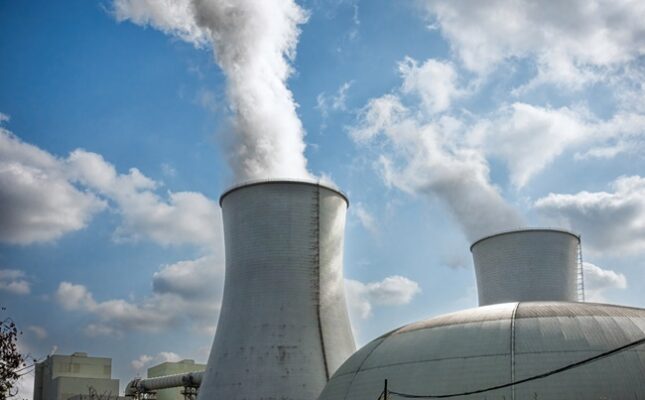
During a meeting in Piotrków Trybunalski, Prime Minister Donald Tusk indicated Bełchatów as the frontrunner for hosting Poland’s second nuclear power plant. If, according to the analyses we are finalizing, a decision is made on the second location, Bełchatów is at the top of the list, he declared. The statement comes at a moment when the government is signalling acceleration of long‑term projects and the need for stable generation capacity in the national power system.
First power plant: Lubiatowo–Kopalino under construction
The Prime Minister recalled that earlier the same day he had visited the construction site of Poland’s first nuclear power plant in Lubiatowo–Kopalino (Choczewo municipality, Pomerania). This project is intended to serve as a pillar of long‑term improvement in energy security and cost predictability for consumers. The government consistently emphasizes that the construction of large, zero‑emission capacity must go hand in hand with grid development and better integration of renewable energy sources.
Tusk prefaced his remarks about Bełchatów by referring to local expectations: “I know the region is waiting for a signal.” He added that the final decision will be made after the analyses are completed—suggesting that the government is working on a set of technical, environmental and infrastructure criteria that will determine the schedule and shape of the investment. At this stage, the announcement serves as a political signpost rather than a formal siting decision.
Offshore wind in the Baltic: a parallel pillar of the transition
The Prime Minister also addressed offshore wind energy. Some of the largest wind farms in Europe are becoming a reality, he said, highlighting the technical complexity and scale of the infrastructure being built in the Baltic Sea. From the government’s energy‑policy perspective, this reflects a model of complementarity: stable nuclear capacity is meant to balance the variability of renewables, while the rapid growth of offshore wind capacity is expected to accelerate decarbonization and reduce the carbon intensity of the energy mix.
Energy prices: no “price freeze” in 2026?
In the context of high electricity prices, Tusk assessed that next year there will be no need to freeze energy prices, as they will “naturally” stabilize at levels comparable to the currently frozen tariffs. This political declaration—if confirmed—suggests an improving cost outlook for households and businesses. At the same time, it underscores the importance of supply‑side investments (nuclear, offshore) that are intended to reduce price pressure over the long term.
Bełchatów at the top of the list: a signal of structural transformation
Placing Bełchatów at the top of the list for the second nuclear plant should be read as a transformational signal: the government aims to combine large‑scale generation investments with development in regions most affected by changes in the energy sector. In practice, such a decision would trigger a broad package of preparations—from environmental decisions and planning of accompanying infrastructure (roads, rail, transmission) to financing arrangements and supply‑chain organization.
The Prime Minister’s statements build a narrative of acceleration. However, nuclear projects are multi‑stage undertakings requiring rigorous procedures and approvals from the nuclear regulator, and their pace depends on documentation readiness, supply‑chain logistics and execution capacity. While indicating a preference for Bełchatów helps align stakeholder expectations, the decisive elements will be formal documents and decisions confirming the implementation pathway.
Energy sector 2030+: a mix built on nuclear and offshore wind
The combination of two pillars—nuclear and offshore—anchors the main goals of the transition: supply reliability, lower emissions and more stable prices. If the first plant in Lubiatowo–Kopalino stays on schedule, and the second—at the preferred location—is efficiently prepared, Poland will gain a dual engine of change: a zero‑emission backbone for the system and rapidly expanding, competitive offshore wind capacity from the Baltic.
The declaration that Bełchatów is “first on the list” opens a new chapter in the debate on Poland’s nuclear map. The government is signalling its intent to build stable capacity and accelerate the transition, while simultaneously calming concerns around energy prices. The coming months will show how quickly the political plan will be backed by formal decisions and a detailed work schedule for the second location.
Leave a Reply