The crisis has paralysed trade in Ceuta. Electricity consumption fell by 35 per cent
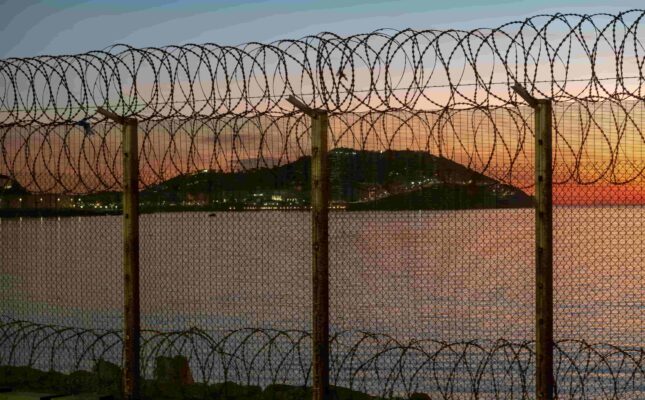
Ceuta is preparing for another possible mass attempt to cross the border on 15 August. The effects of the previous crisis are visible not only in official statistics. At the turn of the month, electricity consumption in the retail sector fell by 35 per cent because many shops were closed. Meter readings have become a rapid indicator of the city’s economic activity for the Spanish authorities.
Ceuta prepares for 15 August
Citing a report by Die Welt, Onet reported that Spanish authorities are analysing calls circulating on social media encouraging another border crossing on 15 August. The risk is considered real, although the potential scale of the event remains unknown.
Euronews, meanwhile, reports that the authorities have increased their readiness to respond to arrivals from Morocco. Ceuta has also suspended some officers’ leave in anticipation of renewed pressure on the city’s infrastructure.
The discrepancies between estimates of the number of migrants remaining in the city are striking. The Spanish government puts the figure at only 2,500 people, while the Ceuta authorities estimate it at 8,000–11,000.
Electricity consumption in the retail sector fell by 35 per cent
On 5 August, Spanish economy minister Carlos Cuerpo told the media that on 31 July and 1 August, electricity consumption by retail businesses fell by approximately 35 per cent compared with a comparable day.
The ministry uses electricity consumption data to monitor economic activity in Ceuta on a daily basis. The decline was not caused by a grid failure or supply restrictions. It resulted from the closure of many shops during the most tense days.
The situation began to improve several days later. However, Cuerpo noted that consumption remained 10–11 per cent below its typical level. The figures do not refer to the city’s total energy consumption, but specifically to businesses operating in the retail sector.
In this case, energy consumption has become an unusual indicator of the city’s condition. Meter readings reveal the scale of the disruption to business activity faster than many conventional economic statistics.
Ceuta as a whole consumes approximately 206 GWh of energy annually
Ceuta has a small local power system. According to CNMC data based on statistics from Red Eléctrica, demand reached 206.16 GWh in 2025.
A year earlier, it stood at 196.68 GWh. Annual demand therefore increased by approximately 4.8 per cent. The system’s small scale means that sudden changes in activity may be much more visible than in large metropolitan areas.
At the same time, there are no grounds for assuming that the migrants remaining in the city are causing a proportional increase in electricity demand. In fact, the available data show that the first observed effect was a decline in consumption in the retail sector.
A 137.8 km cable has transformed Ceuta’s energy security
The crisis emerged at a significant moment for the local energy sector. Red Eléctrica has completed the construction of the double-circuit 132 kV Algeciras–Virgen de África interconnection between Ceuta and the Iberian Peninsula. The connection is 137.8 km long and runs both underground and beneath the seabed of the Strait of Gibraltar.
The project is intended to improve the security and quality of supply while reducing the need for local electricity generation. It also facilitates access to renewable energy available within the mainland power system.
This represents a qualitative change for Ceuta. Previously, the city operated as a small, isolated system dependent primarily on its own thermal power plant.
The interconnection does not solve social or logistical problems. However, it reduces the risk of a local crisis being further exacerbated by constraints on the energy supply.
Energy data show how quickly a crisis extends beyond the border
Ceuta’s case illustrates something important from the perspective of critical infrastructure. A border crisis is not solely a problem for the authorities responsible for security.
It also affects trade, transport, municipal services and energy use. Electricity consumption data make it possible to measure some of these effects.
At the same time, the new interconnection demonstrates the importance of earlier investment in system resilience. A small local system with one principal source of generation is more vulnerable to disruption than a system connected to a large power grid.
This does not mean that Ceuta is currently facing an energy shortage. The conclusion is different: when a city is dealing with an unpredictable crisis, the ability to supply it from two directions becomes an element of security whose value cannot be assessed solely in terms of conventional economic calculations.
Sources: Onet, CNMC, Europa Press, Red Eléctrica de España
Leave a Reply