No more wasting wind. The first commercial deployment of iron–air batteries is launching in the EU.
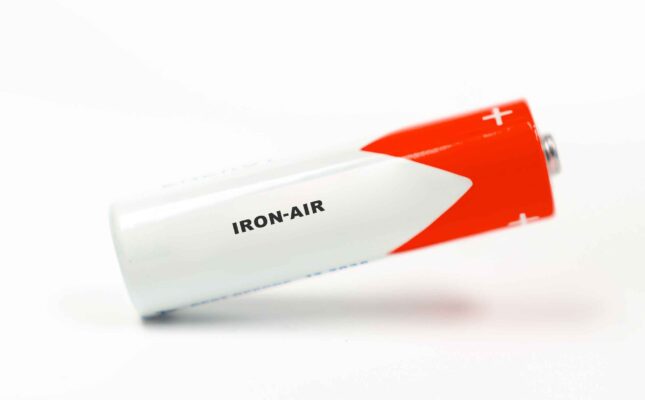
Dutch developer Ore Energy will supply energy provider Budget Thuis with large-scale energy storage systems totaling 1 GWh of capacity. This is the first commercial contract in Europe of this scale for iron–air batteries designed for long-duration energy storage.
How does an iron–air battery work?
The technology developed by Ore Energy is based on the controlled reversal of the rusting process. The system requires only three extremely cheap and abundant components: iron, water, and air.
The process works as follows:
Charging – surplus electricity from renewable sources (e.g. when it is very windy) is used to remove oxygen from iron oxide (rust), converting it back into metallic iron.
Discharging – when energy is drawn from storage, the iron undergoes controlled oxidation (rusting). This reaction releases electrons and generates a stable electric current back into the grid.
The key advantage of this solution is duration: iron–air systems can continuously supply electricity for 24 to even 100 hours. Traditional lithium-ion batteries are suitable for shifting peaks by a few hours (e.g. evening demand after midday solar generation), but they cannot balance the grid over several windless days.
Strategic move by a Dutch market leader
The first phase of the contract includes delivering a 400 MWh installation by 2028. The recipient, Budget Thuis (part of Nuts Groep), is one of the largest energy suppliers in the Netherlands, serving over one million customers. Securing 1 GWh of capacity is intended to protect the company from extreme price volatility in fossil fuel markets, which are still used to balance gaps in wind generation.
Ore Energy’s technology has already undergone field testing in European power infrastructure. A pilot project conducted in cooperation with the French energy company EDF in the second half of last year demonstrated that the system can reliably store and deliver energy for a full four days under industrial conditions.
Billions lost due to wasted renewable energy
The issue of so-called curtailment is becoming a major financial burden for Europe. Data from Aurora Energy Research shows that in 2024 alone, around 72 TWh of green energy was curtailed in Europe, costing the economy approximately €8.9 billion.
Meanwhile, analyses from the European Commission’s Joint Research Centre warn that without investment in long-duration storage, this waste could rise to 310 TWh annually by 2040, with grid congestion management costs reaching a staggering €103 billion per year.
Large-scale deployment of iron–air batteries could dramatically change these projections. Modeling conducted by the Technical University of Berlin shows that a zero-emission energy system supported by iron–air technology would require 32% less investment in new wind and solar farms and would reduce renewable curtailment losses by 44%.
Leave a Reply