Romanian salt caverns as energy storage. A new CAES project worth €55 million.
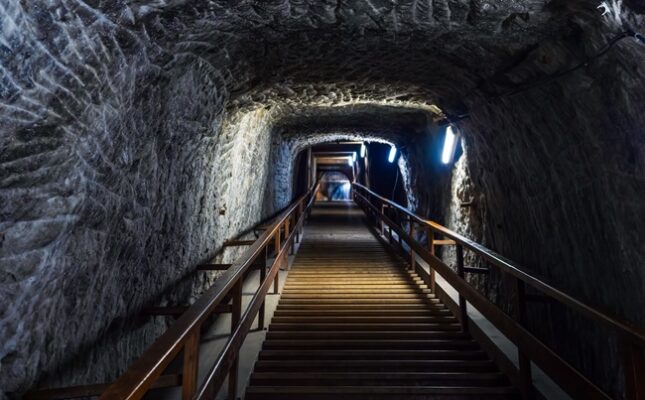
wo companies listed on the Tel Aviv Stock Exchange—Airengy and Hagag Europe—will invest around €55 million (approximately $63.6 million) in building a compressed air energy storage (CAES) power plant in Romania. The project will use Airengy’s proprietary long-duration energy storage technology called “AirBattery”, which is based on storing compressed air in underground salt caverns. The facility is planned to reach a discharge capacity of 25 MW and a storage capacity of up to 5 GWh.
How the AirBattery system works
The ownership structure of the project company allocates 40% shares each to Hagag Europe and Airengy, while the remaining 20% will go to an unnamed third party. Airengy is responsible for the planning, design, construction, and future operation of the AirBattery system.
The first phase of the project will provide around 200 MWh of storage capacity, with construction costs estimated at €4.5 million. Construction is scheduled to begin in 2027, with commercial operation expected in early 2028.
The technology has been designed as a complement to conventional lithium-ion storage systems and has already been tested at smaller scales—first in a 10 kW pilot in central Israel and later in a 250 kW installation in southern Israel.
During charging, surplus electricity from the grid is used to compress air, which is then injected and stored in underground salt caverns. During discharge, the compressed air is released into a hydraulic system, where it drives water that powers turbines to generate electricity.
The system uses only air and water, without rare metals or polluting materials, which the company says ensures low operating costs, minimal wear over decades, and strong resilience to climatic conditions.
Why Romania and expansion plans in Europe
Airengy’s VP of business development, Joshua Tzvi, said Romania was chosen due to its cost structure, level of grid decarbonization, and regulatory framework. A key factor was also the involvement of Hagag Europe, which is expanding from real estate into energy infrastructure and securing rights to underground caverns.
Hagag Europe has identified numerous unused salt caverns in Romania, some already close to grid connections and industrial sites. Romania is not the only target market: Airengy is also working with Kistos Energy Storage in the UK and collaborating with German storage company SEFE to evaluate sites for similar large-scale projects.