The US Department of Energy will invest hundreds of millions in the development of long-term energy storage
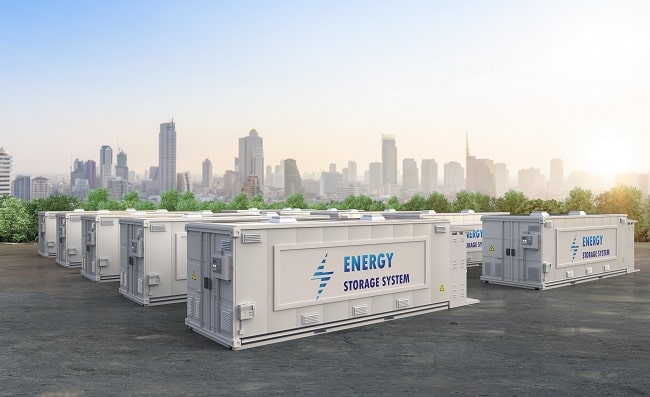
The Department of Energy has declared a $325 million commitment to develop advanced, long-term energy storage technologies in order to bolster the expanding renewable energy industry. This investment will be divided among 15 projects located in 17 different states.
Long-term energy storage solutions are intended to be an alternative to the currently most popular lithium-ion batteries.
Subsidized projects
One of the supported initiatives includes a project led by Xcel Energy in collaboration with Form Energy. Together, they will implement two 10-megawatt batteries capable of storing energy for up to 100 hours. The investments in long-term energy storage will take place at retired coal plants in Becker, Minnesota, and Pueblo, Colorado.
Additionally, another project supported by this initiative is situated at California’s Valley Children’s Hospital. The California Energy Commission, in partnership with Faraday Microgrids, will install a battery system to enhance the medical center’s energy resilience, ensuring it can maintain power during potential disruptions caused by wildfires, floods, and heatwaves.
Furthermore, Second Life Smart Systems plans to repurpose used electric vehicle batteries to provide emergency power to nursing homes, apartment complexes, and electric vehicle charging stations.
Energy storage means savings
According to David Crane, the Energy Under Secretary for Infrastructure, the projects recently unveiled are poised to demonstrate the effectiveness of energy storage on a large scale. These endeavors aim to assist public utilities in optimizing energy management and achieving cost savings.
Elisabeth Moyer, a professor specializing in atmospheric sciences at the University of Chicago, emphasized that long-term energy storage technologies have the potential to eliminate the primary obstacle hindering the shift towards renewable energy sources.
Source: apnews.com
Leave a Reply