Will premium Chinese SUVs be built in Europe? Geely and Volkswagen open a new chapter
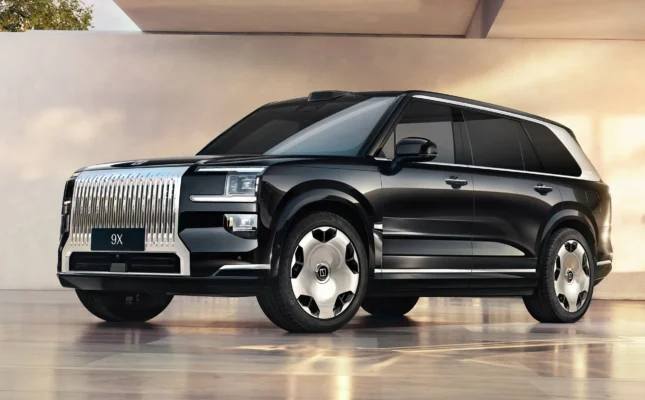
SUVs more than five metres long and designed in China could soon be built in European factories. Geely wants to use Volvo plants, Ford is opening up Spain to Geely models, and Volkswagen is considering manufacturing Chinese-developed vehicles in Germany.
Just a few years ago, such a scenario would have seemed unlikely. Today, Chinese brands are not only selling an increasing number of cars in Europe but are also beginning to use the local production capacity of Western automotive groups. The large premium SUV segment is particularly interesting, as Chinese manufacturers are rapidly winning customers away from European brands in their domestic market.
Geely wants to produce luxury models at Volvo factories
On 17 August, An Conghui, the new chair of Geely Automobile, announced that from 2028, Volvo Cars’ European factories are also expected to be used to produce luxury vehicles from other brands belonging to the Geely group. Neither a specific brand nor a particular model has yet been officially named. However, industry media mainly point to Zeekr and Lynk & Co. These brands currently offer the largest and most technologically advanced SUVs in the entire group.
Potential candidates include the Zeekr 9X and Lynk & Co 900. Both models are more than 5.2 metres long and belong to a segment that, until recently, was almost exclusively dominated by brands such as BMW, Mercedes-Benz and Audi.
It should be noted, however, that neither vehicle is a conventional range extender. The Lynk & Co 900 uses a plug-in hybrid powertrain, as does the Zeekr 9X, although both feature highly electrified systems and offer a very long battery-powered range.
Volvo has spare production capacity
Such a move would not be entirely surprising. Håkan Samuelsson, CEO of Volvo Cars, has previously acknowledged that the brand’s European factories have enough spare production capacity to accommodate vehicles from other Geely group brands.
This could become an important part of the Chinese group’s new strategy in Europe. Instead of building every plant from scratch, Geely could use Volvo’s existing infrastructure, reducing costs and accelerating the expansion of local production.
For the European market, this would mean something else as well: Chinese premium cars could eventually carry a “made in Europe” label, even though their design, technology and underlying concept originated in China.
Geely and Ford join forces in Spain
A second project is being developed in parallel. Ford and Geely have reached an agreement to cooperate on vehicle production in Spain. A new joint venture is expected to use Ford’s factory in Valencia. In the future, the plant is set to produce both models from the American manufacturer and Geely vehicles intended for the European market.
This is another example of the changing balance of power. Until recently, Western automotive groups built factories in China to gain access to the local market. Now, it is increasingly Chinese manufacturers that are using plants in Europe to make it easier to enter the EU market.
Volkswagen is also looking at Chinese-developed vehicles
Volkswagen is considering a similar approach. According to German media, the group is for the first time seriously considering not only selling models in Europe that were originally designed for the Chinese market, but also producing them locally.
One of the vehicles most frequently mentioned is the Volkswagen ID.Era 9X. It is a huge SUV, measuring around 5.2 metres long and featuring an EREV powertrain—in other words, an electric vehicle with an internal combustion engine that serves as an electricity generator.
The model was developed by SAIC Volkswagen and is one of the most advanced products created as part of the German group’s China strategy.
According to the information available so far, the ID.Era 9X is among the models being assessed for possible production in Europe. One potential location is said to be Zwickau, home to one of Volkswagen’s most advanced factories in Germany.
However, no official decision has been made at this stage.
Could the ID.Era 9X replace the Touareg?
From the perspective of Volkswagen’s European line-up, such a move would not be without logic.
The brand currently has no direct successor to the Touareg, and its largest SUVs sold in Europe leave a clear gap between mainstream models and the premium segment.
The ID.Era 9X could fill that gap, while offering a solution Volkswagen does not yet have in Europe: a large EREV powertrain that enables everyday electric driving without giving up an internal combustion engine as a backup source of energy.
This type of powertrain has become particularly popular in China in recent years.
Chinese manufacturers are gaining strength in the premium segment
The growing interest in Europe is no coincidence. In the Chinese market, domestic manufacturers are rapidly winning customers away from Western premium brands.
Zeekr, Li Auto, Aito, Nio and Denza are competing increasingly effectively with BMW, Mercedes-Benz and Audi. Price is often not their only advantage. Chinese cars offer large batteries, sophisticated infotainment systems, advanced driver-assistance systems and extensive standard equipment.
The Zeekr 9X clearly demonstrates the scale of this shift. The model quickly captured a significant share of China’s market for high-end SUVs—a segment that for years was dominated primarily by German manufacturers.
This does not mean that Western brands have been driven out of China. However, the pressure continues to grow, and their market shares are clearly declining in many segments.
Range extenders are only beginning to reach Europe
EREVs remain a niche in Europe, but the situation is changing rapidly. Several models using this type of powertrain are already available in Poland:
- Leapmotor B10 Hybrid EV
- Leapmotor C10 REEV
- Forthing T-Five REEV
- Forthing S7 REEV
- Voyah Free REV
All of them come from Chinese manufacturers. European brands remain very cautious about this technology, although interest is growing. Volkswagen has already acknowledged that the SSP platform could technically support a range extender, and that demand will be the primary factor in deciding whether such a solution is introduced in Europe.
The Leapmotor D19 shows how far this technology has come
One of the most extreme examples of EREV development is the Leapmotor D19. The range-extender version uses a battery with a capacity of no less than 80.3 kWh. Until recently, such a figure was mainly associated with fully electric vehicles rather than hybrids. The manufacturer claims an electric range of around 500 km under China’s CLTC testing cycle, while starting the internal combustion engine increases the total range considerably.
There is currently no official confirmation that the D19 will be introduced in Europe. However, such a model would be a natural candidate for a technological “halo car” showcasing the brand’s capabilities.
“Made in Europe” could take on an entirely new meaning
The most interesting aspect of the entire story, however, is something else. European factories that for decades primarily produced cars designed in Germany, Sweden or France could soon begin manufacturing large models developed in China.
If Geely’s plans come to fruition and Volkswagen decides to take a similar step, the distinction between a “Chinese car” and a “European car” will become even more blurred. A vehicle could be designed in China, its technology developed by Chinese engineers, and its final assembly carried out in Sweden, Spain or Germany.
Leave a Reply