West Africa adopts an energy storage directive. A breakthrough for regional grid security
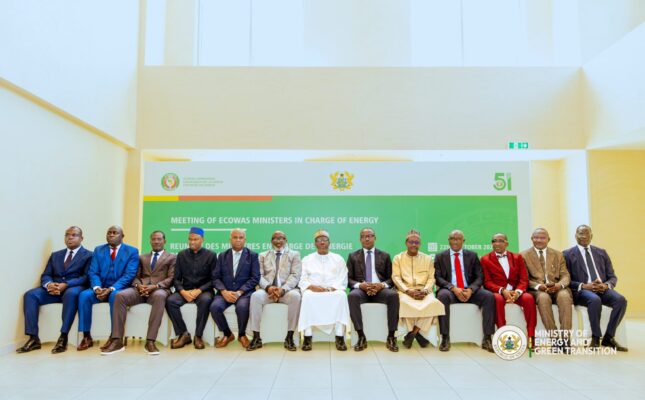
West African countries have taken a major step towards the widespread deployment of energy storage systems. Energy ministers from the member states of the Economic Community of West African States (ECOWAS) have adopted a regional directive establishing a common legal framework, market design rules, and standards for battery safety and recycling. The new regulations are intended to facilitate the integration of large-scale solar PV, wind power and green hydrogen projects into local and regional electricity grids.
Regional coordination and a common capacity market
The document, adopted in Accra (the capital of Ghana), was developed in cooperation with experts in finance, power grids and renewable energy technologies. The directive covers both grid-connected systems and off-grid installations.
The implementation of the new regulations, in cooperation with local governments, will be coordinated by the West African Power Pool, an organization responsible for integrating power systems across the region. The common framework is expected to facilitate private capital investment and reduce investment risks in countries such as Nigeria, Senegal, Côte d’Ivoire and Sierra Leone.
Ghana leads the race. 200 MW of battery storage paired with solar PV
The adoption of the directive coincided with a concrete announcement from the host country. Ghana’s energy minister, John Abdulai Jinapor, announced the launch of a tender for a hybrid installation comprising a 200 MW solar PV farm and a 200 MW battery energy storage system (BESS).
Ghana stands out among its neighbors for its high electrification rate (approximately 90%) and is emerging as a regional leader in the energy transition:
- 2030 target – the country’s REMP plan envisages the installation of 1,970 MWh of battery storage capacity.
- Rapid growth – by comparison, at the beginning of 2026, Ghana’s total installed battery storage capacity stood at just 10 MWh.
Individual projects are also being launched in other countries across the region. In Senegal, the first solar PV installation with battery storage (Walo, 20 MWh) was commissioned in August 2025, while Togo secured French financing for a 55 MW energy storage facility.
Despite these initiatives, experts emphasize that most BESS investments on the continent remain concentrated in Southern Africa and North Africa. The newly adopted directive aims to change this by opening the West African market to international investors.
Leave a Reply