More than one-third of residential solar installations in the US are now being built with battery storage from the outset
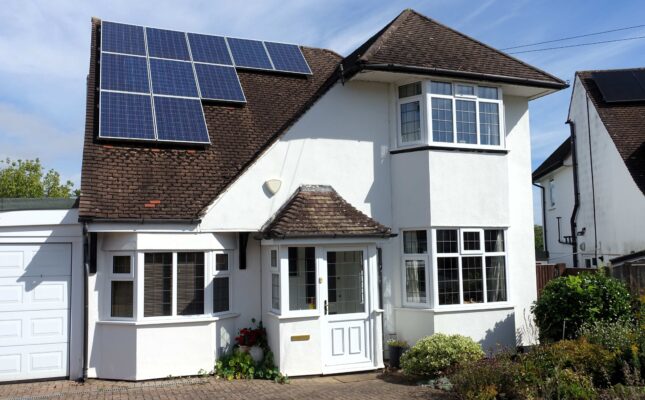
According to the latest report from Lawrence Berkeley National Laboratory, as many as 37% of new residential PV installations in the United States were equipped with battery storage in 2025. This marks a significant increase from 2024, when the figure stood at 25%. Batteries are no longer treated as an optional add-on but have become a standard component of residential PV systems.
California leads, but the rest of the country is catching up quickly
California remains the main driver of this growth. In 2025, as many as 74% of new residential solar installations in the state were paired with battery storage, up from 58% a year earlier. This is a direct consequence of the Net Billing Tariff, commonly referred to as NEM 3.0, introduced in April 2023, which reduced the market value of electricity exported to the grid during the day.
However, the trend is no longer limited to a single state. Across the rest of the US, the battery attachment rate rose from 7% to 17% in just one year, with the fastest growth recorded in Texas and Arizona. Hawaii and California still have the highest concentration of battery storage systems. Analysts point out that installers in more states are facing changes to net-metering schemes and the introduction of dynamic electricity tariffs, making energy storage increasingly cost-effective.
The commercial and industrial sector also recorded growth. In 2025, 11% of new installations were equipped with batteries, compared with 7% in 2024.
Higher discharge power with the same capacity
The report also provides some interesting observations on the technical parameters of residential battery storage systems:
- Capacity – the median capacity of residential batteries remained unchanged at 13.5 kWh in both 2024 and 2025.
- Discharge power – median continuous power nearly doubled, rising from 6 kW in 2024 to 11.4 kW in 2025.
Researchers at Berkeley Lab attribute this sharp increase in power ratings to new products entering the market, most notably the Tesla Powerwall 3, which offers significantly higher output power than previous generations. The authors of the report note that the study covered only battery storage systems installed at the same time as a new PV system.
Leave a Reply