More Than 1.3 GWh of Storage Capacity in Bulgaria: Sunterra RE Completes Massive Battery Project
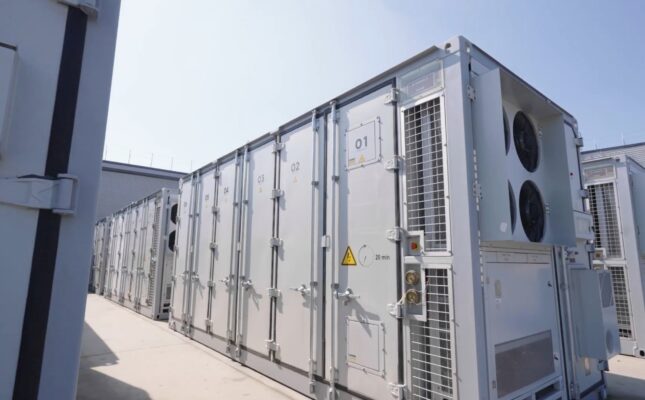
Bulgarian renewable energy company Sunterra RE has officially completed the second phase of its major investment project. The company has commissioned state-of-the-art battery energy storage systems (BESS) at three operational solar parks across the country. As a result, the total installed storage capacity at these sites has increased to nearly 397 MW, while the combined energy storage capacity has reached an impressive 1.3 GWh.
Four-Hour Duration and Safe LFP Technology
The newly commissioned facilities are located in Gulyabovo, Kaloyanovo, and Karlovo. All three installations are equipped with safe and reliable lithium iron phosphate (LFP) batteries. These systems can supply stored electricity to the grid for up to four hours, while maintaining a high efficiency level of nearly 90%. The entire infrastructure has been designed for long-term operation, with an expected service life of approximately 25 years.
The capacity breakdown for each location is as follows:
- Gulyabovo: 150 MW / 450 MWh
- Kaloyanovo: 150 MW / 506 MWh
- Karlovo: 97 MW / 320 MWh
Self-Financed Investment and Grid Stabilization
The facilities were connected to the national grid immediately after the company obtained all necessary approvals from state regulatory authorities. The relevant agencies have certified that the new BESS installations meet stringent technical, legal, and safety requirements.
All of these advanced projects were financed entirely with the Bulgarian developer’s own funds. The investments form a key part of Sunterra RE’s long-term strategy, which focuses on rapid expansion in the energy storage sector.
According to company representatives, the new battery systems will enable the safe storage of clean solar-generated electricity and its delivery to the grid precisely during periods of peak demand. This approach is expected to significantly enhance the stability, flexibility, and overall efficiency of Bulgaria’s power system.