Kawasaki Corleo: The Future of Personal Mobility Powered by Hydrogen
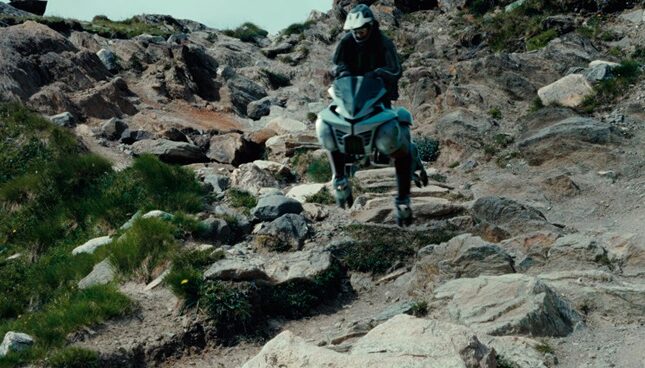
The Japanese automotive giant Kawasaki surprised the industry by presenting a prototype vehicle that breaks all existing conventions. At Expo Osaka-Kansai 2025, they showcased Corleo – a four-legged robot resembling a horse that redefines the concept of personal transportation. What makes it truly unique? Its heart is an eco-friendly hydrogen drive, marking a breakthrough in the pursuit of cleaner mobility.
Hydrogen Engine of the Future
Corleo is not just a vision of a futuristic vehicle but also a manifestation of innovative technologies. Kawasaki has opted for a hydrogen-powered drive system, allowing for emissions-free movement in various terrain conditions. The engine generates electrical energy, which is distributed to independent drive units placed in each of the robot’s four legs. The result? Smooth, dynamic movements and the ability to adapt to uneven terrain.
Thanks to the hydrogen technology, Corleo generates no CO2 emissions, making it an excellent alternative to traditional off-road vehicles. Kawasaki demonstrates its commitment to the development of clean energy and reducing the carbon footprint in the transport sector.
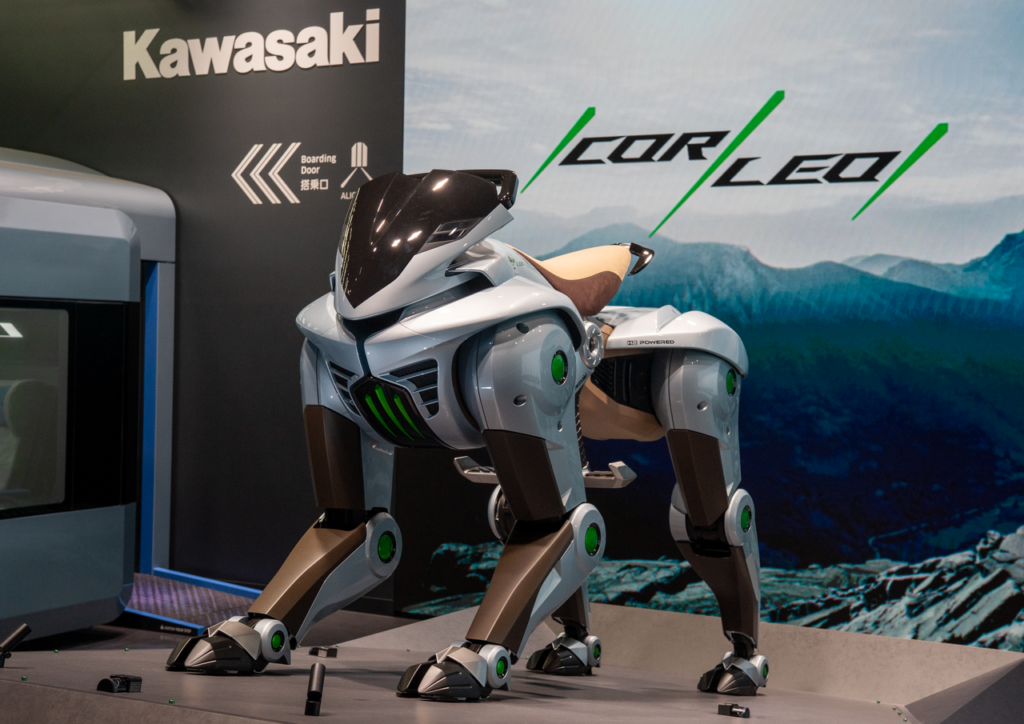
Revolutionary Design and Biomechanics of Movement
The Corleo design is inspired by the natural movement of a horse, providing it with high stability and the ability to tackle difficult terrain such as sand, snow, or mountain trails. Each of the four independently articulated legs is equipped with an advanced suspension system, and the anti-slip “hooves” ensure excellent grip.
The materials used in the robot’s construction, such as aluminum and carbon fiber, ensure durability with minimal weight. Furthermore, its modular design allows for easy adaptation to various uses, including transportation of people with limited mobility or exploration of hard-to-reach areas.
Kawasaki Corleo: The Future of Personal Mobility Powered by Hydrogen
Horseback-Inspired Control
Instead of a steering wheel and pedals, the control of Corleo is based on the user’s body movements. Sensors in the footrests and handlebars interpret slight shifts and changes in center of gravity, allowing for smooth handling of the robot. This makes operating the vehicle similar to horseback riding and could become a natural extension of the user’s body.
Additionally, Corleo is equipped with an advanced artificial intelligence system that analyzes the surroundings, adjusts the movement trajectory, and ensures stability during rides. The user can monitor key information, such as hydrogen levels, vehicle stability, or the projected route, on a built-in display.
Tomorrow’s Mobility: Ecological, Intelligent, and Functional
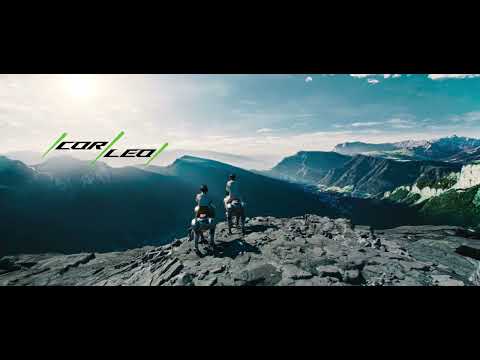
Kawasaki clearly states that Corleo is not meant to replace motorcycles, but rather to open a new era in personal mobility. Potential applications of this robot include not only recreation but also professional use in national parks, nature reserves, or difficult-to-reach areas.
While Corleo is still just a prototype, Kawasaki presents it as a symbol of its commitment to the development of environmentally friendly technologies. The company estimates that the first fully functional models could be available around 2050, depending on technological progress and the development of hydrogen infrastructure.
A New Dimension of Ecological Transport
The presentation of Corleo at Expo Osaka-Kansai 2025 is not just a technological demonstration of Kawasaki’s capabilities but also a signal to the entire automotive industry. Clean energy, advanced robotics, and intuitive control may signal a future where personal transportation harmonizes with nature.
Corleo is a step towards more sustainable and intelligent mobility. While it is still a concept, its existence proves that a future of emissions-free transport may be closer than we think.
Source: kawasaki.eu
Leave a Reply