Time for a reshuffle: Haier E-Tower HV enters the game.
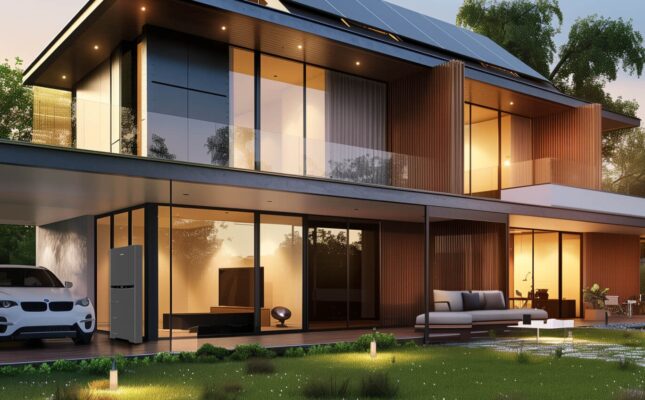
What makes an energy storage system more than just a place to store surplus photovoltaic energy?
Haier E-Tower HV shows that the key lies in how the entire system responds to changing demand, energy prices, and the operation of other devices. Its modular design, support for dynamic tariffs, and intelligent control create a solution that actively supports energy management in a home or business. Let’s take a closer look at the technologies behind its capabilities.
Who exactly is Haier in the energy market?
Haier is a global corporation with more than 40 years of history and has held a leading position in the global major home appliance market for many years. It is present in Poland, among other things, through its factories and extensive service network. Haier Energy brings this background — manufacturing scale, supply chain capabilities, and electronics expertise — to the photovoltaic and energy storage market.
For installers, this means one thing: the product is backed by an organization with global resources, while access to spare parts and technical support forms part of the manufacturer’s long-term strategy. For end customers, this means not only a solidly built product, but also the opportunity to create a complete Haier ecosystem that supports energy security and access to power when it is needed most.
Two components that create one ecosystem
At the heart of the E-Tower HV concept is a simplified system architecture. The complete system consists of a hybrid inverter and battery modules. There is no separate battery controller or additional management unit, and communication between the components has been simplified. The battery management system (BMS) is integrated into each module.
What does this change in practice? Fewer components, shorter installation times, and fewer connections where errors can occur. Anyone who has commissioned systems requiring communication to be configured between the inverter, controller, and batteries knows how many problems seemingly minor installation issues can cause.
It also means simpler pricing, a shorter bill of materials, and fewer components whose absence could delay the project.
Scalability that grows with the customer
The E-Tower HV has a fully modular design. The system is based on a 4.8 kWh battery module with a 1C charge and discharge rate. The installation can start with a single module and be expanded as the customer’s needs grow — up to six modules in two clusters, providing a maximum capacity of 28.8 kWh per inverter.
This means the investor does not have to buy an oversized energy storage system from the outset. The system can be expanded as energy demand increases.
E-Tower HV is available with 4, 5, 6, 8, 10, 12, and 15 kW inverters, making it possible to precisely match the device to the needs of a single-family home, farm, or small business. The maximum battery charge and discharge current reaches 50 A, allowing the system to respond effectively to changing energy consumption profiles.
Three MPPTs and DC oversizing of 2.0
For installers, the number of DC inputs may prove particularly important. E-Tower HV offers three independent MPPT trackers. Each MPPT supports a string current of up to 16 A, making it possible to design installations with panels facing different directions and installed at different tilt angles, as well as to use modern high-current photovoltaic modules — without unnecessary compromises when designing strings.
The wide MPPT operating voltage range extends the energy production window throughout the day, which can directly translate into higher yields.
In addition, the DC/AC oversizing ratio is up to 2.0. In practice, this means that a 10 kW inverter can be connected to a PV system of up to 20 kWp, naturally subject to the design conditions and specifications of the particular device.
Under Polish solar conditions, this level of oversizing can be a well-considered strategy. Greater module capacity can increase energy production in the morning, evening, and during less favorable weather conditions, while surplus energy generated during peak production periods can be used to charge the battery.
Phase imbalance of up to 150% — a detail you will appreciate on site
Polish homes rarely have perfectly balanced phases. An induction hob on one phase, an EV charger on another, and the rest of the house on the third — that is everyday reality.
The problem arises when several energy-intensive devices operate simultaneously on the same phase. With a typical three-phase inverter, uneven loading can lead to a reduction in available power or trigger protective devices.
E-Tower HV takes a different approach: it tolerates unbalanced loads of up to 150% of the power allocated per phase. In practice, this means greater flexibility in managing available power and better adaptation of the system to the actual energy consumption profile.
For users, this means greater convenience in everyday use of the installation — without having to think about which appliances can be switched on at the same time. For installers, it means greater freedom when designing the system and a lower risk of problems caused by uneven phase loading.
Installation and commissioning: fewer steps, less risk
The installation itself has been designed with installation teams in mind. A major advantage of the system is the ability to install it in two different ways, which clearly demonstrates its flexibility.
The inverter can be installed together with the battery modules as a single tower, with the inverter mounted on top, or it can be mounted conventionally on a wall when the layout or height of the room limits the use of a tower configuration.
The battery modules themselves are stacked on top of one another and connected into a tower, while electrical and communication connections are made using quick connectors. There is no need to install additional cable ducts between modules or carry out time-consuming device addressing.
Commissioning is guided by a wizard in the Haier Energy app, which takes the user step by step through network configuration, country settings, and operating modes. The system automatically detects the number of connected modules.
In practice, this solution can shorten installation time and reduce the number of tasks required during commissioning.
Backup in under 10 ms and uncompromising safety
Backup power is no longer just an interesting extra — after recent years, customers are asking about it directly. E-Tower HV switches to backup power in less than 10 ms. The system supports both on-grid and off-grid operation, making it suitable for locations where continuity of power supply is an issue.
Depending on the configuration and connected loads, fast switching can reduce the risk of interruptions affecting devices such as computers, alarm systems, or equipment requiring a stable power supply.
The list of protective features includes, among other things, a DC disconnect switch, Type II surge protection devices (SPDs) on both the AC and DC sides, and AFCI arc-fault detection.
The batteries are protected on multiple levels — from a pressure relief device (PRD), through a fire suppression module and an aerogel insert that limits heat propagation between cells, to insulation monitoring, residual current monitoring (RCM), and anti-islanding protection.
The cells use LiFePO4 technology, which offers high thermal stability and lower susceptibility to uncontrolled temperature rise than some other lithium-ion technologies. Combined with the multi-level protection system, this enhances the safety of the entire energy storage system.
For installers, this means fewer additional components are required to complete the system and provides a strong argument when speaking with customers who place particular emphasis on energy storage safety.
Backup Box — a solution dependent on configuration and market
It is also worth emphasizing that the way backup power is implemented depends on local grid connection requirements and the specific installation configuration. In some European markets, including Germany and Italy, requirements relating to island operation and separation from the public grid may require additional equipment, such as a dedicated Backup Box. In Poland, this solution may remain optional depending on the configuration and the intended scope of backup power.
Convenient energy management via the app
A small detail that makes commissioning easier: Ethernet and Wi-Fi communication modules are included as standard. There is no need to remember to purchase an additional communication module or worry about unexpected issues during handover.
Configuration and monitoring are handled through the Haier Energy app, while integration with the hOn ecosystem allows the installation to work together with other Haier devices in a smart home — from air conditioning to heat pumps.
The inverter supports a full set of operating modes: self-consumption, tariff schedules, backup power, and export limitation.
The system is also ready to work with dynamic tariffs. Under net-billing conditions, the ability to store energy and manage its use depending on current prices can become a practical tool for optimizing energy costs rather than merely an additional system feature.
Warranty and support — what remains after installation
Haier provides a 10-year warranty for the system. For an installation company, this is a commitment with practical significance: for a decade, the manufacturer provides warranty protection for the equipment and after-sales support.
In an industry where a reputation takes years to build and can be lost after a single unsuccessful project, long-term manufacturer support is an important consideration when choosing a solution.
Distribution with Polish technical support
The authorized distributor of Haier Energy solutions in Poland is KENO Energy from Gliwice — a company that has been active in the renewable energy market in Poland and Europe for many years.
For installers, cooperation with KENO means product availability from stock, Polish-language technical support during system selection and commissioning, product training, and assistance at every stage of the project — from the initial quotation through to servicing.
As an expert in renewable energy, KENO understands the needs of professional customers and sees potential in Haier solutions to genuinely simplify the everyday work of installation companies.
E-Tower HV is already available for sale and can be ordered through authorized distributors.
Not one standout parameter, but a well-thought-out whole
E-Tower HV does not try to compete on the basis of a single parameter. Its strength lies in the combination of carefully considered solutions: two main system components, three MPPTs, DC/AC oversizing of up to 2.0, backup switching in under 10 ms, IP65 protection, a full set of safety and communication features as standard, and a 10-year warranty from a globally recognized manufacturer.
For installers looking for a system designed with efficient installation, flexible system design, and convenient operation in mind, E-Tower HV may be a solution worth taking a closer look at.
Ultimately, the value of any system is best verified through real-world installation experience — and E-Tower HV has been designed specifically with the installer’s day-to-day work in mind.
Leave a Reply