The AP1000 reactor design for Poland is complete — Scotland chooses renewables instead of nuclear: an outline of the country’s energy dispute
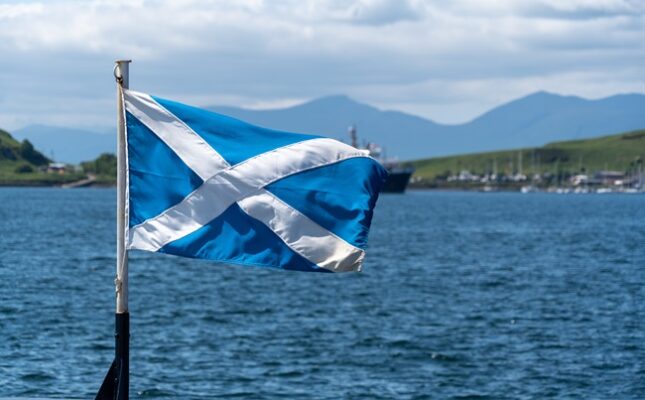
As the UK government announces multibillion‑pound investments in new nuclear projects in England, Scotland continues to follow its own course: it sees the future of energy exclusively in renewable sources. This position was confirmed by acting Scottish Energy Secretary Gillian Martin, who made it clear in an interview with BBC Scotland News: “Instead of investing in expensive nuclear power plants, we intend to harness the full potential of renewable energy.”
For years, Scotland has effectively applied a ban on building new nuclear reactors, using its devolved powers in spatial planning. In practice, this means that although strategic decisions on energy policy are made in Westminster, no nuclear projects can be carried out on Scottish soil without Holyrood’s approval.
A political divide over nuclear power
While the SNP government sees no place for new nuclear power stations, the Scottish branch of the Labour Party expresses a different position. Scottish Secretary Ian Murray called the existing ban “a misguided policy” which, in his view, deprives Scottish communities of job opportunities and new investment. He also announced that if Labour takes power in Scotland after the 2026 elections, it will reverse the current restrictions.
Michael Shanks, a Scottish MP and member of the UK Department for Energy Security and Net Zero, went even further, claiming that Scotland is losing the potential to play a significant role in the modern nuclear energy sector. “The Scottish ban is holding back our progress while the world moves forward,” he wrote in The Scotsman.
Renewables — cheaper and closer to the people?
Gillian Martin emphasized that renewable energy is not only cheaper to produce but also more accessible and cost‑stable for end users. “We have so much renewable energy in Scotland that the grid often cannot absorb it all. We are also developing hydropower, which can provide flexibility in energy production during periods of lower renewable generation.”
We have already written on our portal about the massive investments in hydropower in Scotland: Historic decision! Scotland is building a powerful energy storage system!
The Scottish government also places hope in the Acorn project — a carbon capture and storage (CCS) initiative that has the potential to become one of the pillars of industrial decarbonization in north‑east Scotland. Funding for this investment may be announced in the upcoming UK government spending review.
Nuclear power as an industrial pillar — arguments of supporters
Meanwhile, the nuclear industry reminds that nuclear energy is not only a stable source of low‑emission power but also a boost for Scottish industry and the economy. According to a report by Oxford Economics, commissioned by the Nuclear Industry Association, the nuclear sector brought Scotland £1.5 billion last year — mainly thanks to the participation of Scottish companies in projects such as Hinkley Point C and Sizewell C.
“170 Scottish companies have contracts for Hinkley, and more than £280 million has already been spent within the supply chain,” emphasizes Tom Greatrex, NIA director. “The same applies to Sizewell — it is a twin project with the same industrial base.”
A future without Torness — and what next?
The currently operating Torness nuclear power station in Scotland will be shut down by 2030. For many experts, this poses a serious challenge: how to fill the gap left by one of the country’s most important low‑emission energy sources?
Supporters of nuclear power warn that the lack of new investments may lead to increased emissions if the place of clean nuclear energy is taken by less environmentally friendly sources. Opponents counter that renewable sources — supported by energy storage and CCS technologies — are the future of zero‑emission energy.
Scotland at a crossroads: green dogma or pragmatic transition?
The debate over Scotland’s energy future is not merely a technical dispute. It is a discussion about values, a vision of development, and decision‑making independence. In 2026, Scottish voters will face a choice that may define the region’s energy landscape for decades — between continuing an exclusively renewable policy and opening up to a broader mix that includes nuclear energy.
Leave a Reply