Why local energy systems may become Poland’s most important investment?
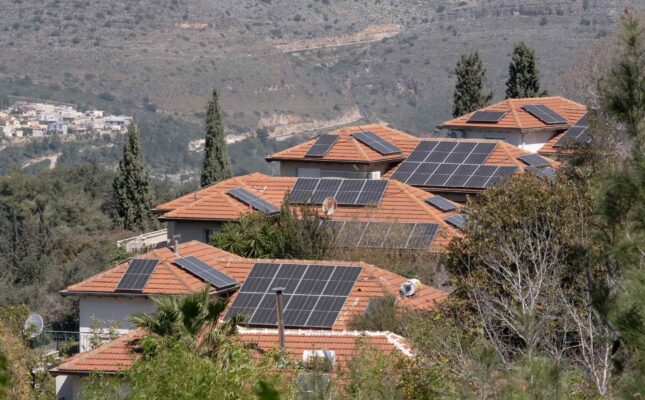
The issue of energy self‑sufficiency is inevitably linked to security in multiple dimensions. On the one hand, it encompasses operational and tactical security related to threats to the functioning of energy generation and processing systems, as well as their resilience to adverse phenomena such as blackout risks, supply interruptions, investment threats, or energy poverty.
On the other hand, energy self‑sufficiency includes security in the strategic dimension, in which energy independence becomes one of the pillars of state sovereignty and national security. This part of the Compendium addresses precisely that dimension of security.
Energy today is not only a matter of the economy and everyday comfort of citizens. It is a foundation of national security that determines whether a state can endure and develop in the face of crises. Without reliable energy sources, hospitals, schools, workplaces, and the military cannot function. Without energy, there is no resilience, and without resilience – there is no security.
When addressing the issue of local energy self‑sufficiency from a security perspective, it should be noted that the concept of security in this report is understood as the absence or negligible impact of threats, taking into account the practical and theoretical contributions of Polish scholars in this field, particularly in the areas of national security and energy security.
A parallel aspect is access to raw materials, which also constitutes a foundation of state security. Dependence on suppliers burdened with geopolitical risk is nothing other than increased vulnerability to energy blackmail.
This leads to a dependency trap in which the security of citizens becomes a bargaining chip. Such dependence acts like a geopolitical energy leash that someone can pull at any moment. It is, in essence, a strategic raw‑material trap in which control over one’s own future is gradually surrendered.
Contemporary challenges show that energy and raw‑material security condition other areas of security. It determines the strength of social cohesion because it shapes the cost of living and affects the scale of energy poverty. It creates the military backbone, enabling the operation of critical infrastructure and armed forces in times of threat. It influences environmental quality, and thus the health of society.
This article is a fragment of the compendium “Energy Independence – Poland’s Transformation Begins from the Bottom Up”, prepared by the editorial team of e‑magazyny.pl in cooperation with scientists and industry experts. The publication contains more examples of best practices and analyses related to Poland’s energy transition.
Energy is also a geopolitical tool – a weapon that an adversary may use to destabilize a state.
Energy and raw‑material security are not only one of the pillars of development – they are a strategic space in which the future of the country is decided. The strength of a state today is determined not only by large central investments but also by the ability to mobilize local potential. True transformation begins from the bottom up – in municipalities, enterprises, and communities that build self‑sufficient hybrid energy networks and develop biogas plants and geothermal heating systems.
These initiatives, rooted in local resources, not only reduce dependence on scarce fossil fuels but above all strengthen the independence, resilience, and agency of the state. It is precisely at this level – close to people and their everyday needs – that the country’s energy sovereignty should be shaped.
The future of Poland’s security does not lie solely in large investments – although those are also necessary – but in the strength of local initiatives. Distribution means resilience, self‑sufficiency means independence, and independence means freedom.
Research methodology
The information presented in this chapter is based on three main sources:
- analysis of international projects involving the Military University of Technology in Warsaw, carried out within the EU and NATO frameworks, including: Rail4EARTH, Energy Supply Chain Resilience, Modular, Mobile, and Autonomous Low‑Emission System for Providing Heat, Cooling, and Electricity to the Population in Emergency Situations;
- field research conducted in municipalities and small towns in Poland;
- a literature review covering more than 1,230 scientific sources from 2012–2025.
A mixed qualitative and quantitative approach was applied, taking into account social, infrastructural, and defense aspects. The adopted research hypothesis states that the energy sector constitutes a foundation of state resilience.
Energy as the foundation of state resilience
In light of the current global geopolitical situation, energy self‑sufficiency – understood as the ability of local communities, municipalities, institutions, and enterprises to independently generate, store, and distribute energy – is becoming a key pillar of national security.
Amid rising geopolitical tensions, hybrid warfare, and unstable raw‑material markets, distributed and resilient energy sources build real strategic autonomy for the state.
Modern warfare does not begin with a shot – it begins with division, disinformation, and attempts to weaken social resilience. An element of these actions is also the destabilization of energy systems which, if centralized, become easy targets. The answer to this challenge lies in local, autonomous energy sources that are difficult to paralyze and even harder to destroy.
Attitudes of local communities toward energy self‑sufficiency initiatives
Research indicates that local communities understand the importance of energy self‑sufficiency and, consequently, local energy security.
The Institute of Security at the Military University of Technology has been conducting research for several years in Polish towns and municipalities, focusing on the local dimension of energy security.
The research covered, among others:
- Barlinek,
- Stargard,
- Wiśniowa,
- Gorlice,
- Uniejów,
- Zakopane,
- Pyrzyce,
- Mszczonów,
- Gniezno,
- Biała Rawska,
- Kłodawa.
The results indicate strong and growing interest in the topic from both local authorities and residents.
Similar findings were obtained by other researchers, showing that local energy cooperatives are open to innovation and willing to collaborate for energy stability.
Studies on the potential creation of Autonomous Energy Regions (ARE) showed that in many counties, renewable energy potential could meet more than 73% of national electricity demand, and seven regions could achieve full self‑sufficiency.
Thus, local social environments exhibit a favorable climate for conducting research, testing, and implementing new initiatives. Similar positive attitudes toward energy initiatives have been observed in Romania, Switzerland, Germany, and Austria.
However, some studies indicate that local cooperatives have limited impact on the energy and economic security of Polish municipalities.
Resilience to disinformation in the field of renewable energy
One of the key challenges for the energy transition is disinformation, which can be particularly destructive in the context of local energy systems.
Individual incidents, such as damage to a photovoltaic installation or unsuccessful assembly by uncertified installers, are exaggerated and amplified in the media. This creates the impression that the entire technology is unreliable and that investments in renewable energy sources are risky.
Research by the WAT Institute of Security shows that such narratives are not accidental – they often involve organized disinformation activities.
Methods of disinformation
- Media impersonation operations – creating fake news portals publishing manipulated content.
- Deepfake and image manipulation – using artificial intelligence to create false recordings and photos.
- Mass copying of content and adding false narratives – modifying local articles by inserting manipulated information.
- Promoting division and polarization – amplifying local conflicts around energy investments.
- Use of social media and alternative platforms – conducting operations on Telegram, Bluesky, and local internet forums.
It is noted that each of these methods constitutes a separately conducted operation with its own codename within Russian intelligence services.
The goal of these actions is not only to undermine the credibility of renewable energy technologies but above all to weaken trust in the energy transition process.
How to counter disinformation?
| Area of action | Description |
|---|---|
| Early detection of false narratives | Monitoring local and niche communication channels where disinformation appears first. Enables rapid response and neutralization of harmful content. |
| Professionalization of the RES market | Introducing mandatory installer certification and quality audits, minimizing technical errors that may become a pretext for propaganda campaigns. |
| Education and crisis communication | Rapid debunking of fake news by local authorities, experts, and the industry, supported by examples of successful and safe RES investments. |
| Building networks of local ambassadors | Engaging residents, entrepreneurs, and local officials using RES who can personally testify to the benefits and safety of the technology. |
| Cooperation with NATO and the EU | Sharing information on disinformation trends, threat analyses, and influence campaigns targeting local energy communities. |
Summary
Disinformation in the field of energy is not a marginal issue but an element of cognitive warfare. Attacks on local RES installations can be more effective than actions targeting large power plants because they more easily influence residents and create a sense of threat.
The response should be building social resilience, professionalizing the market, and strengthening institutional cooperation.
Bogdan Ćwik, D.Sc. Eng. (Professor at the Military University of Technology)
Professor at the Faculty of Security, Logistics and Management at the Military University of Technology in Warsaw. His research focuses on risk in a broad sense, including environmental and energy security. He specializes in issues related to low-emission and autonomous electric power supply systems—including hybrid microgrids—as well as the concept of eco-friendly infrastructure networks, such as the “green planet,” “green city,” and “green railway.”
Leave a Reply