Lower bills in factories. Fraunhofer IWU presents an analytical system for optimizing energy storage systems.
Fraunhofer Develops Smart Energy Storage Tool for Factories
The Fraunhofer Institute for Machine Tools and Forming Technology IWU has developed an innovative tool designed to support energy management in manufacturing companies. The analytical system, known as ESiP (Energy Storage Systems in Production), has already successfully completed initial real-world trials in cooperation with industrial facilities and utility companies.
Its primary purpose is to improve the integration of renewable energy sources within factories and reduce so-called peak loads, which are responsible for the highest fixed costs in electricity distribution charges.
Keeping Up to Half of Self-Generated Electricity On-Site
The system’s simulations take into account specific production parameters as well as the performance characteristics of different energy storage technologies. According to the software’s developers, ESiP is designed not only to identify the most suitable storage technology but also to create the most cost-effective long-term operational strategy.
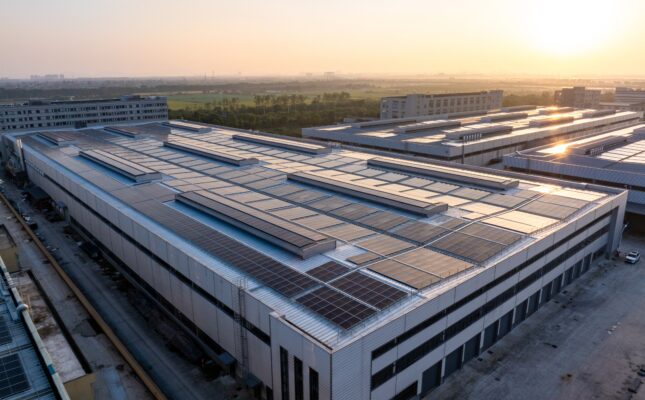
Analyses conducted by the institute indicate that precise simulation combined with optimized battery charging and discharging schedules can, in some scenarios, enable factories to retain and use locally nearly half of the electricity generated on-site, for example from rooftop photovoltaic installations.
An additional benefit of smoothing industrial energy consumption profiles is the reduction of stress on the public power grid, helping improve overall grid stability.
Operating with Incomplete Data and an AI-Powered Battery Recycling Facility
One of ESiP’s commercial advantages is its ability to function effectively even when data is incomplete. If a company lacks detailed load profiles or accurate historical performance data from its renewable energy assets, the system’s algorithms can fill these gaps through scaling techniques and mathematical simulations.
The tool can also combine multiple storage functions, such as simultaneously optimizing participation in energy markets while maintaining backup power capabilities for the factory.
AI to Support Battery Recycling
Fraunhofer IWU will showcase the ESiP system at this year’s The Smarter E Europe exhibition. The institute will also present plans for a pilot facility currently under construction in Chemnitz.
The facility will be a state-of-the-art installation designed to automatically dismantle end-of-life electric vehicle traction batteries down to the individual cell level. Scheduled to begin operations in August 2026, the pilot plant will use artificial intelligence and advanced analytical models to assess battery health and automatically identify components suitable for reuse in second-life battery applications.
The project highlights how AI-driven analytics can support both energy optimization in manufacturing and the circular economy by extending the useful life of battery components.
Leave a Reply