CHN Energy launches the largest solar-hydrogen project with energy storage in China.
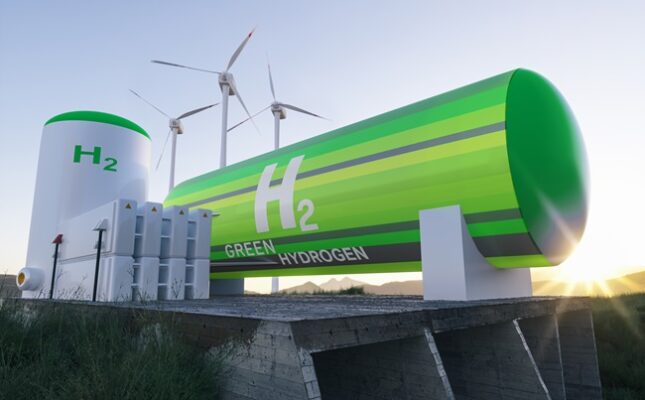
China Energy Investment Corp., a state-owned enterprise, has completed construction of the integrated Guohua Rudong complex in Jiangsu Province. The project combines an offshore photovoltaic plant, a battery energy storage system, and a green hydrogen production facility within a single integrated system. The operating entity, Guohua Investment (Jiangsu branch), describes it as the largest integrated project of its kind in China.
The complex is located on reclaimed tidal flats in Yudong, near Yangkou Port in Rudong County (Nantong). It includes a 400 MW offshore solar farm, a 60 MW / 120 MWh battery energy storage system, a hydrogen production unit with a capacity of 1,500 (unit per hour as specified), and a 220 kV power substation. The project is complemented by hydrogen refueling infrastructure with a daily capacity of 500 kg.
Clean electricity for cities and hydrogen for industry
According to data from CHN Energy, the photovoltaic section alone will generate around 468 GWh of electricity annually, enough to supply nearly 200,000 households. The hydrogen facility is designed to produce approximately 482 tons of high-purity green hydrogen per year.
The solar farm was first connected to the grid in early 2025 and reached full PV capacity on April 29, 2025. The entire integrated complex was officially completed on June 10, 2026, following successful system-wide testing in which all performance indicators met design specifications. The hydrogen facility is currently in the final commissioning phase and is expected to begin stable operations in August 2026.
Direct power supply via subsea cable
A key technical innovation of the Guohua Rudong project is the use of a dedicated subsea cable linking the solar farm directly to the hydrogen production facility. During peak solar generation, excess electricity can be used directly to power the electrolyzers without passing through the public grid. Local operators note that at full PV output, only about 1/40 of hourly solar generation is sufficient to fully power the hydrogen system at maximum load.
The battery storage system is designed to smooth fluctuations in solar output and ensure stable electricity supply for hydrogen production. This configuration increases local renewable energy consumption and serves as a commercial demonstration of direct coupling between offshore solar generation and hydrogen technologies. The project is part of China’s third national batch of large-scale wind-solar energy bases.
Leave a Reply