These countries emit the most CO2 in the world
Despite the global increase in renewable energy sources (RES) production, the persistent levels of CO2 emissions remain a source of concern. These emissions, alongside other greenhouse gases, contribute to the escalating challenges linked to climate change.
Indeed, many of the adverse impacts can be averted through sustained and dedicated efforts toward positive changes and embracing green transformation. However, collective action on a global scale is imperative. Particularly, countries that are the largest contributors to greenhouse gas emissions must take substantial measures to curtail their outputs. The countries that typically rank among the top emitters of greenhouse gases include China, the United States, India, the European Union, and Russia.
Ranking of countries in terms of emissions
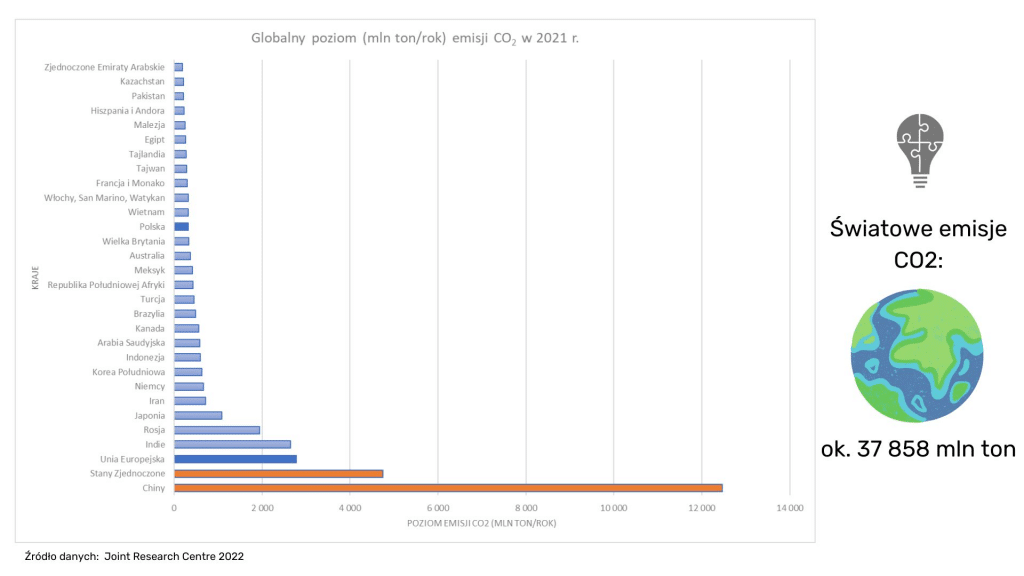
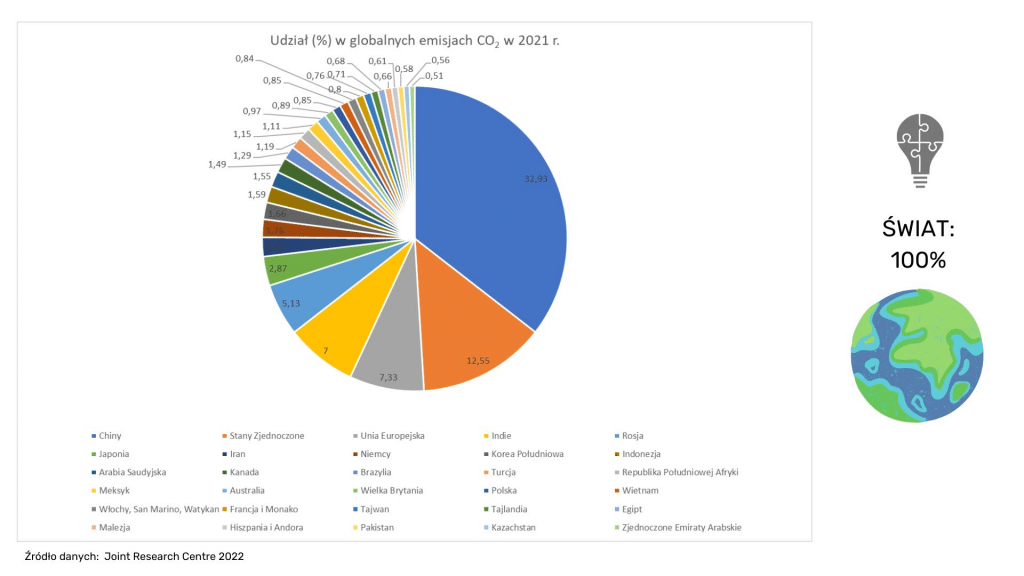
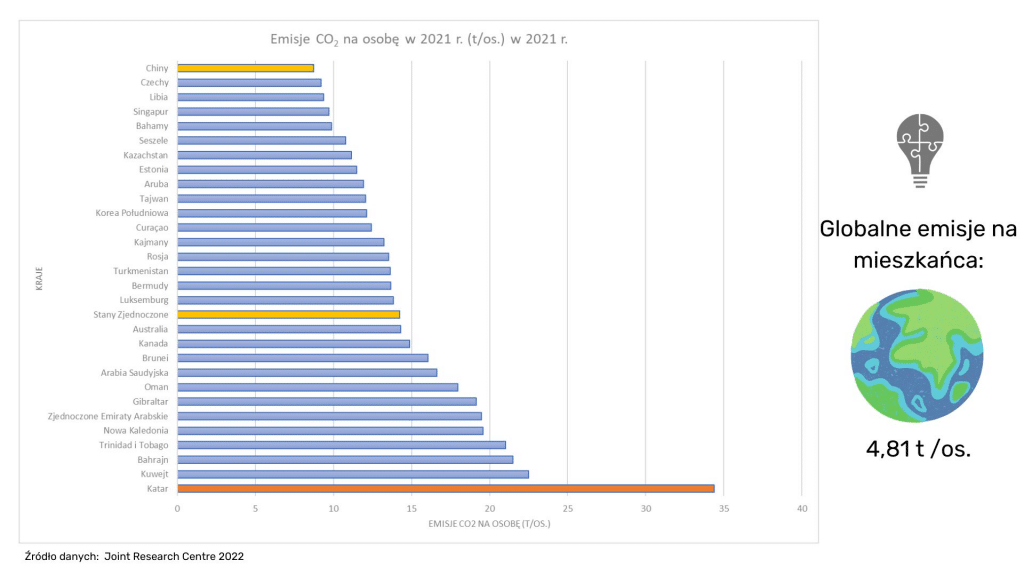
The provided charts visually depict the prevailing scenario. The emission intensity data for individual countries have been sourced from the publication of the Joint Research Centre, which is a division of the European Commission. This unit is dedicated to offering scientific and technical assistance in shaping and advancing European Union policies.
The rankings provided encapsulate CO2 emissions arising from human activities and are based on 2021 data. Notably, these lists exclude dependent territories with populations fewer than 20,000, alongside Palau, an autonomous island nation in the Pacific Ocean with an approximate population of 18,000. These regions are considered to exert minimal global influence from a broader perspective.
Click on the selected chart to enlarge it.
Global data
Data per person
Who are the biggest emitters?
As the chart makes evident, these are mainly the world’s most influential economies, alongside the economies that are on the rise.
Globally, about one-third of the CO2 produced from human activities comes from China, with the United States following closely. It’s important to note that these countries are also leading in generating renewable energy worldwide. The European Union, taken as a whole, holds the third spot in CO2 emissions. However, when considering individual countries, Poland finds itself at the 19th position (or 18th if we exclude the entire EU).
Nevertheless, the rankings undergo a shift when we consider CO2 emissions on a per-person basis. In this regard, Qatar claims the top position, with China and the US switching places. We’ve presented data for 30 countries, which is why Poland isn’t visible in this specific context. But if the ranking included more entries, Poland would secure the 33rd spot (emitting 8.48 tons of CO2 per person). Just to put things in perspective, the average for the EU stands at 6.25 tons of CO2 per person.
Why is reducing CO2 emissions so important?

Source: iStock
Emissions pose a threat to people and the planet
The outcome of these damaging emissions is the warming of the global climate. This brings along issues like more frequent floods, droughts, and sudden heavy rains. Another consequence is the rising levels of seas and oceans. The vanishing glaciers are of particular concern.
These extreme events aren’t only bothersome and disruptive in our daily lives, but they also present a significant danger to our well-being and that of generations to come. The impact on health and life is a serious concern.
Economic problems in the most vulnerable regions
Countries situated in regions most vulnerable to the impacts of global warming encounter a range of economic challenges:
- Reduced Arable Land: There’s a decrease in land suitable for cultivating food crops due to changing environmental conditions.
- Challenging Farming Conditions: Growing crops becomes tougher due to altered weather patterns and less predictable conditions.
- Decline in Agricultural Output: Sustaining the current level of agricultural production becomes increasingly difficult.
- Loss of Traditional Species: Native species vanish, disrupting ecosystems and traditional ways of life.
- Material Losses from Extreme Weather: Dangerous weather leads to material losses and damages.
- Costly Reconstruction: High expenses are incurred in rebuilding towns and cities affected by climate-related disasters.
- Increased Health Issues: Citizens face more health problems, resulting in higher expenditures on healthcare and preventive measures.
Sources:
Crippa, M., Guizzardi, D., Banja, M., Solazzo, E., Muntean, M., Schaaf, E., Pagani, F., Monforti-Ferrario, F., Olivier, J., Quadrelli, R. ., Risquez Martin, A., Taghavi-Moharamli, P., Grassi, G., Rossi, S., Jacome Felix Oom, D., Branco, A., San-Miguel-Ayanz, J. and Vignati, E. , CO2 emissions of all world countries ? JRC, IEA, PBL 2022 Report, EUR 31182 EN, EUR 31182 EN, Publications Office of the European Union, Luxembourg 2022, JRC130363, publications.jrc.ec.europa.eu
Leave a Reply