The Strait of Hormuz in flames, oil prices rising. A geopolitical shock exposes the world’s dependence on fossil fuels.
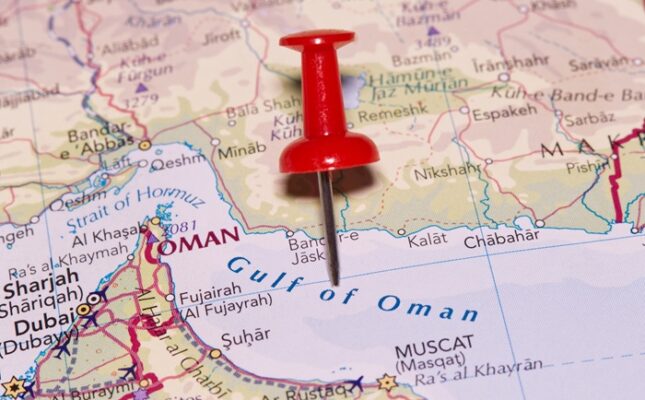
The threat of Iran closing the Strait of Hormuz triggered a sharp reaction from markets and politicians. At the same time, environmental organizations are warning that this is yet another example of how the world’s dependence on fossil fuels generates not only emissions, but also geopolitical risks on a global scale.
Oil prices jump 10% in a single day
Following attacks in the Strait of Hormuz—a 38-kilometer-wide chokepoint through which around 20 million barrels of oil pass daily (nearly one-fifth of global supply)—oil prices surged. Brent crude rose by approximately 10%, surpassing $82 per barrel.
Iran warned that the shipping route had been closed to navigation. Hundreds of vessels reportedly halted operations and waited for developments. For many countries, this poses serious challenges for both oil and LNG imports and exports.
Energy analysts indicate that if flows through the strait are not quickly restored, prices could once again exceed $100 per barrel. Such a scenario would automatically translate into fuel inflation and cost pressures across the entire economy—from transport to food production.
More production, but not immediately
In response to the tensions, OPEC+ members announced an increase in oil production by more than 200,000 barrels per day next month. The cartel—comprising OPEC countries and major non-member producers, including Russia—accounts for over 40% of global oil production.
History shows that OPEC and its allies have repeatedly attempted to stabilize markets during crises. The problem, however, is that production is not a “tap” that can be turned on instantly. Increasing supply requires logistics, infrastructure, and available production capacity. Some producers may attempt to maximize output at the expense of maintenance, but this is only a short-term solution.
An alternative is to redirect exports via pipelines—for example, to the Red Sea or through Iraq to the Mediterranean basin. However, even these scenarios do not eliminate the risk of a bottleneck in the Persian Gulf.
“A world locked into fossil fuels”
Climate organizations emphasize that the current crisis is not an isolated incident but a symptom of a systemic problem. Greenpeace International argues that as long as the global economy depends on oil and gas, energy security and price stability will remain hostage to geopolitics.
Similarly, 350.org points out that a single flashpoint—such as the Strait of Hormuz—can destabilize markets worldwide. As a result, households pay the price through higher fuel, energy, and everyday goods costs.
According to these organizations, accelerating the energy transition—expanding renewables, energy storage, and transport electrification—is not only a climate issue but also one of security and sovereignty. Renewable energy based on local resources is seen as reducing countries’ vulnerability to geopolitical shocks.
A lesson for Europe and Poland
For Europe, the current situation is another test of resilience after the gas crisis triggered by the war in Ukraine. Diversification of supply, development of renewable energy sources, and investments in energy efficiency are no longer purely climate policy tools—they are becoming pillars of economic security.
For Poland in particular, the implications are significant. Every global oil price spike translates into transport costs, fuel prices at the pump, and inflationary pressure. Accelerating the development of renewables, energy storage, and electromobility could reduce the economy’s exposure to external shocks.
Geopolitics or transformation?
The crisis around the Strait of Hormuz shows that the global economy still operates in a 20th-century logic—dependent on fossil fuels and politically unstable regions. Every conflict in a critical part of the world is immediately reflected in prices and market stability.
The question is not whether, but how quickly countries will be able to move from reactive crisis management to a strategic shift in their energy model. Today’s oil price increases are not only a warning signal for markets—they are a reminder that energy security and the climate transition are two sides of the same coin.
Leave a Reply