The ruling of the German Federal Court of Justice with potential consequences for the entire market
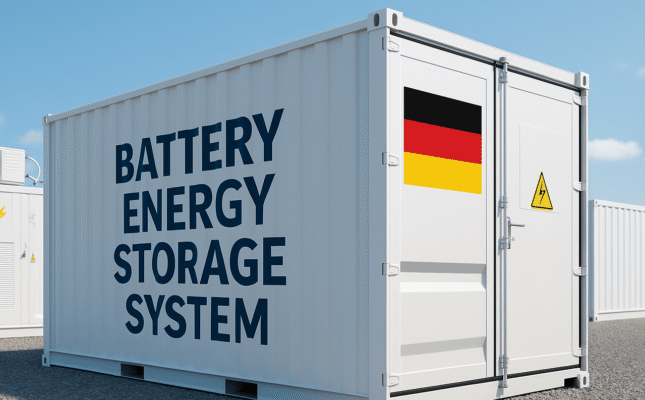
Germany’s Federal Court of Justice has issued a ruling that could reshape the economic outlook for investments in energy storage systems. The decision confirms the legality of charging the “Baukostenzuschuss” (BKZ) fee on BESS projects, even though these systems are not conventional consumers of electricity from the grid.
What is BKZ and why does it apply to BESS?
The BKZ is a one-time fee imposed by distribution system operators (DSOs) or transmission system operators (TSOs) on entities that plan to draw significant amounts of electricity from the grid. The fee is intended to compensate for infrastructure expansion costs, such as new connection lines or transformer stations.
Until now, the fee typically did not apply to generation projects such as coal plants or solar farms. However, it has been imposed on battery energy storage systems (BESS) — even though they also discharge energy back into the grid.
The cost of the BKZ can reach up to €140,000 per MW of connection capacity. This poses a significant financial barrier, especially for smaller developers and startups operating in the growing energy storage market.
Industry: “This is unfair treatment”
Many market participants — including the likely plaintiff in the case, Kyon Energy — have argued that energy storage systems are not typical end consumers and that their load profile differs significantly from conventional demand.
According to them, BESS should not be subject to the BKZ, as they are not “pure consumers” of energy but rather network assets that support the stability of the power system.
The ruling: Operators have discretion, but no obligation
The Federal Court acknowledged that BESS have a different load profile than end consumers. However, it concluded that treating them similarly in the context of the BKZ is “objectively justified” and aligned with the fee’s purpose.
Importantly, the Court emphasized that the decision to impose the BKZ lies within the discretion of the individual grid operator. This provides a degree of flexibility and potential room for case-by-case negotiations.
As noted by Lars Stephen from Fluence, the ruling does not change the regulatory approach established in 2009. Rather, it confirms that imposing the BKZ is permitted — but not mandatory. This is a significant distinction for real-world project planning.
Market impact: Barrier or challenge?
Germany’s BESS market is growing rapidly — and is projected to become the largest energy storage market in Europe. This growth is taking place despite the BKZ burden, but many developers stress that the fee slows the scaling of investments, especially for smaller players.
It’s also worth noting that the BKZ is just one of several fees that energy storage system operators must contend with. Other costs — such as those related to charging and discharging energy — have been temporarily suspended until 2029, but no long-term systemic solution has yet been implemented.
The German energy regulator (Bundesnetzagentur) is currently conducting consultations on this topic and published a white paper in May to guide future decisions.
What’s next? The need for systemic reform
The BGH ruling does not end the debate — on the contrary, it may intensify it. While it formally confirms the legality of charging the BKZ on BESS, it also opens the door to political and regulatory action.
The ability of different operators to apply different approaches could lead to market inequalities, but might also serve as a catalyst for harmonizing the rules.
The industry is united in its message: Energy storage is not just about grid consumption — it’s also about actively supporting grid stability. If BESS are to play a central role in the energy transition, their treatment should reflect their function — not just their technical grid connection profile.
Source: energy-storage.news
Leave a Reply