Scientists have sent solar energy stored in space to Earth
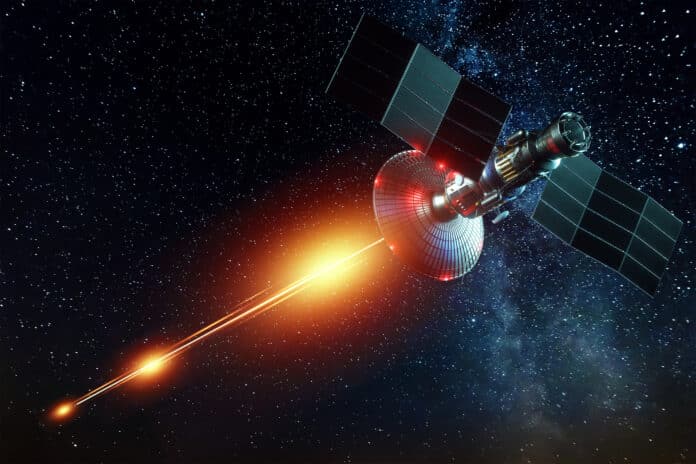
A team of researchers from the University of California Institute of Technology (Caltech) successfully transmitted solar energy from space to receivers positioned on the roof of the Gordon and Betty Moore Laboratory of Engineering located on the Caltech campus.
This achievement is a significant milestone within the Space Solar Power Project. The experiment utilized the Microwave Array for Power-transfer Low-orbit Experiment (MAPLE), a device designed to transmit collected solar energy using microwaves. MAPLE is a key component of the SSPD-1 solar energy storage facility.
In this innovative approach, solar energy is transformed into the same type of electromagnetic radiation employed in microwave ovens. Microwaves have the ability to traverse through clouds, ensuring a consistent energy supply regardless of weather conditions or the time of day.

A new direction of energy transfer
Until now, MAPLE’s energy transmission capabilities have been limited to within space and the device itself. An earlier experiment involved using wireless energy transfer to illuminate two LEDs aboard the MAPLE.
Ali Hajimiri, who leads the Space Solar Power Project, envisions this technology as a means to democratize energy access, akin to how the internet democratized information access. This technology could send energy to regions lacking additional infrastructure due to conflicts or natural disasters.
Wireless solar energy transfer technology is capturing global interest. Japan is planning to implement it within the next decade, led by a team of researchers led by Hiroshi Matsumoto, the former president of Kyoto University and the pioneer behind the first-ever microwave energy transfer in space in 1980.
Various institutions, including the United States Air Force Research Laboratory, Chongqing University in China, and the European Space Agency, are also actively exploring the applications of this technology.
Leave a Reply