How to Extinguish Energy Storage System Fires? Water Is Not the Best Solution
The Energy Transition Brings New Technologies – and New Risks
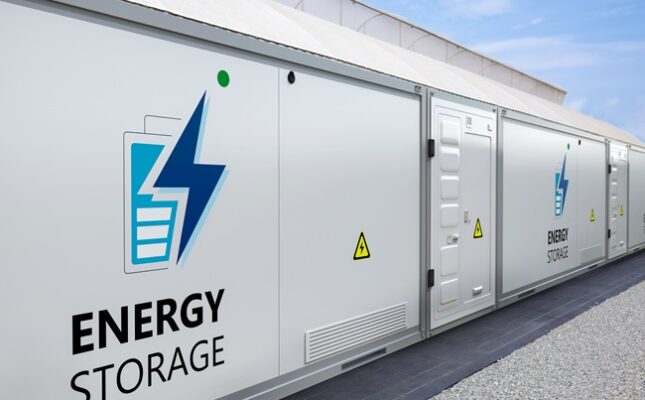
Battery energy storage systems are becoming the backbone of modern energy infrastructure. However, as several recent incidents have shown, these systems can sometimes catch fire. What might seem obvious in the case of a regular fire—grabbing a water hose—can actually make things worse when it comes to lithium-ion batteries.
Fires in Energy Storage Systems – Examples
Battery energy storage systems (BESS) are a cornerstone of the energy sector’s future. However, their development is still at a relatively early stage. In many parts of the world, these systems are being deployed simultaneously with the development of proper technical regulations, safety standards, and operational procedures. As a result, the design, installation, and management of energy storage systems vary widely. This opens the door to risks we are only beginning to fully understand and control.
One of the most serious threats is fire. Although statistically rare, such events can have catastrophic consequences—both financially and environmentally. These fires can result from a combination of factors, with the most common causes including:
- Overheating of lithium-ion cells and thermal runaway,
- Design flaws – improper module placement or lack of effective cooling and detection systems,
- Manufacturing defects or mechanical damage to batteries,
- Improper operation or lack of regular maintenance,
- Inadequate fire prevention procedures and lack of personnel training.
Below are some of the most high-profile cases from the past year that drew attention from experts, regulators, and investors to the need for higher safety standards in the energy storage sector:
- Moss Landing, California – A major fire occurred at one of the world’s largest energy storage facilities. The site, owned by Vistra Energy and located near Monterey Bay, was evacuated, and nearby roads and schools were temporarily closed.
- Otay Mesa, California – A fire broke out at the Gateway Energy Storage facility and lasted for five days. The fire was difficult to contain because lithium-ion batteries kept reigniting. Firefighters had to withdraw from direct suppression efforts due to explosion risks.
- Wenzhou, China – A violent fire during the testing phase of a BESS project completely destroyed the containerized installation.
- Hwaseong, South Korea – A tragic fire at Aricell’s battery factory claimed the lives of 23 people. The incident began with the explosion of a cell on the production line and quickly engulfed the entire building. Although not a typical energy storage system, the event highlighted the scale of risk posed by uncontrolled chemical reactions in large quantities of lithium-ion cells.
A Battery Fire Is Not a Typical Fire
Battery energy storage systems are fundamentally different from traditional electrical equipment. One of the greatest threats during an incident is thermal runaway—a chain reaction where heat released by one cell causes neighboring cells to overheat. This phenomenon can lead not only to fire spreading but also to explosions, especially if built-up gases ignite inside the casing.
Mishaal SyedNaveed, Senior Fire Protection Engineer at Wärtsilä Energy Storage, explains:
“There are two major risks: a classic fire and a potential explosion. Spraying water on batteries can worsen the situation, causing short circuits, electric arcs, or even explosions in extreme cases.”
Cooling Instead of Extinguishing
Instead of directly attacking the burning system, experts recommend a defensive approach focused on isolating the fire and limiting its spread. The main goal is to prevent the escalation of thermal runaway and protect neighboring modules. What does this look like in practice?
- Do not enter the battery casing.
- Do not aim a water stream directly at the source of the fire.
- Use a mist nozzle to disperse water and cool the surroundings indirectly.
“You don’t need to pour water directly onto the batteries—cooling the neighboring modules is enough to stop the chain reaction,” explains SyedNaveed. “Changing the angle and spray pattern is a simple but effective shift in approach.”
Designing for Safety
A fundamental part of the prevention strategy is designing energy storage systems with proper spacing between modules. Spatial separation reduces fire propagation and allows for effective cooling. Increasingly, manufacturers like Wärtsilä are also working with industry organizations (e.g., Fire & Risk Alliance) to train firefighters. These workshops teach first responders the technical aspects of battery operation, potential failure scenarios, and effective risk mitigation methods.
“We’re dealing with a new kind of hazard—which is why we train firefighters to understand what they’re facing,” says SyedNaveed. “It’s best when experienced firefighters train other firefighters—it builds trust and effectiveness.”
Regulations vs. Technology
Although safety standards for energy storage systems are being gradually introduced, in many regions, legislation still lags behind the pace of technological development. In the U.S., the NFPA 855 code has become the model fire protection standard for energy storage systems.
This standard is now gaining recognition internationally. Still, as SyedNaveed emphasizes, merely adopting the rules is not enough. What’s crucial are “testing, project verification, and collaboration between engineers and emergency responders.”
Less Fear, More Knowledge
A fire in a battery storage system doesn’t have to mean disaster. The key is understanding how the technology works and how to respond properly. Instead of instinctively reaching for water, it’s better to trust the procedures developed by experts.
“These are not ticking time bombs,” reassures SyedNaveed. “A well-designed system and a trained team can prevent tragedy.”
The development of renewable energy and storage systems is inevitable—but only if safety evolves alongside technology and the knowledge of those who will be first on the scene during an emergency.
Source: ess-news.com
Leave a Reply