BESS boom in Spain. 27 projects and 1.78 GW of new capacity in a single quarter
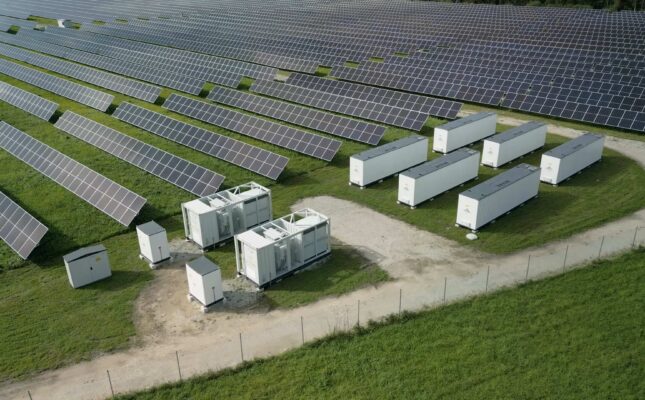
Spain’s renewable energy sector shows no signs of slowing down. In the third quarter of 2026, public notices were published in the country for 27 projects involving battery energy storage systems. The total capacity of the planned BESS installations reaches an impressive 1.78 GW. The announcements cover both standalone battery storage facilities and systems integrated with existing solar and wind farms.
Solar, wind and batteries. Industry giants embrace hybridization
Most of the announced projects involve adding energy storage systems to existing PV installations. This approach helps avoid grid transmission constraints. Moreover, it makes it easier to secure better terms for selling electricity.
The largest announced investments include:
- The La Puebla 3 project in the province of Huelva, featuring 150.8 MW of BESS capacity, integrated with an existing solar farm.
- The BESS Gaetana project (108 MW), combined with a 166.4 MW PV installation in Badajoz, and BESS Aurea (117.6 MW), designed for a 171 MW solar farm.
- A series of systems across several regions, including the Maira Gamma facility (45 MW) in Burgos, connected to a 140 MW PV farm.
- A portfolio of energy storage facilities in the province of Seville, including the Freya system (39.6 MW) and four identical installations, each with a capacity of 39.6 MW, in Alcalá de Guadaíra.
Furthermore, developers are integrating batteries not only with solar installations. For example, EDP has submitted plans for the Castillo Garcimuñoz energy storage facility (19.5 MW), which will form part of a hybrid complex combining wind (25.5 MW) and solar power (20.9 MW). Meanwhile, Iberdrola is planning a 30.3 MW battery storage system at the Iglesias wind farm in Burgos.
Administrative procedures underway. What does this mean for the market?
The published notices formally initiate administrative procedures. Developers have submitted their initial environmental applications and are seeking construction permits. Some investors have also applied for public utility status, which facilitates land expropriation for grid connection infrastructure.
In Spain, the publication of an application does not automatically mean that a project is entering the construction phase. Some of the applications included in the 1.78 GW pipeline are preliminary submissions, and developers often sell such projects to larger investment funds. The main advantage of adding battery storage to an existing PV farm is that no new grid connection is required. Hybrid installation status allows developers to use the existing connection point and bypass the main bottleneck in the Iberian electricity system.
Leave a Reply