A Liquid That Becomes a Barrier. How a Polymerizing Electrolyte Protects Sodium Cells
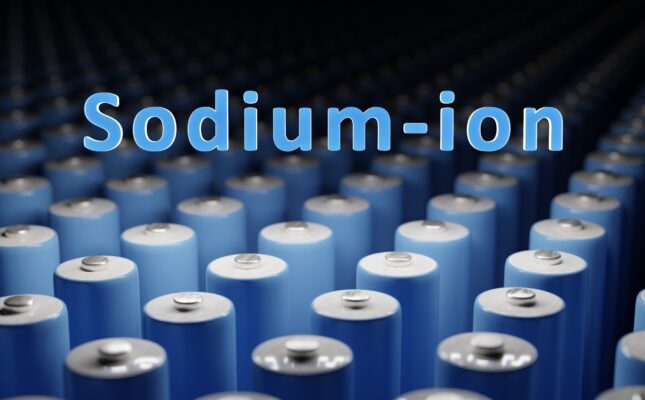
A research team from the Institute of Physics of the Chinese Academy of Sciences has achieved a major breakthrough in the safety of sodium‑ion batteries. Scientists led by Prof. Hu Yongsheng have developed a non‑flammable polymerizable electrolyte (PNE). As reported in the prestigious journal Nature Energy, this technology enabled the creation of the world’s first ampere‑hour‑class sodium‑ion battery with zero thermal runaway. The solution eliminates the risk of fire and explosion, which until now has hindered the commercialization of sodium battery technology.
How does the PNE mechanism work?
The breakthrough lies in the transition from passive fire protection to active heat blocking. The new PNE electrolyte system is based on three defensive mechanisms:
Heat absorption – the electrolyte is designed to absorb energy at the early stage of overheating, neutralizing the exothermic reactions that drive failure.
In‑situ polymerization – once the temperature exceeds 150°C, the liquid electrolyte changes its state into a solid. It forms a polymer network that prevents separator melting and internal short circuits.
Electrode protection – a dual‑salt system creates protective layers on both the cathode and anode. These layers maintain the structural integrity of the cell at high voltage and extend its service life.
Extreme tests and high performance
Batteries based on PNE technology passed rigorous safety tests. According to data published in Nature Energy, the cells successfully completed both the nail‑penetration test and the hot‑box test at 300°C. Importantly, the safety improvements did not come at the expense of performance. The batteries remain stable at voltages above 4.3 V and operate across a wide temperature range from ‑40°C to 60°C.
This enables the maintenance of high energy density while ensuring full operational reliability.
The authors emphasize that the new electrolyte system uses only widely available commercial raw materials, making the technology economically viable and easy to scale for industrial applications.
“In the future, this technology will deliver innovative solutions for batteries with high energy density and the highest level of safety,” the research team stated.
Details of the discovery were published in the article titled “Thermal runaway‑free ampere‑hour‑level Na‑ion battery via polymerizable non‑flammable electrolyte”.
Leave a Reply