The EU’s competitors in energy markets will profit from the war in Iran. How will prices change? Forecast
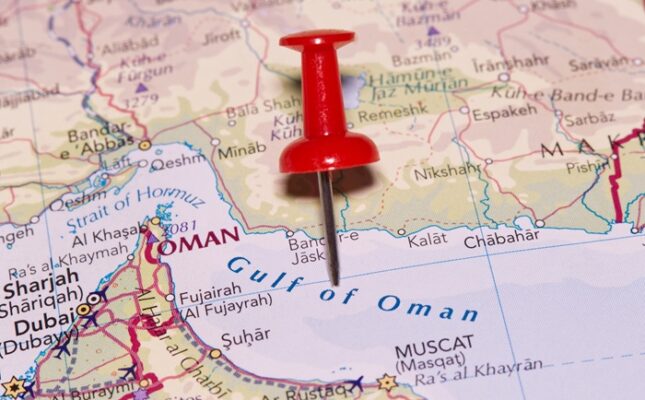
The war in Iran almost immediately triggered a reaction in the global energy market. A 58% increase in the price of Brent crude oil within 9 days illustrates the intensity of these changes—and this is just one of many alarming price spikes. As it turns out, however, part of the world may benefit from the conflict—namely, those regions that are also competitors of the European Union.
The war in Iran and the rapid reaction of fuel markets
It took just one day for global markets to react almost “allergically” to the war in Iran. The confrontation quickly escalated beyond a regional clash into an international-scale conflict.
On March 1 and 2, 2026, Iran responded decisively. Over the following two weeks, the conflict escalated further, with strikes targeting Iraq, Kuwait, Qatar, United Arab Emirates, Saudi Arabia, Bahrain, Cyprus, Jordan, and Azerbaijan. The primary targets were American facilities and units, including military bases, air defense infrastructure, and vessels.
One of the most serious consequences has undoubtedly been the blockade of the Strait of Hormuz—one of the world’s most critical energy transport routes. According to Reuters, about 20% of global energy supplies pass through this narrow corridor. Any disruption here results in immediate price spikes.
On March 2, S&P Global Platts suspended the publication of price offers for crude oil from the Persian Gulf, as well as LNG from Qatar and a new LNG facility in Abu Dhabi. This was already a clear signal that the market could not properly price commodities under such high war-related risk.
Meanwhile, Goldman Sachs reported that oil flows through the Strait of Hormuz had dropped by as much as 90%—potentially the largest disruption in fuel supplies since the 1973 oil crisis.
The “Iran effect” – how prices have already changed
The term “Iran effect” has entered public debate, referring to the impact of the conflict on global energy prices—essentially rapid and significant price spikes over a short period.
According to TradingView data, on February 27 (the day before the conflict began), Brent crude cost about $73 per barrel. By March 2, the price had risen to around $80, then to $84 on March 3. The peak came on March 9 at $117 per barrel—representing a 58% increase in just 9 days. As of March 19, prices hovered around $111.
The war in Iran has affected fuel prices worldwide, including in Poland. According to Forbes, since early March diesel prices have risen by over PLN 1 per liter, gasoline by PLN 0.50, and LPG by around PLN 0.25.
Upward trends are visible across Europe, compounded by rising maritime transport costs. Freight rates for transporting oil from the Middle East to China have surged to as much as $400,000 per day, according to Reuters—further pushing up fuel prices.
Who benefits from the war in Iran?
Notably, Russia has already begun profiting from the conflict. According to CREA data, within two weeks it generated an additional $6.9 billion in oil and gas revenue. The timing has been favorable, as the Kremlin had been facing serious financial challenges in February. Additionally, the U.S. granted India temporary permission to import Russian oil.
China has also benefited—albeit indirectly. Although it is one of the largest importers of Middle Eastern oil (around 5.4 million barrels per day), the impact is mitigated by its energy mix: about 60% coal, and only 25% oil and gas. This structure provides a buffer against global fuel price shocks, unlike in Western economies.
Who, besides the EU, is losing?
As fuel prices rise, leaders of the European Union have begun exploring solutions to reduce the burden on member states. Ursula von der Leyen announced ongoing work on strategies to respond to the crisis.
However, countries neighboring Iran and Israel are suffering even more severe consequences.
- Iraq faces potential losses of up to $196 million per day due to the Hormuz blockade.
- The United Arab Emirates may lose up to 2.1 million barrels per day in transport capacity.
- Saudi Arabia sends 89% of its oil (around 6.2 million barrels daily) through the Strait of Hormuz, and has also suffered damage to the Ras Tanura terminal.
- Kuwait exports about 1.5 million barrels daily through the same route and depends on LNG imports for electricity generation.
What will happen to prices next?
Much depends on how long the blockade of the Strait of Hormuz continues.
The U.S. Energy Information Administration (EIA) forecasts that oil prices will remain above $95 per barrel until at least May 2026, possibly dropping to around $70 only in the second half of the year.
According to Goldman Sachs, prices may reach around $98 by the end of April, potentially rising to $110 if disruptions persist. By Q4 2026, Brent crude could fall to $71 and WTI to $67.
Price declines would require:
- restoration of transport through the Strait of Hormuz
- increased production by OPEC+
- reduced global demand due to high prices
Beyond energy: long-term consequences
The war in Iran is not just about energy prices—it has wide-ranging consequences.
The Middle East relies heavily on desalination for water supply. For example, Riyadh in Saudi Arabia gets about 90% of its drinking water from desalination plants in Al-Jubail. Energy shortages therefore directly threaten water access.
Food imports, consumer goods, and livestock supply are also at risk, as most transport depends on maritime routes—again highlighting the importance of the Strait of Hormuz. Land routes (e.g., via Turkey) are insufficient to compensate.
Miscalculation by the U.S.?
The death of Iran’s Supreme Leader Ali Khamenei on the first day of the conflict did not destabilize the country or bring a quick victory for the United States and Israel. Contrary to expectations, no regime change occurred.
This is largely due to Iran’s power structure, built on religious institutions, the Revolutionary Guard, state security apparatus, and strong economic elites. As a result, many experts predict the conflict could last for years or even decades—similar to other regional conflicts.
One thing is clear: geopolitics in the Middle East remains one of the key drivers shaping global oil and gas prices.
Leave a Reply