Energy storage facility to be built next to a paper mill in Switzerland. It will generate revenue in three markets
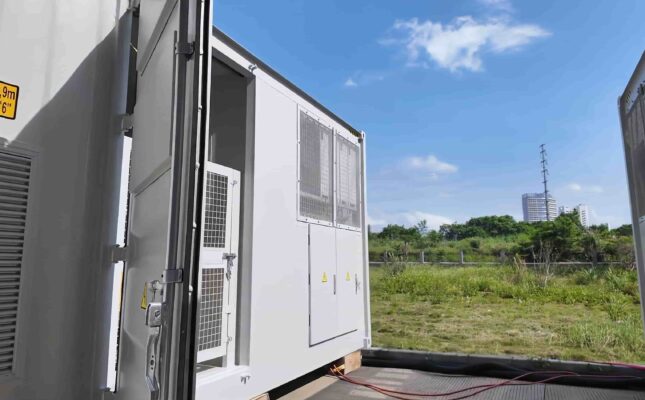
A 10 MW/20 MWh energy storage facility will be built next to a Swiss paper mill. The battery is expected to become operational before the end of 2026. It will initially generate revenue from ancillary services and later also participate in the day-ahead and intraday markets.
10 MW/20 MWh storage facility to be built next to a paper mill
The BESS will be constructed on the premises of the Parlen Papier mill in Perlen, Switzerland. The investor is BESS Parlen AG, a joint venture between Parlen Industrielholding and the Valyou Investment Foundation.
The storage facility will have a power output of 10 MW and a capacity of 20 MWh. The system will be supplied by the German company ADS-TEC Energy, while the Swiss company Wattss will be responsible for the overall management of the project.
The facility is scheduled to become operational by the end of 2026. However, the exact value of the investment has not been disclosed.
The project is not limited to securing the mill’s energy needs. From the outset, the battery is also intended to operate as a standalone market asset.
The BESS will generate revenue from ancillary services and the energy market
Ancillary services are expected to provide the first source of revenue. The storage facility will later also participate in the day-ahead and intraday markets.
The owner does not want the economic viability of the BESS to depend on a single application. The battery is intended to take advantage of several opportunities to monetize its flexibility.
According to ADS-TEC Energy, Wattss is also responsible for integrating the storage facility into the energy market. The company is additionally handling the project’s technical development. This represents an important direction for industrial energy storage systems, as merely reducing inflexible electricity consumption may not make full use of such a facility’s capabilities.
A BESS can also respond to market conditions and make its flexibility available to the system operator. As a result, a single battery can perform several functions.
Swissgrid pays for flexibility. Batteries can participate in balancing
The Perlen model fits well with the way Switzerland’s balancing market operates. Swissgrid is responsible for maintaining the balance between electricity generation and consumption. The operator procures the flexibility it needs from market participants.
This flexibility can be provided by hydropower plants, batteries, photovoltaic installations and industrial consumers, among others. Swissgrid compensates participants both for making flexibility available and for its activation.
Energy storage facilities can therefore earn revenue by remaining ready to adjust their operation. They can also generate income when their flexibility is actually used by the operator. At the same time, Swissgrid wants to make it easier for new technologies to access the market. The operator also points to the rapid growth of photovoltaics as one of the reasons for redesigning the balancing market.
Increasing generation from weather-dependent sources significantly raises the need for flexibility. Batteries can respond faster than many conventional generating units.
Could a 20 MWh capacity represent a new model for industrial energy storage?
The Perlen project is not particularly impressive in scale compared with Europe’s largest BESS facilities. What is more interesting, however, is how the battery will be used. The storage facility is being built next to an operating industrial plant, but its role will extend beyond the site’s own needs. The investor is combining industrial infrastructure with participation in the energy market.
This could improve the utilization of the asset itself. The battery will not have to wait solely for periods of high demand at the mill. It can also generate revenue when its flexibility is more valuable to the energy market or the power system.
ADS-TEC Energy says the project is intended to transform the Perlen site into a more active energy hub. The investors, meanwhile, are seeking new long-term sources of revenue.
This may prove to be the most important aspect for future BESS projects. An energy storage facility is no longer merely a technical addition to a factory. Instead, it becomes an asset that can serve the industrial plant, the power system and the energy market.
Leave a Reply