ZGR Energy Storage Saved San Vicente del Monte from the Massive Iberian Peninsula Blackout
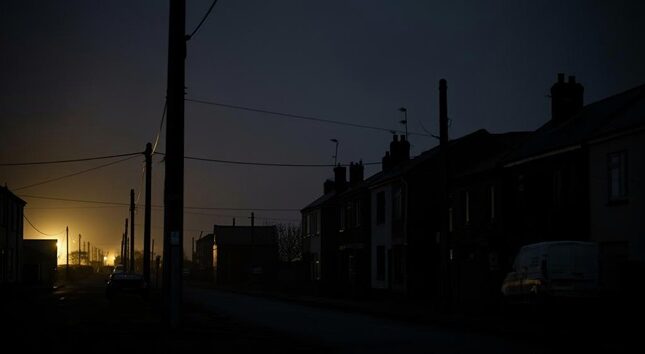
On April 28, 2025, while most of the Iberian Peninsula was plunged into darkness due to a widespread power grid failure, one village in Spain remained fully lit and powered—San Vicente del Monte. This small mountain village in Cantabria, home to just 200 residents, owes its resilience to an innovative energy storage system developed by Spanish manufacturer ZGR.
Massive Power Outage Hits the Iberian Peninsula
On Monday, April 28, 2025, at 12:33 p.m., the largest power outage in decades struck Spain and Portugal. Power was out for around 10 hours in most continental areas, and even longer in some regions. At least eight people died as a result—seven in Spain (due to carbon monoxide poisoning and candle-related fires) and one in Portugal (a ventilator-dependent individual).
The outage paralyzed public transport, communication, and the operations of numerous institutions. In Spain, all Renfe trains and metro systems halted, and Madrid’s Barajas Airport ceased operations for several hours. In Portugal, traffic signals failed, while shops, pharmacies, and electronic payment systems stopped working. Internet communication dropped to 17% of normal levels.
Just before the failure, Spain’s power system was primarily fueled by solar energy (59% of 32 GW production), with moderate wind, nuclear, and gas contributions. The country was exporting power to Portugal, France, and Morocco. At 12:33, a rapid sequence of failures occurred in southern Spain (Granada, Badajoz, Seville), resulting in a loss of 2,200 MW of capacity. A swift drop in frequency below 48 Hz triggered automatic load shedding and disconnection of the peninsula from the rest of the European grid.
Full power was restored in Portugal around midnight, and in Spain by the morning of April 29. Hydroelectric plants with black start capabilities (Aldeadávila in Spain and Castelo do Bode in Portugal) played a crucial role in the restoration, supported by electricity imports from Morocco and France.
Microgrid Instead of Candles
While most of the Iberian Peninsula experienced a standstill, life in the small village of San Vicente del Monte continued as usual. An autonomous energy storage system installed in 2020—rated at 160 kW and 250 kWh—functioned as a local microgrid, taking over power supply when external sources failed. Connected to the local low-voltage (400 V) grid, it ensured uninterrupted power for over five hours, until regional grid service was restored.
“Spain’s distribution network is generally stable and reliable,” said José Antonio Grande, Business Development Director at ZGR. “However, the end segments in rural areas are more susceptible to voltage drops and outages. That’s why we developed these pilot projects to improve supply quality and continuity in the most vulnerable locations.”
A Worthwhile Investment—Financially and Socially
The total cost of the system was €225,000 and was part of a broader initiative by energy company Viesgo, which was acquired by Portuguese utility EDP in 2020. The San Vicente del Monte project was one of four similar pilot systems implemented by ZGR in northern Spain (two in Cantabria and two in Galicia), in areas serving around 700,000 customers under EDP-Viesgo.
The containerized system fits inside a 20-foot container and includes a ZGR inverter, a lithium-iron-phosphate (LiFePO₄) battery by Narada, a compressed air cooling system, and a fire suppression mechanism. It was designed to handle loads up to 300 kVA and store up to 300 kWh per feeder. With the village’s daily energy consumption around 50 kWh, the system can independently power the entire village for more than five hours.
Importantly, the system operates fully automatically: in the event of a public grid outage, the inverter instantly switches to island mode and begins supplying power from the stored battery energy.
Energy Storage Doesn’t Have to Be an Eyesore
ZGR also prioritized visual integration with the surrounding environment. In some locations, like Lugo in Galicia, containers were clad in wood to blend into the rural landscape. “It’s a modular solution, like all our systems. The bidirectional inverter manages battery charging and discharging based on system needs,” Grande noted.
Although San Vicente del Monte has become a symbol of energy resilience, ZGR emphasizes that similar solutions are technically feasible in many other regions—for example, on the island of La Palma, which recently experienced its own outage. The challenge isn’t the technology, but rather the lack of a capacity market in Spain, which could economically incentivize the deployment of such systems.
ZGR isn’t slowing down. The company is developing both standalone energy storage and hybrid systems integrated with renewables. It’s currently involved in projects totaling hundreds of megawatts and plans to significantly scale up production capacity—up to 6 GW in Spain and at a new factory in Phoenix, USA, set to open in 2026.
Source: ess-news.com