GASCADE launches the first large hydrogen transmission network.
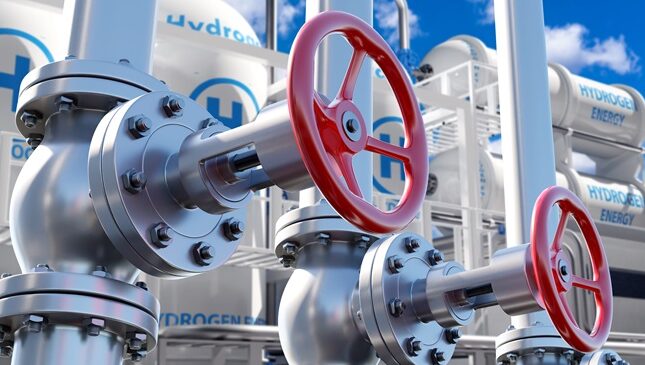
In the face of growing challenges related to Germany’s energy transition, GASCADE Gastransport GmbH has reached a breakthrough stage in the development of hydrogen infrastructure. As part of the Flow – Making Hydrogen Happen project, the first hydrogen filling of a natural gas pipeline section that was previously used for natural gas transport has begun.
Transformation of Existing Infrastructure
The Flow – Making Hydrogen Happen project involves adapting around 400 kilometers of existing gas pipelines to transport hydrogen by the end of 2025. The entire network will reach a length of 1,630 kilometers and connect the northern and southern regions of Germany. It will pass through key industrial centers such as Rostock, Lubmin, Schwedt, Berlin, Leipzig, Leuna, Erfurt, Ludwigshafen, Karlsruhe, and Stuttgart. This will create a significant transmission artery enabling efficient hydrogen delivery to industrial and energy consumers.
Importance for the Hydrogen Economy
GASCADE emphasizes that the realization of this project is an important step toward building a sustainable hydrogen economy. “We are proud to begin the process of commissioning the first large hydrogen pipelines in Germany. This provides planning certainty for the development of the global hydrogen value chain,” says Christoph von dem Bussche, Managing Director of GASCADE.
Ulrich Benterbusch, the other managing director, points out that converting the existing infrastructure allows for the quick and cost-effective launch of hydrogen transport. “The Flow – Making Hydrogen Happen project is a central element of our strategy. We are creating secure and efficient foundations for the future hydrogen market in Germany,” adds Benterbusch.
Innovation and Contribution to Climate Protection
The development of hydrogen infrastructure by GASCADE is significant not only for the German energy sector but also for global efforts to reduce CO2 emissions. By converting pipelines, it will be possible to widely utilize green hydrogen, contributing to the decarbonization of many industrial sectors.
“Our vision is to create a sustainable and climate-friendly energy future. With the Flow – Making Hydrogen Happen project, we are setting new standards in the industry and taking concrete actions toward this transformation,” emphasizes Dirk Flandrich, Program Manager.
It is worth noting that in January 2025, we reported on another hydrogen economy project in Germany – AquaVentus. Details can be found in the article titled “Lower Saxony finances the construction of an underwater hydrogen pipeline at the bottom of the North Sea.”
Source: worldpipelines.com
Leave a Reply