Nuclear energy – an ecological source of energy?

Nuclear energy holds a significant position in the modern world, with 437 operating reactors catering to around 10% of the global energy demand. There are differing perspectives on nuclear energy’s role: some view it as a means to decarbonize and enhance energy security, while others advocate for its abandonment in favor of renewable energy, citing concerns about its environmental impact and cost. In this article, we will delve into both the positive and negative aspects of nuclear energy.
Advantages of nuclear energy
Low-emission energy production
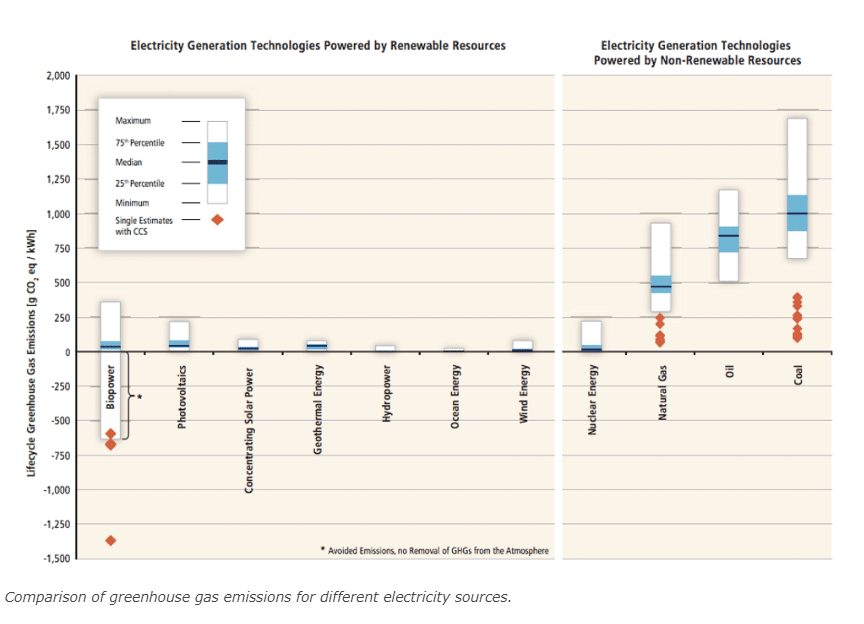
The nuclear fission reaction itself does not produce emissions. However, emissions are associated with processes like fuel extraction, fuel preparation, reactor construction, storage of radioactive waste, and other operational aspects of nuclear reactors. It’s important to note that while there are emissions linked to nuclear energy, they are significantly lower than the greenhouse gas emissions generated by burning fossil fuels. As illustrated in the graph below, nuclear energy’s emissions profile allows it to be competitive with renewable energy sources in this regard.
Small area occupied by nuclear power plants
Nuclear fission is a highly energy-dense source, which means that nuclear power plants have a remarkably small footprint per unit of energy they generate. To put it in perspective, a solar power plant producing 1 GW of energy, which is equivalent to a typical nuclear power plant, would require approximately 75 times more land area. To achieve the same energy output with wind power, an area as large as 360 times that of a nuclear power plant would be necessary. This highlights the efficiency of nuclear energy in terms of land use.
A stable source of energy
Nuclear power plants offer a high level of energy stability. Unlike renewable energy sources, they are not reliant on weather conditions, ensuring a consistent power supply. Additionally, nuclear plants do not demand frequent maintenance, in contrast to fossil fuel power plants. Typically, a nuclear power plant requires refueling only once every one and a half to two years. Research from the US Energy Information Administration reveals that nuclear power plants operate at their maximum capacity for about 93% of the time, making them over twice as efficient as coal-fired power plants, wind turbines, and solar panels. This reliability and efficiency are key advantages of nuclear energy.
Centralized energy production
Numerous countries, including Poland, grapple with the challenge of outdated power systems that are ill-suited for integrating distributed generation sources, such as renewable energy. This issue often leads to rejected network connection applications and additional demands placed on investors, causing delays in the entire process. In contrast, a nuclear power plant, being a large, centralized energy producer, seamlessly integrates with the existing power system structure. This compatibility can be advantageous when it comes to addressing the evolving energy landscape and modernizing power infrastructure.
Disadvantages of nuclear energy
High costs and long time of building a nuclear reactor
Nuclear energy indeed demands substantial initial investments, and despite plans for many nuclear power plants to be constructed within five years, the reality often extends beyond this timeframe, as shown in the graphic below. Critics, including environmentalists, contend that during the extended construction period of a nuclear power plant, pollutants from coal-fired and other plants persist. Furthermore, the overall costs of producing one unit of energy through nuclear fission reactions are considerably higher than those associated with renewable energy sources. These factors contribute to the challenges and debates surrounding nuclear energy as an option for meeting energy needs.

Average construction time of nuclear power plants.
Radioactive waste
Spent nuclear fuel retains its radioactive properties for extended periods, often spanning decades or even hundreds of years. Regrettably, it cannot be transformed into harmless substances. The only viable approach is to store it in securely sealed containers, typically in underground repositories or on the seabed. Nevertheless, creating a foolproof method for safely managing radioactive waste, one that ensures no threat to future generations, remains an ongoing challenge. This underscores the complexities and concerns associated with nuclear waste management.
Failures can have tragic consequences
The operation of nuclear reactors relies on a chain reaction of decay, which, in the case of a failure, can be extremely hazardous. Uncontrolled incidents can result in the overheating of the reactor core and, in some cases, the release of radioactive materials, leading to explosions and the contamination of the surrounding area. The Chernobyl disaster in 1986 stands as a haunting example of such an event. The Fukushima nuclear power plant disaster, occurring 25 years later, further highlighted the potential for disasters, including those triggered by natural events like tsunamis, to release radioactive substances into the environment. These catastrophic events had a profoundly negative impact on public opinion, contributing to increased skepticism and reluctance toward nuclear energy.
Complicated situation of nuclear energy in Europe
Nuclear energy remains a contentious topic, making it challenging to achieve societal consensus. Some countries have chosen to phase out nuclear power, such as Germany, which is shifting towards renewable energy as part of its Energiewende program. However, they acknowledge that full reliance on renewables is currently unattainable, with renewable energy meeting only 1% of the country’s energy needs during adverse weather conditions.
In France, initial plans aimed to reduce nuclear energy’s contribution from 70% to 50% of the nation’s energy needs. Nevertheless, President Emmanuel Macron has announced a resumption of new nuclear power plant construction to bolster energy independence, especially considering rising fossil fuel prices, including gas imports from Russia.
Finland is also expanding its nuclear energy capacity, with existing reactors covering 30% of energy demand. Additional reactors under construction and planned are expected to increase this to 60%, enhancing the country’s energy security, particularly since it heavily relies on hydropower, which can be unreliable in dry seasons.
Poland is in the process of planning and constructing its first nuclear power plant. The program envisions the development of six units with a combined capacity of up to 9 GW. The “Lubiatowo-Kopalino” nuclear power plant in the Choczewo commune in Pomerania is part of Poland’s energy transformation strategy aimed at reducing CO2 emissions. This illustrates the diverse approaches and debates surrounding nuclear energy across different countries.
Leave a Reply