Will the collective prosumer gain popularity in our country?
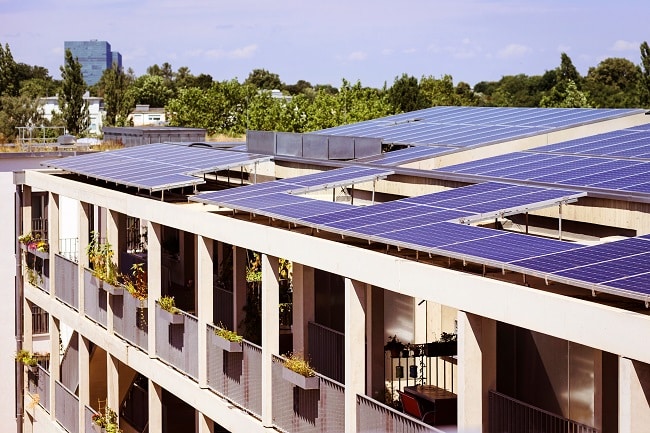
In today’s edition, our spotlight will be on showcasing institutions dedicated to harnessing renewable energy sources, particularly within housing communities and cooperatives. We’ll delve into examples like the adoption of photovoltaic panels by residents of single-family homes to illustrate this trend.
The concept of the collective prosumer, which is at the heart of our discussion, remains a topic deserving of extensive exploration and a clear outlook on its future trajectory. We aim to address pertinent questions: Why should we consider this solution? Is it truly advantageous, and is it poised for widespread adoption in our country? Additionally, we’ll delve into potential challenges, legal frameworks, and the supportive measures provided by legislators, among other relevant considerations.
Who is a collective prosumer and what does it mean to be a collective prosumer?
To start, let’s define what a collective prosumer of renewable energy entails according to legislation. As per Art. 2 point 27c of the Renewable Energy Sources Act (commonly referred to as the “RES Act”), a collective prosumer is an end user who generates electricity exclusively from renewable sources for their own use. This generation occurs through either a micro-installation or a small installation connected to the electricity distribution network within a multi-unit building. It’s important to note that for final recipients who are not household consumers of electricity, this electricity generation cannot constitute their primary economic activity.
So, in simpler terms, a collective prosumer refers to any resident of a community or housing cooperative who benefits from renewable energy sources within their building. This could mean utilizing resources like solar panels installed on the roof of an apartment complex.
New, very optimistic prospects for members of housing communities and cooperatives
The introduction of the collective prosumer institution into the legal framework aligns seamlessly with the growing trend towards promoting and embracing green energy. With the surge in collective housing developments, such as new residential investments, housing estates, and apartment complexes, there’s a natural inclination to extend the popularity of photovoltaic panels from single-family homes to housing communities.
Thanks to new legal provisions and evolving construction standards, housing communities now have a promising opportunity to contribute to the country’s green transformation. However, it’s worth noting that implementing these solutions may not always be feasible, especially for older housing cooperatives that may lack the technical infrastructure for such investments. Nonetheless, each situation should be evaluated individually to determine the viability of adopting eco-friendly solutions.
Who can become a collective prosumer?
Now, let’s clarify who can become a collective prosumer. It includes:
- Apartment owners in a multi-unit building or apartment complex, including tenants or lessees who are party to a comprehensive agreement, sales agreement, and electricity distribution agreement.
- Entrepreneurs with premises in a multi-unit building or apartment complex who wish to generate electricity for their business needs, provided they are party to a comprehensive agreement, sales agreement, and electricity distribution agreement.
Why is it worth considering the possibility of becoming a collective prosumer and what influences the growing popularity of such a solution?
There are several advantages and benefits associated with being a collective prosumer and the increasing popularity of this solution:
- Real Savings on Electricity Bills: By generating electricity from renewable sources within the community, collective prosumers can significantly reduce their electricity expenses over time.
- Energy Security for the Local Community: Having an alternative source of electricity enhances the resilience of the local community, especially during times of grid outages or disruptions.
- Positive Impact on Social Awareness: Embracing green energy fosters a sense of environmental responsibility and contributes to shaping a more sustainable society.
- Ecological Factors: Utilizing renewable energy sources reduces carbon emissions and helps mitigate climate change, promoting a cleaner and healthier environment for all.
- Image Enhancement: Businesses can enhance their image by proudly identifying themselves as entities committed to utilizing green renewable energy solutions in their operations, appealing to environmentally-conscious consumers and stakeholders.
- High Availability of Technical Solutions: There’s a wide range of technical solutions available that can be tailored to suit various situations, fostering healthy competition among providers and offering collective prosumers greater flexibility in negotiating contract prices and terms.
Will limiting the power of renewable energy installations to 1MW adversely affect the popularity of the collective prosumer institution in Poland?
In the context of the collective prosumer institution, the electricity generation capacity is typically limited to up to 50 kW for micro-installations and up to 1 MW for small installations. It’s important to note that this 1 MW limit shouldn’t present significant challenges for most communities or housing cooperatives, as it generally suffices to meet the energy needs of a given community.
While the actual demand and expectations regarding green energy production may vary, the 1 MW limit for collective prosumers is typically considered adequate. Moreover, considering the evolving legal landscape and the ongoing push for greater adoption of renewable energy, it’s likely that these limits will be periodically reviewed and potentially expanded to accommodate a broader range of entities seeking to embrace green solutions on a larger scale.
Will the possibility of obtaining subsidies for participation in renewable energy installations for collective entities have a positive impact on the popularization of this type of solution?
External financing plays a crucial role in driving the development of specific solutions, including collective prosumer institutions. Co-financing such initiatives can significantly boost their implementation. It’s worthwhile to explore whether local support programs offer additional financial resources for advancing green energy within housing communities and cooperatives.
Community and cooperative leaders play a pivotal role in this regard. They often spearhead such initiatives and explore available external co-financing opportunities. This support greatly benefits community budgets, thereby enhancing the attractiveness and popularity of collective prosumers in the domestic market.
Attention to an important article. 15 section 4 of the Act on Spatial Planning and Development.
It’s important to highlight the regulations outlined in Art. 15 section 4 of the Spatial Planning and Development Act (commonly referred to as the “Pzp Act”). This legislation allows for the possibility of locating buildings, including micro-installations and other renewable energy installations, such as those generating electricity from solar energy. These installations can be placed even in areas designated for purposes other than production, unless explicitly prohibited by the local plan.
This provision has a significantly positive impact on many communities or cooperatives’ current situations. Generally, in areas without a specific local plan, locating a renewable energy installation necessitates obtaining a decision on development conditions, unless such a decision has already been issued and permits the installation’s location. Conversely, in areas with an existing local plan, the installation must align with its provisions. Thus, it’s crucial to understand the legal framework set forth by Art. 15 section 4 of the Spatial Planning and Development Act.
What should you pay attention to when conducting a general feasibility analysis of implementing a collective prosumer?
Elements to pay attention to when conducting a general feasibility analysis of implementing a collective prosumer:
- a thorough analysis of the real energy demand of common parts of a specific building and individual premises;
- verification of the roof surface or other common area where the installation may be located;
- verification of the angle of incidence of sunlight, direction of the world, surface layout, etc.;
- thorough economic analysis of expenses and potential profits ;
- identification of support in the form of external co-financing;
- possible additional costs, service costs, fees for possible defects after the warranty period;
- a thorough analysis of the real financial possibilities of a given community or cooperative;
- community interview to examine whether the local community is in favor of this type of solution.
What are the future prospects for the increasing popularity of a solution based on a collective prosumer?
The Polish legislation and technological advancements indeed provide reasons for optimism regarding the development of the collective prosumer institution. Furthermore, it’s noteworthy that the legislature is progressively facilitating the adoption of green energy, leading to increased popularity of such solutions. While collective prosumer initiatives may not currently command a significant share of the domestic market, it’s crucial to monitor and adapt to the evolving landscape. In the near future, especially with regard to newly constructed housing estates, these solutions may very well become the norm.
What are the possible threats that reduce the popularity of the collective prosumer institution?
Threats to the adoption of collective prosumer solutions include the lack of adequate provision of information and relatively low levels of publicity in the media. While entities with a strong interest in green energy are well-informed about these solutions, the absence of extensive advertising campaigns can hinder awareness and understanding among average residents of communities and cooperatives.
Disinformation and the spread of unverified information regarding the security of these solutions also pose potential threats. To enhance acceptance, transparent communication about the benefits of implementation, particularly in terms of cost savings for each resident, is crucial.
Is it worth becoming a collective prosumer?
Indeed, the decision to adopt a collective prosumer solution cannot be answered definitively. It’s certainly worth considering such an approach, but each decision should be carefully evaluated based on specific conditions such as economic factors, available technical solutions, actual energy demand, and the potential for external co-financing. While collective prosumer solutions generally offer ecological and economic benefits in terms of monthly electricity costs, it’s essential to assess whether they are suitable for every case.
Summary and Conclusions
The collective prosumer is a relatively new concept in the domestic market, and analysis of existing implementations suggests that these investments are still awaiting significant development. However, favorable circumstances, including societal attitudes, legal regulations, and the overall upward trend in the renewable energy sector, indicate promising prospects for the popularization of such ecological solutions.
The convergence of pro-ecological, economical, and safe solutions is likely to attract widespread attention and adoption in the long term. The only question remains: how rapidly will this transformation occur?
Leave a Reply