A New Era of Geothermal Energy? Emission-Free Heat Plant Based on Hot Rock Under Construction in Bavaria
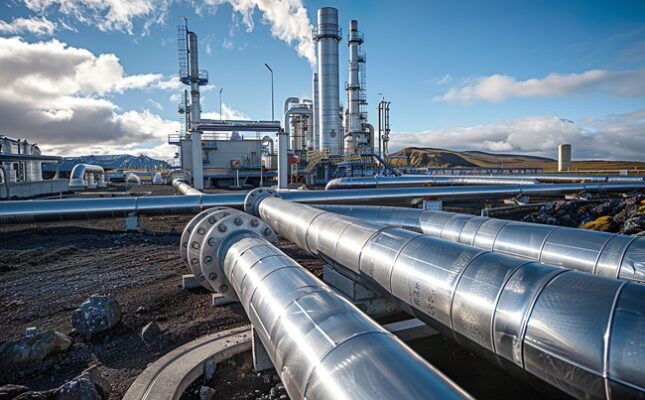
A Geothermal Revolution in Bavaria: Eavor‑Loop™ to Deliver Clean Heat Without Groundwater or Emissions
In the town of Geretsried in Bavaria, one of Europe’s most innovative energy projects is taking shape. Unlike traditional geothermal installations that rely on extracting underground hot water, Eavor‑Loop™ uses only the heat from deep rock formations—completely eliminating the need for groundwater contact. It is the first commercial-scale project of its kind in Europe.
The initiative is led by Eavor GmbH, a German subsidiary of the Canadian company Eavor Technologies Inc. The project is well underway and is expected to begin supplying heat to the municipal district heating system by 2026.
Millions in Funding for a Future-Driven Technology
The Geretsried investment has attracted significant interest from European financial and environmental institutions. The project received €91.6 million from the EU Innovation Fund and a €45 million loan from the European Investment Bank under the InvestEU program. This support signals strong EU confidence in a new geothermal model—emission-free, predictable, and non-invasive.
In March 2024, a heat supply agreement was signed for the city’s district heating network. Simultaneously, expansion of local heating infrastructure is underway to integrate the new energy source with the existing grid.
How Does Eavor‑Loop™ Work?
The Eavor‑Loop™ system is based on a closed-loop thermal circuit, where water circulates through a deep-well structure without interacting with surrounding geology. The system consists of two vertical wells connected underground by a network of horizontal channels. At a depth of around 4,500 meters, it creates an underground “radiator” that absorbs heat from surrounding rock.
Water circulation is driven by the natural thermosiphon effect—cooler water descends in one well while heated water rises in the other. Notably, no pumps are used, which further reduces energy consumption and the risk of mechanical failure.
Thanks to patented Rock‑Pipe™ technology, the internal piping is completely sealed off from the surrounding environment, ensuring no leaks and full geological safety. This is a key distinction from traditional geothermal systems, which often involve the release of hydrogen sulfide, methane, or groundwater contamination.
Third Time’s the Charm?
This isn’t Geretsried’s first attempt at geothermal energy. Two earlier hydrothermal projects, launched in 2013 and 2017, failed due to insufficient hot water flow. Wells as deep as 6 km yielded less than 10 liters per second—making them economically unviable.
The Eavor‑Loop™ system completely sidesteps this issue. It doesn’t rely on underground water reservoirs or local hydrogeological conditions. Instead, it harnesses the constant thermal conductivity of the Earth’s crust.
Clean Heat Without Environmental Trade-offs
Eavor‑Loop™ technology could transform how geothermal energy is perceived. It is completely emission-free during operation, produces no greenhouse gases, uses no chemical additives, does not alter underground pressure, and does not cause seismic disturbances.
This makes it a promising option for regions where traditional geothermal projects pose significant environmental risks. And because it operates on a closed-loop with no water extraction or injection, the system offers scalability and predictable operational costs.
What’s Next?
With the success of the Geretsried project, Eavor Technologies is strengthening its position in the European renewable energy market. The Bavarian site could be the first of many Eavor‑Loop™ installations across Europe—especially in regions with deep drilling potential but poor hydrothermal conditions.
As the demand for local, independent sources of heating grows—especially in light of the energy transition—this project could play a vital role. For residents, it means clean heat with zero emissions; for municipalities, energy independence; and for the climate, a meaningful reduction in CO₂ output.
Source: eavor.com