German municipal utility chooses zinc-bromine batteries. New 30 MWh energy storage facility to be built in Gaggenau
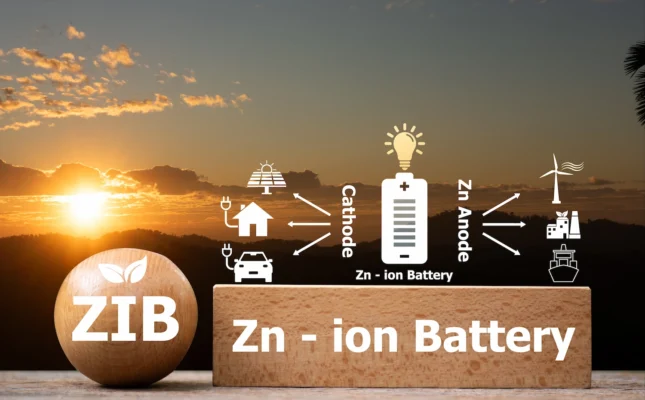
Municipal utility Stadtwerke Gaggenau and infrastructure company Capac AG are joining forces to build a large-scale energy storage facility in southwestern Germany, with a power output of 7.5 MW and a capacity of 30 MWh. Instead of conventional lithium-ion batteries, the investors have opted for zinc-bromine technology developed by US manufacturer Eos. The facility will be built on the site of a former gasworks in Gaggenau. Construction is scheduled to begin in 2027, with commissioning planned for 2028. Capac will serve as the general contractor, overseeing the entire process from technical design to system commissioning.
Safety and durability take priority over lower upfront costs
The main advantage of zinc-bromine technology is its use of a non-flammable, water-based electrolyte. This eliminates the risk of thermal runaway and fire, one of the biggest challenges associated with conventional lithium-ion batteries.
As Benjamin Henecka, CEO of Capac Energy, emphasizes, the system is designed to operate for 25 years. Over this period, its capacity is expected to decline by only around 3.6%. This is a significant advantage for municipal utilities. Higher upfront costs pay off in the long run, as investors do not need to purchase additional battery cells or replace worn-out modules during the project’s lifetime.
The total investment amounts to €15.2 million, jointly financed by Stadtwerke Gaggenau and JP Holding. The energy storage facility will generate revenue through energy price arbitrage on the day-ahead and intraday markets. It will also provide ancillary services to help stabilize the power grid.
Compact design and reduced dependence on China
US manufacturer Eos will supply its modular energy storage systems based on the Intensity architecture. This design allows battery units to be stacked both horizontally and vertically within a dedicated steel structure. The absence of fire risk enables modules to be packed densely, making efficient use of a relatively small site. The battery cells themselves are manufactured in Pennsylvania using readily available materials, including zinc bromide, conductive plastic and graphite felt.
Choosing US technology is also a strategic business decision. European energy companies are increasingly seeking alternatives to supply chains dominated by Chinese manufacturers. Partnering with Eos provides greater flexibility in sourcing technology and reduces exposure to market fluctuations.
The Gaggenau project is not the only joint initiative involving these companies. In June, Capac and Eos announced plans to build a similar 22 MWh energy storage facility in the German city of Bruchsal. The two companies have also signed a framework agreement to deploy up to 2 GWh of such energy storage systems across Germany, Austria and Switzerland by 2031.
Leave a Reply