The White House is mobilizing every possible resource to fight renewable energy.
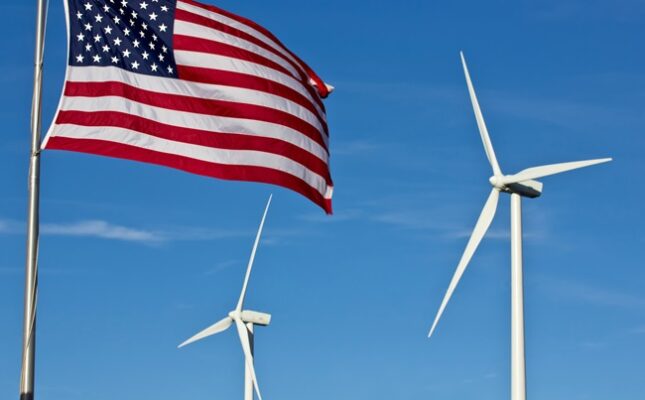
According to the New York Times, Donald Trump’s administration has taken unprecedented steps to halt the development of offshore wind energy in the U.S. The president, who has for years criticized wind turbines as “ugly, expensive, and inefficient,” has ordered a number of federal agencies to prepare plans aimed at weakening the sector.
A coalition against wind power
At least half a dozen departments – from Health to the Pentagon – have been involved in the effort. Robert F. Kennedy Jr., Secretary of Health, publicly confirmed that he is working on an analysis of the alleged health risks associated with turbines. Meanwhile, Defense Secretary Pete Hegseth points to national security concerns, and Transportation Secretary Sean Duffy revoked $679 million earmarked for ports supporting offshore wind development.
Susie Wiles, the White House Chief of Staff, and Stephen Miller are coordinating the entire campaign. According to an administration spokesperson, the actions are in line with Trump’s January executive order mandating a review of all wind projects on federal waters.
Billion-dollar investments halted
The White House’s decisions are hitting the largest energy projects in the U.S. In recent months:
- Revolution Wind – construction of the $4 billion wind farm was halted despite being 80% complete.
- Empire Wind – work stopped in April, resuming only after intervention by New York’s governor.
- SouthCoast Wind and New England Wind – the administration announced a reconsideration of federal permits.
- Maryland Offshore Wind – the project of 114 turbines near Ocean City may lose approval.
Currently, only three wind farms – Vineyard Wind, Sunrise Wind, and Coastal Virginia Offshore Wind – are continuing construction.
Arguments vs. facts
Opponents of wind turbines cite threats to military radars, the risk of drone attacks, and the allegedly harmful effects of electromagnetic fields on humans and animals. Experts respond that the Pentagon has been analyzing radar issues since 2006 and that technical solutions exist. Environmental studies show that the electromagnetic impact of subsea cables is minimal and comparable to that of household appliances.
John Leshy, former lawyer for the Department of the Interior, stated outright that the administration is “grasping at straws” in its search for pretexts to block investments.
States’ and industry’s reaction
Democratic governors of five Northeastern states warned that revoking permits undermines investor confidence and destabilizes entire energy markets. “Markets function on certainty – canceling approved projects sends the signal that decisions can be reversed overnight,” they stressed in a joint letter.
European investors, who until recently treated the U.S. as a key market for offshore wind development, are also expressing concerns about the sector’s future.
Politics vs. transition
Trump’s opposition to wind energy is nothing new – he has publicly criticized it for years, and his political allies actively blocked projects in Cape Cod. The current actions fit into a broader strategy of supporting the oil and gas industry at the expense of renewables.
The United States, once seen as a promising market for offshore wind, now finds itself at a crossroads. Depending on further White House decisions, the sector could become a symbol of the political battle over the future of America’s energy system.
Leave a Reply