Scotland Backs Renewable Energy, Rejecting Nuclear – Outline of the Country’s Energy Future Dispute
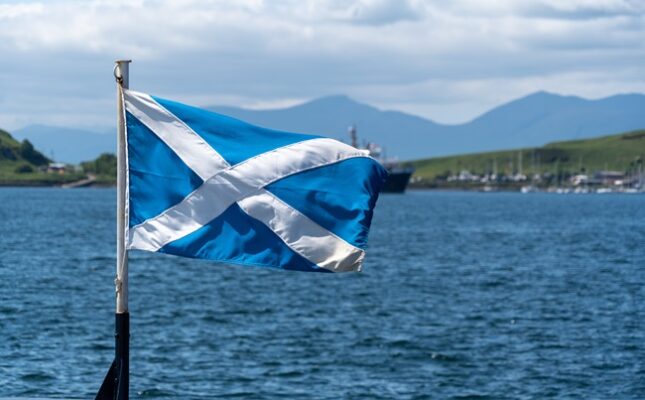
While the UK Government Announces Nuclear Investments, Scotland Sticks to Renewables-Only Path
As the UK government unveils multi-billion-pound investments in new nuclear projects in England, Scotland remains steadfast on its own course: seeing the future of energy solely in renewable sources. This position was reaffirmed by acting Scottish Energy Secretary Gillian Martin, who told BBC Scotland News: “Instead of investing in expensive nuclear power plants, we intend to fully harness the potential of renewable energy.”
For years, Scotland has effectively maintained a ban on new nuclear reactors, using its devolved planning powers. In practice, this means that while strategic energy decisions are made in Westminster, nuclear projects cannot proceed on Scottish soil without Holyrood’s approval.
Political Rift over Nuclear Power
While the SNP government sees no place for new nuclear plants, the Scottish branch of the Labour Party takes a different view. Scottish Secretary Ian Murray called the current ban “a misguided policy” that, in his view, deprives Scottish communities of jobs and new investment. He also pledged that if Labour wins power in Scotland in the 2026 elections, it would reverse the ban.
Michael Shanks, a Scottish MP and member of the UK Department for Energy Security and Net Zero, went further, saying that Scotland is missing out on playing a key role in the modern nuclear sector. “Scotland’s ban is holding back our progress while the rest of the world moves forward,” he wrote in The Scotsman.
Renewables – Cheaper and Closer to Communities?
Gillian Martin emphasized that renewable energy is not only cheaper to produce but also more accessible and price-stable for consumers. “We have so much renewable energy in Scotland that often the grid cannot absorb it all. We are also developing hydro power, which can provide flexibility during periods of lower renewable generation.”
The Scottish government also has high hopes for the Acorn Project – a carbon capture and storage (CCS) initiative that could become a cornerstone of industrial decarbonization in northeast Scotland. Funding for this project may be announced in the upcoming UK government spending review.
Nuclear Industry’s Case: Jobs and Stability
Meanwhile, the nuclear industry argues that atomic energy is not only a stable source of low-emission power but also a driver of Scottish industry and the economy. According to a report by Oxford Economics for the Nuclear Industry Association (NIA), the nuclear sector contributed £1.5 billion to the Scottish economy last year – largely thanks to Scottish firms involved in projects like Hinkley Point C and Sizewell C.
“170 Scottish companies have contracts for Hinkley, and over £280 million has already been spent in the supply chain,” emphasized NIA CEO Tom Greatrex. “The same goes for Sizewell – it’s a twin project with the same industrial base.”
A Future Without Torness – What’s Next?
Scotland’s existing Torness nuclear power station is set to close by 2030. For many experts, this raises a serious question: how will Scotland fill the gap left by one of its key low-emission energy sources?
Proponents of nuclear power warn that without new investments, emissions could rise if clean nuclear energy is replaced by less environmentally friendly sources. Opponents counter that renewables – supported by energy storage and CCS technologies – represent the real future of zero-emission energy.
Scotland at a Crossroads: Green Doctrine or Pragmatic Transition?
The debate over Scotland’s energy future is not merely technical. It’s a discussion about values, vision, and decision-making autonomy. In 2026, Scottish voters will face a choice that could define the region’s energy landscape for decades to come – between continuing with a renewables-only policy or embracing a broader mix that includes nuclear energy.
Would you like a shorter version, headline ideas, or perhaps a graphic summary of this content?